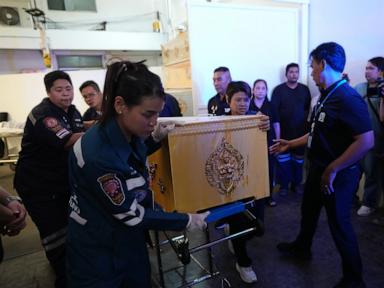
Grieving families gathered outside Bangkok's Institute of Forensic Medicine to collect the bodies of their loved ones, following a devastating shooting that has left Thailand searching for answers. A 14-year-old schoolboy opened fire at Debsirin Nonthaburi School northwest of the capital, killing at least seven people before taking his own life.
The violence didn't begin at the school gates. Investigators confirmed that the teenager also killed his two grandparents at their family home earlier that Friday morning. By early Saturday afternoon, eight bodies—including five school staff members, the shooter, and his grandparents—were released to their families for traditional funeral rites.
The Toll on the Community
Sixteen people remain hospitalized, with seven fighting for their lives in critical condition. Most of the wounded children are between 12 and 14 years old. Parents returned to the quiet campus to gather belongings left behind in the panic, while local residents laid flowers at the entrance.
The psychological aftermath is already proving severe. Parents reported that children who survived the attack are struggling to sleep alone, trapped in shock by an event few ever expected to witness in a Thai school. Debsirin Nonthaburi School announced that all classes will remain suspended through mid-week, shifting staff to remote work while the community processes the loss.
Unanswered Questions Behind the Gunfire
Authorities are piecing together what drove the 14-year-old to violence. Early reports indicate the boy had shown signs of school-related stress, though some relatives expressed complete surprise, claiming they noticed no warning signs.
The firearm used in the attack was a small, compact weapon legally registered to the boy's grandfather. Forensic experts noted that most victims suffered a single fatal gunshot wound to vital areas like the chest or head, highlighting the chilling precision of the assault.
A Broader Trend of Violence
While mass shootings are historically rare in Thailand, this tragedy follows a worrying pattern of high-profile gun violence in recent years. In 2023, a 14-year-old was accused of a shooting at a major Bangkok shopping mall, and earlier this year, a 17-year-old opened fire at a public high school in the country's south.
Data compiled by groups like the Small Arms Survey places civilian gun ownership in Thailand at roughly 15.1 per 100 people. This puts firearm-related death rates higher than most of Asia, trailing behind only the Philippines in the region.
As families transport the coffins back to their hometowns for final farewells, public pressure mounts for stricter oversight on firearm storage and youth mental health interventions. The country now faces difficult conversations about how to prevent such grief from reaching school grounds again.