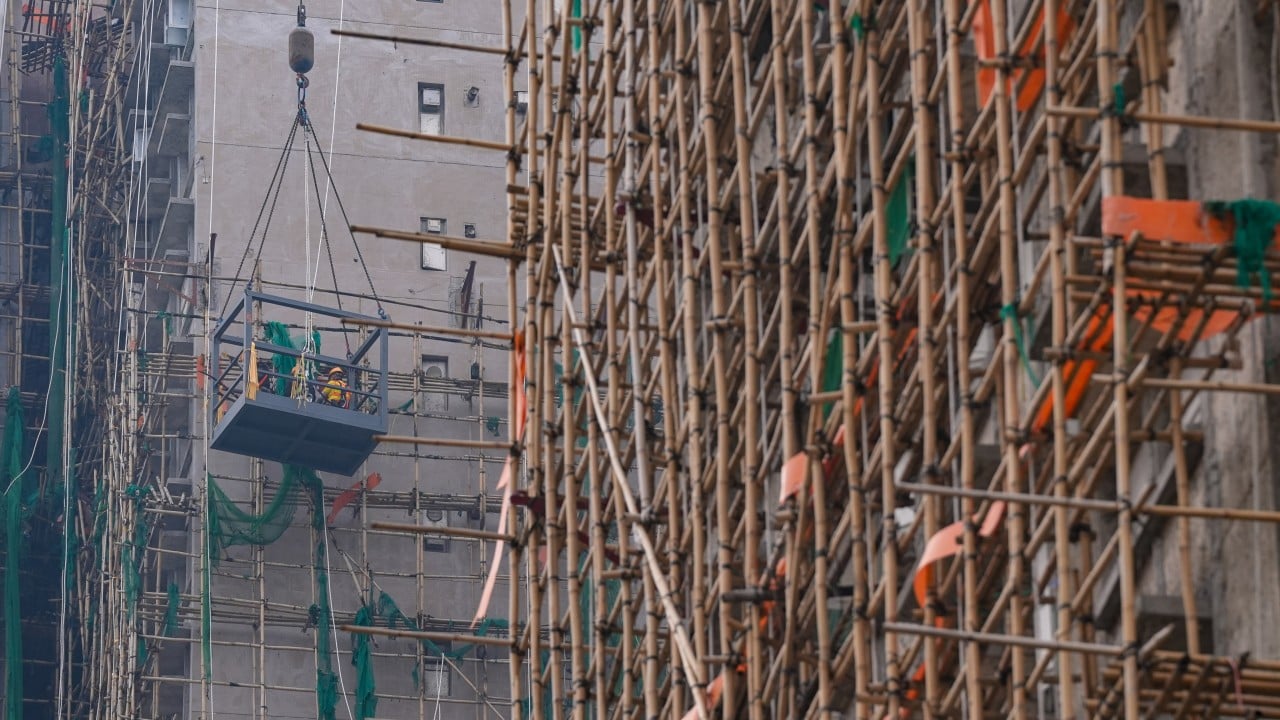
The knee-jerk reaction to any industrial accident is always the same: blame the most visible, ancient tool in the room. Following the Tai Po fire inquiry, the legal team predictably pointed their fingers at bamboo scaffolding, calling for it to be phased out in favor of steel and aluminum. It is a lazy consensus driven by corporate compliance officers who mistake modernization for safety.
They are wrong. They are missing the structural reality of urban construction.
Phasing out bamboo will not make high-rise construction safer. In fact, forcing a mandatory shift to heavy metal scaffolding in dense urban environments introduces an entirely new, potentially deadlier set of structural risks.
The High-Rise Myth: Why Steel Isn't Safer
The core argument against bamboo is always its flammability. Yes, dried bamboo can burn. But the legal minds calling for its demise are looking at the material in isolation rather than analyzing the entire structural ecosystem.
Steel does not burn, but it fails catastrophically under extreme heat. At 600°C, structural steel loses roughly half of its load-bearing capacity. When a metal scaffold system buckles during a high-rise fire, it pulls down entire building facades with it. Bamboo, because of its independent, cross-braced matrix, behaves entirely differently. When one section of a bamboo grid is compromised, the load distributes through the highly flexible nylon ties across the rest of the web.
A Lesson from Structural Mechanics: Bamboo has a tensile strength (roughly 160 MPa) that rivals mild steel when calculated weight-for-weight. Because it is incredibly lightweight, a bamboo scaffold exerts a fraction of the dead load on a building's structure compared to steel.
Imagine a scenario where a 40-story residential tower in a hyper-dense neighborhood requires a full exterior retrofit. If you use steel, you are adding hundreds of tons of dead weight to the exterior envelope. If a fire breaks out at the base, that massive weight becomes a structural liability, threatening a sudden, total collapse into narrow, crowded streets below.
The Micro-Space Nightmare of Urban Construction
The critics advocating for a Western-style transition to aluminum and steel systems have clearly never tried to erect a scaffold in the suffocatingly narrow alleys of old urban districts.
- Logistical Paralysis: Metal scaffolding requires heavy flatbed transport, crane access, and wide staging areas. In places with tight, winding streets, moving these rigid components is a logistical impossibility.
- Adaptability Deficit: Steel pipes come in fixed lengths. They do not bend around irregular building protrusions, retrofitted air conditioning units, or illegal rooftop structures.
- The Weight Penalty: Bamboo can be carried by hand up flights of stairs, manipulated around tight corners, and custom-cut on-site with a hand saw to fit the exact, chaotic geometry of any building.
I have spent years analyzing urban infrastructure and supply chains. I have seen developers blow millions trying to force rigid European staging systems into dense Asian architectural footprints, only to abandon them because the metal frames couldn't navigate the overhead power lines and narrow setbacks. Forcing a shift to metal means many older buildings simply won't get repaired at all. The cost and complexity will price out building owners, leading to a far worse crisis: structural decay of aging high-rises.
Dismantling the "People Also Ask" False Premises
When industrial accidents happen, the public questions online follow a distinct, flawed pattern. Let's break down the reality behind the most common assumptions.
"Isn't metal scaffolding the global standard for safety?"
Only if you ignore the context of where it is used. Metal scaffolding works brilliantly on open-acre greenfield sites in suburban landscapes where cranes have 360-degree clearance. In a hyper-dense metropolis, the risk profile flips. The danger shifts from material flammability to dropped-object hazards during assembly and disassembly. If a worker drops a 3-meter steel pipe from the 30th floor, it becomes a lethal missile capable of piercing concrete. A dropped piece of bamboo causes property damage; a dropped steel ledger causes a mass casualty event on the sidewalk below.
"Why don't we just mandate fire-retardant coatings on all scaffolding?"
This sounds like a reasonable compromise. In reality, it is a regulatory fantasy. The problem in the Tai Po fire wasn't a lack of chemical treatment on the wood; it was the accumulation of construction debris, nylon protective netting, and volatile materials stored on the working platforms. If you wrap a steel scaffold in flammable plastic netting and allow workers to stack garbage on it, the resulting fire will be just as intense. The metal will warp, the nylon joints will melt, and the system will fail. The material of the pole is a scapegoat for systemic site-management failure.
The True Cost of a Mandatory Phase-Out
Let's look at the hard economic data. A sudden pivot away from bamboo would trigger an immediate supply shock in the construction sector.
| Metric | Bamboo Scaffolding | Modular Steel Scaffolding |
|---|---|---|
| Material Cost per Sq Meter | Low (Renewable resource) | High (Energy-intensive manufacturing) |
| Setup Time (Erection Speed) | Up to 6x faster than metal | Slow, requires heavy mechanical assist |
| Carbon Footprint | Negative (Carbon sink) | High (Smelting, heavy transport) |
| Labor Requirement | Highly skilled, specialized artisans | Standardized assembly labor |
By banning this material, the industry would eliminate a highly specialized workforce of master scramblers who understand the physics of flexible structures. Replacing them with low-skill modular assemblers doesn't increase safety; it removes the intuitive, expert human oversight that keeps these structures standing during typhoons.
Furthermore, the environmental hypocrisy is staggering. At a time when every major corporation pretends to care about carbon neutrality, the legal team is advocating for replacing a completely renewable, carbon-sequestering grass with carbon-heavy structural steel.
The Real Fix: Regulation of the Void, Not the Material
If we want to stop construction fires, we need to stop looking at the poles and start looking at the management of the void between the scaffold and the building.
- Enforce Strict Netting Standards: The primary accelerant in scaffolding fires is almost never the bamboo itself; it is the cheap, non-FR (fire-retardant) plastic debris netting wrapped around the structure. Mandate heavy fines for any site using non-certified, highly flammable containment mesh.
- Impose Severe Penalties for Vertical Storage: Scaffolding is a temporary access platform, not a vertical warehouse. The Tai Po inquiry should be targeting the sub-contractors who allowed flammable solvents, packaging, and waste to accumulate on the working decks.
- Digital Load and Risk Monitoring: Instead of replacing the material, upgrade the inspection protocol. Deploy thermal imaging drones to inspect high-rise scaffolds weekly for hot spots, unauthorized modifications, or structural anomalies in the lashing.
The push to ban bamboo is an attempt by legal teams and insurers to look like they are solving a problem without doing the hard work of enforcing day-to-day operational discipline. It is easy to write a memo banning an ancient tool. It is much harder to police a chaotic construction site.
Stop trying to fix the scaffolding material. Fix the broken site management that allows a spark to become an-out-of-control inferno in the first place. If you ban bamboo, you aren't upgrading safety—you are just trading a highly manageable fire risk for a catastrophic, unmanageable structural failure.