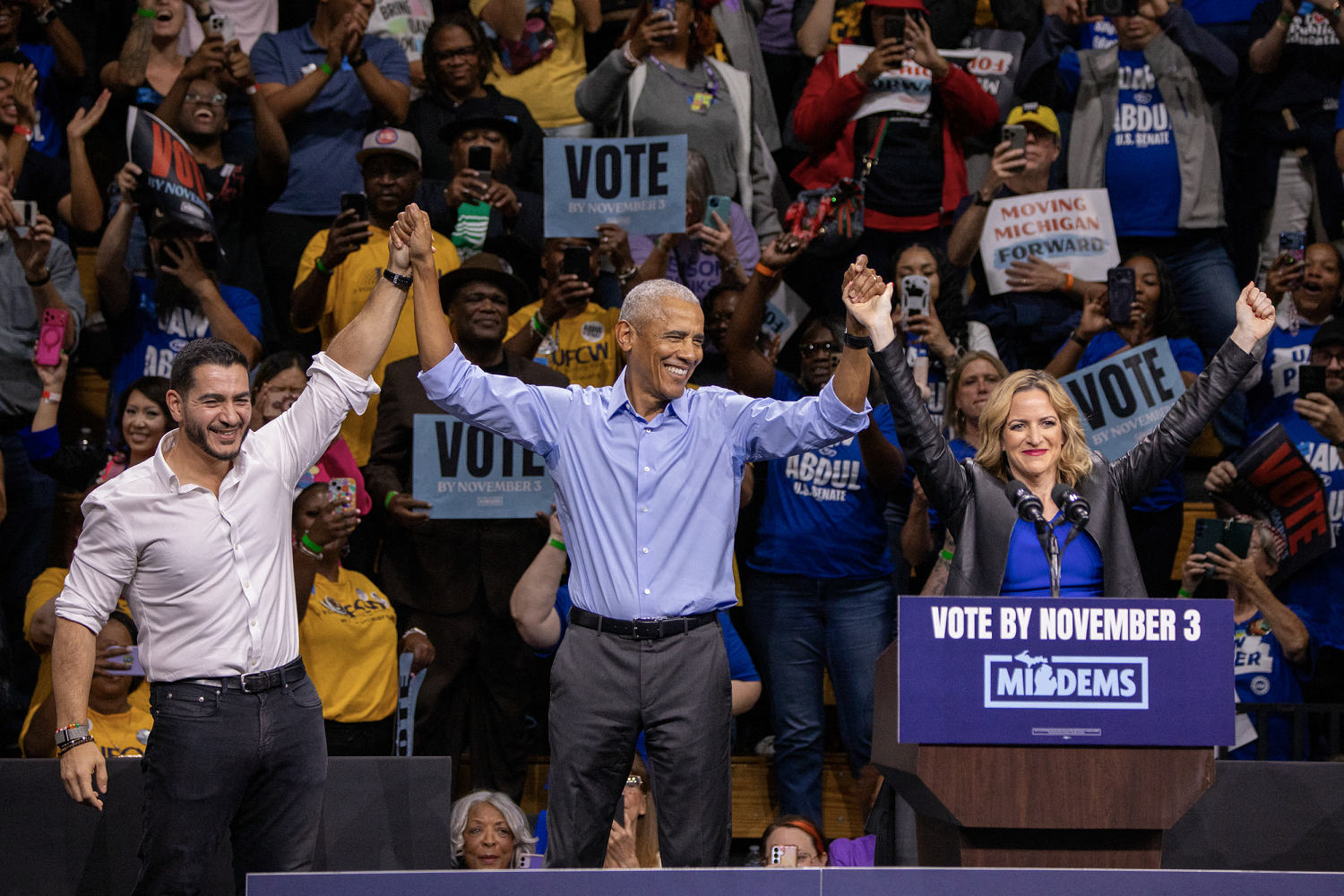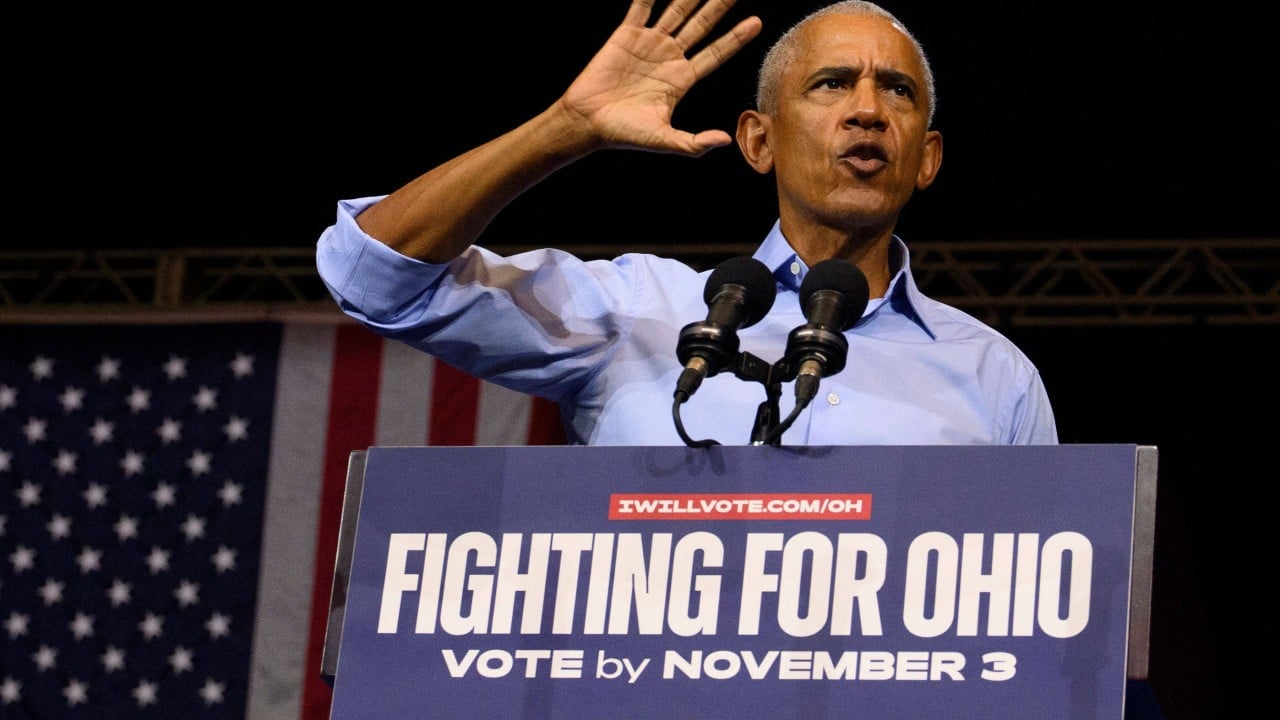
Barack Obama is back on the campaign trail, and the smile is gone. For years, the former president operated as the Democratic Party’s aspirational closer, the guy brought in during the final stretch to remind voters of hope, change, and the better angels of their nature. Not anymore. Across battleground states, Obama has sharpened his rhetoric into a blunt instrument, hammering Donald Trump’s administration and political movement as an engine of "chaos and cruelty."
This rhetorical shift is not an accidental flare-up of partisan anger. It is a calculated, data-driven intervention designed to solve a massive turnout problem for Democrats in off-year and midterm cycles. When a former two-term president abandons lofty idealism for gut-punch framing, he is signaling that internal polling looks grim. The Democratic base is fractured, exhausted, and increasingly skeptical of institutional messaging, forcing Obama to abandon the high road for trench warfare.
The Mechanics of the Chaos and Cruelty Doctrine
Political operatives rarely stumble onto a two-word mantra by accident. The phrase "chaos and cruelty" represents the synthesis of thousands of hours of focus group testing conducted by Democratic strategists since the 2024 election cycle. Strategists discovered a hard truth about the American electorate: voters have largely priced in Donald Trump’s norm-breaking behavior. Calling him a threat to democracy no longer moves the needle with swing-state independents in places like Pennsylvania, Michigan, or Wisconsin. Abstract warnings about constitutional guardrails bounce right off voters worried about the price of groceries and mortgage rates.
So, the messaging machine adjusted. "Chaos" targets the suburban moderate—the college-educated independent who may dislike progressive social policies but craves predictability in governance, stable markets, and a drama-free news cycle. By framing Trump’s governance style as an endless stream of self-inflicted crises, erratic policy reversals, and institutional disruption, Obama is trying to trigger fatigue among voters who simply want the government to run quietly in the background.
"Cruelty," on the other hand, is pure base mobilization. It is aimed squarely at the disaffected progressive wing, younger voters, and minority constituencies whose enthusiasm has cratered. By highlighting aggressive deportation sweeps, cuts to social safety nets, and hardline cultural policies, Obama is attempting to reframe the election from a referendum on Democratic economic performance into a moral test.
"You do not bring a policy white paper to a street fight. When Obama uses the word cruelty, he is trying to manufacture the kind of moral urgency that gets a 24-year-old in Milwaukee to stand in the rain for two hours to cast a ballot."
The problem with this dual-pronged strategy is that it exposes a deep fissure inside the Democratic coalition. The very rhetoric required to fire up the activist base often alienates the pragmatic suburbanites who fear the left has lost touch with economic reality. Obama is trying to thread an impossibly thin needle, using his personal credibility to hold together two factions that fundamentally disagree on what the party should be.
The Diminishing Returns of the Obama Halo
For nearly two decades, Obama has been the undisputed heavyweight champion of Democratic politics. His endorsement was gold, and his presence at a rally guaranteed local media saturation and a surge in small-dollar donations. Yet, seasoned campaign managers quietly admit that the Obama halo has lost some of its luster, particularly among the exact demographic groups Democrats need most.
Consider the math of modern turnout. In cycles where Obama’s own name was on the ballot, his coalition relied on massive margins among Black, Hispanic, and young voters. In the years since he left the White House, the Democratic Party has suffered steady erosion across all three groups. Working-class voters of all backgrounds have increasingly viewed the party as overly academic, culturally elitist, and disconnected from kitchen-table economics.
When Obama steps onto a stage today, he faces a subtle but significant credibility hurdle. To a twenty-something voter drowning in student debt and priced out of the housing market, a multi-millionaire former president lecturing them about the dangers of Trump’s chaos can feel out of touch. It is a dynamic that Republican strategists actively exploit, painting Obama not as a tribune of the working class, but as the ultimate avatar of the coastal establishment.
To counter this, Obama has had to adjust his delivery. He no longer speaks like a constitutional law professor. Instead, he uses mocking humor, sharp sarcasm, and blunt, everyday language to puncture Trump’s strongman image. He attacks Trump’s crowd sizes, mocks his grievances, and portrays him as a self-obsessed billionaire who cares nothing for the average worker. It is an aggressive, street-level style of campaigning that would have been unthinkable during his 2008 run.
Why Surrogates Cannot Fix a Structural Deficit
Deploying a former president is ultimately a tactical band-aid, not a strategic cure. History shows that popular former presidents rarely transfer their personal popularity to down-ballot candidates. Bill Clinton could not save Al Gore in 2000, nor could he prevent the Democratic wipeout in 1994. Ronald Reagan’s charisma did not stop Democrats from retaking the Senate in 1986.
Voters are notoriously transactional. They do not cast a ballot for a local House candidate or a state attorney general because Barack Obama gave a rousing speech in their city three days prior. They vote based on their immediate material conditions, their perception of local safety, and the specific vulnerabilities of the candidates on their ballot.
By leaning so heavily on Obama to carry the prosecutorial load against Trump, current Democratic leaders are inadvertently highlighting their own bench problem. If the party’s most effective communicator is a man who last ran for office in 2012, it raises uncomfortable questions about the viability of the current generation of leadership. Relying on yesterday’s star to fight tomorrow’s battles is a sign of institutional stagnation.
The Counter-Narrative That Republicans Welcome
Every time Obama steps into the arena to attack Trump, he hands the GOP a gift. Modern conservative media thrives on clear, recognizable foils, and no figure in American politics triggers Republican base turnout quite like Barack Obama. For millions of conservative voters, Obama remains the ultimate symbol of federal overreach, cultural transformation, and the political establishment that Trump promised to dismantle.
When Obama characterizes Trump’s policies as cruel, Republicans immediately flip the script. They argue that what Democrats call cruelty is actually the enforcement of basic laws, the protection of the border, and the dismantling of a bloated administrative state. They point to the economic anxiety of the post-pandemic years and ask voters whether they felt better off under the predictable, managed decline of the establishment or the disruptive, America-first approach of Trump.
Furthermore, Obama’s attacks allow Trump to frame himself as the underdog fighting against the entire apparatus of the former regime. Even when holding the levers of power, Trump operates best when he has an elite adversary to rail against. Obama’s high-profile campaign stops validate Trump’s core narrative: that the old guard is desperate to stop him, and by extension, to stop his supporters.
Let us look at a hypothetical example of how this plays out in a typical swing district. Imagine a moderate voter in suburban Phoenix who voted for Obama in 2012, Trump in 2016, and Biden in 2020. This voter is exhausted by political noise. When they turn on the local news and see Obama calling Trump cruel and chaotic, they might nod in agreement about the chaos. Yet, in the very next segment, they see a Republican ad highlighting local inflation, border crossings, and a Democratic congressional candidate who refuses to distance themselves from unpopular national policies. The voter does not see a hero saving them from cruelty; they see two sides screaming at each other while their property taxes go up. In that scenario, Obama’s intervention achieves nothing more than raising the ambient temperature of an already boiling electorate.
What the Data Actually Says About Negative Framing
Political science offers mixed verdicts on the effectiveness of relentless negative framing. While negative campaigning is proven to depress turnout among your opponent's soft supporters, it carries a massive risk of triggering general voter alienation. When the primary message of a campaign is simply that the other side is monstrous, voters often conclude that the entire system is broken and stay home altogether.
Consider the key vulnerabilities in the "chaos and cruelty" messaging strategy:
- Compassion Fatigue: Constant appeals to moral outrage lose their potency over time. If everything is an existential crisis and every policy is an act of cruelty, voters eventually tune out the alarm bells as partisan hyperbole.
- The Competence Gap: Attacking an opponent's character does not automatically establish your own competence. Voters may agree that Trump is chaotic while still believing that Republicans are better equipped to handle the economy or national security.
- Asymmetric Enthusiasm: Trump’s supporters view attacks on his character as badges of honor. Calling him chaotic simply confirms to his base that he is disrupting a system they want disrupted.
- The Nostalgia Trap: Obama’s presence inevitably invites comparisons to his own presidency, reminding disaffected progressives of their frustrations with his administration's compromises on healthcare, foreign policy, and Wall Street regulation.
This is the fundamental trap of modern Democratic messaging. By focusing overwhelmingly on the personality and temperament of Donald Trump, the party avoids the harder, more contentious work of defining a cohesive economic vision that appeals to non-college-educated workers. It is much easier to unite a fractured coalition around a common enemy than it is to agree on tax policy, energy production, or trade tariffs.
The Reality Behind the Stagecraft
Strip away the soaring cadence, the rolled-up sleeves, and the carefully curated venue backdrops, and Obama’s campaign tour reveals a party playing defense on turf it used to own. The "chaos and cruelty" line is sharp, memorable, and tailored for twenty-second social media clips. It will undoubtedly juice fundraising numbers in deep-blue zip codes and earn praise from sympathetic pundits.
What it will not do is rewrite the fundamental mechanics of an election decided by thin margins in a handful of Rust Belt and Sun Belt counties. Voters in those decisive battlegrounds have heard every possible critique of Donald Trump for over a decade. There are no undecided voters left who are waiting for Barack Obama to explain who Trump is.
The election will not be won by the party that crafts the sharpest moral indictment of its opponent, nor will it be decided by the nostalgic pull of a former president’s rhetoric. It will be decided by which party convinces exhausted, skeptical working families that their paychecks will stretch further next year than they did this year—a question that all the eloquent outrage in the world cannot answer.