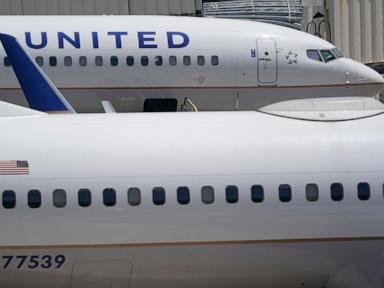
The metal tube is pressurized, the air is dry, and you are trapped at thirty-five thousand feet.
To your left, a window showing nothing but frozen cloud tops. To your right, the physical manifestation of your deepest travel anxieties: a total stranger who has already claimed seventy percent of the shared armrest. You sit with your shoulders rolled forward, trying to shrink your own skeleton. Every breath is a negotiation of personal space.
This is the tax we pay for modern flight. For decades, the middle seat has been the great equalizer of coach, a purgatory of polyester and elbows that everyone—regardless of their career, their destination, or their temperament—agreed to despise.
But what if you could pay to make that person disappear? Not into first class, but simply out of existence, leaving behind a pristine, unoccupied void.
United Airlines is betting that a massive cohort of travelers will pay handsomely for exactly that silence. The carrier recently announced a new seating configuration for its upcoming Airbus A321XLR fleet. In a single, highly strategic row of its Economy Plus cabin, United is eliminating the middle passenger entirely. In their place, the airline is dropping a permanently fixed, leather-covered table complete with dual cup holders, effectively giving the aisle and window passengers an oasis of guaranteed elbow room.
It is the commercialization of absence.
The Price of Peace
Consider Sarah. She is a hypothetical, mid-level consultant flying from Chicago to London. She does not have the corporate budget for a five-thousand-dollar business class lie-flat pod, but she has a headache, a laptop, and a presentation due the moment her boots hit the tarmac.
In a standard row, Sarah’s laptop screen is tilted at an awkward angle to prevent her neighbor from reading her company's confidential quarterly projections. Her mouse hand is pinned against her ribs.
Under United’s new plan, Sarah can book the window seat in this designated row. The middle seat does not exist as a human space. Instead, a sturdy, flat console stretches between her and the aisle passenger. She can set her coffee down without worrying about a sudden jolt of turbulence sending it into her lap. She can spread out her notes.
But this comfort is not a gift; it is a calculated commodity. While United has not yet released the specific pricing for this single-row upgrade—slated to launch as the A321XLR aircraft begin domestic routes and eventually long-haul international flights—it represents a massive shift in how domestic airlines view physical space.
In Europe, this practice is already a standard feature of short-haul business travel. If you fly "business class" on Lufthansa or Finnair within the continent, you are often sitting in a standard three-and-three economy row, but the airline guarantees the seat next to you remains empty. It is a simple, elegant operational trick: when demand for business class is high, they sell those rows with empty middles. When economy demand spikes, they can sell the middle seats again.
United is bringing this philosophy to the United States, but with a permanent twist. By physically installing a table over the middle seat, they are permanently reducing the capacity of that specific row. They cannot pivot and sell that middle seat to a last-minute budget traveler.
This means the premium they charge for those remaining two seats must be high enough to offset the loss of a third ticket.
The Illusion of Inclusion
This is not the first time United has experimented with rearranging the geometry of the cabin. Just months ago, the airline announced "United Relax Rows," an option on some of its wider Boeing aircraft that allows economy passengers to purchase an entire row of three seats and convert them into a flat couch after takeoff.
The message from airline executives is clear: we want to give passengers choice.
But to the average traveler, these choices can feel like a slow, systematic strip-mining of basic human dignity. There was a time, not so long ago, when a checked bag, a carry-on, a decent seat assignment, and a warm meal were bundled into a single ticket. Today, the booking process feels like navigating a digital gauntlet of micro-transactions.
Do you want to breathe slightly fresher air? That will be twenty dollars. Do you want to ensure your knees do not press into the metal spine of the seat in front of you? Fifty dollars. Do you want to guarantee that a stranger's shoulder does not brush against yours for six hours?
Prepare to open your wallet wide.
For budget-conscious travelers, these innovations can feel less like "perks" and more like a stark reminder of class divides. The front of the plane grows increasingly luxurious, while the back of the plane feels more crowded, more stressful, and more stripped of basic comforts.
Yet, we continue to buy the tickets. We complain about the shrinking legroom, the lack of snacks, and the fees, but when it comes time to book, the vast majority of the public still clicks the button for the cheapest fare. This paradox has forced airlines into a dual strategy: offer ultra-low, stripped-down fares to compete with budget carriers, while simultaneously inventing new, highly-priced micro-tiers to extract maximum revenue from passengers who are desperate for a little relief.
The Silent Cabin
In the end, we are searching for control in an environment where we have absolutely none.
We cannot control the weather, the air traffic control delays, or the screaming toddler three rows back. The only thing we can attempt to control is our immediate personal boundary.
By turning the vacant middle seat into a luxury item, United has recognized that in the modern world, quietness and physical isolation are the ultimate status symbols. We do not just want to get from point A to point B anymore. We want to get there without being touched, without being crowded, and without having to negotiate who gets the armrest.
The shared leather table on United’s new Airbus is more than just a piece of plastic and foam. It is a physical barrier against the friction of modern life. It is a quiet, expensive statement that for a few hours, you have purchased the right to be left alone.


.png?width=1200&auto=webp&trim=0%2C0%2C0%2C0)