The rain in Greater Manchester does not fall; it hangs. It coats the brickwork of old cotton mills and clings to the high-vis jackets of workers waiting at the Piccadilly bus station. For decades, this damp chill accompanied a specific kind of political exhaustion. It was the feeling of being managed from a distance, of decisions made three hundred miles south by people who had never had to choose between heating their kitchen or buying a weekly travel pass.
Then came the yellow buses.
To an outsider, a bus is just a box on wheels. But when Andy Burnham reclaimed control of the local transport network—creating the Bee Network and capping fares—it felt like a minor mutiny. It was a tangible, physical declaration that the capital did not own the coordinates of everyday life.
But a bigger, darker storm is brewing across the post-industrial towns of the UK. The political ground is shifting. Populist right-wing movements are no longer shouting from the fringes; they are winning seats, capturing arguments, and speaking directly to the deep-seated anger of communities that feel left behind. Westminster seems paralyzed, caught in a cycle of technocratic jargon and reactive panic.
This leaves a burning question hanging over the rain-slicked streets: Can a soft-left regional mayor be the one to turn back the populist tide?
The Anatomy of the Ghost Town
Consider a hypothetical town thirty minutes outside of Manchester city center. We can call it Millfield. It represents dozens of actual places across the North of England.
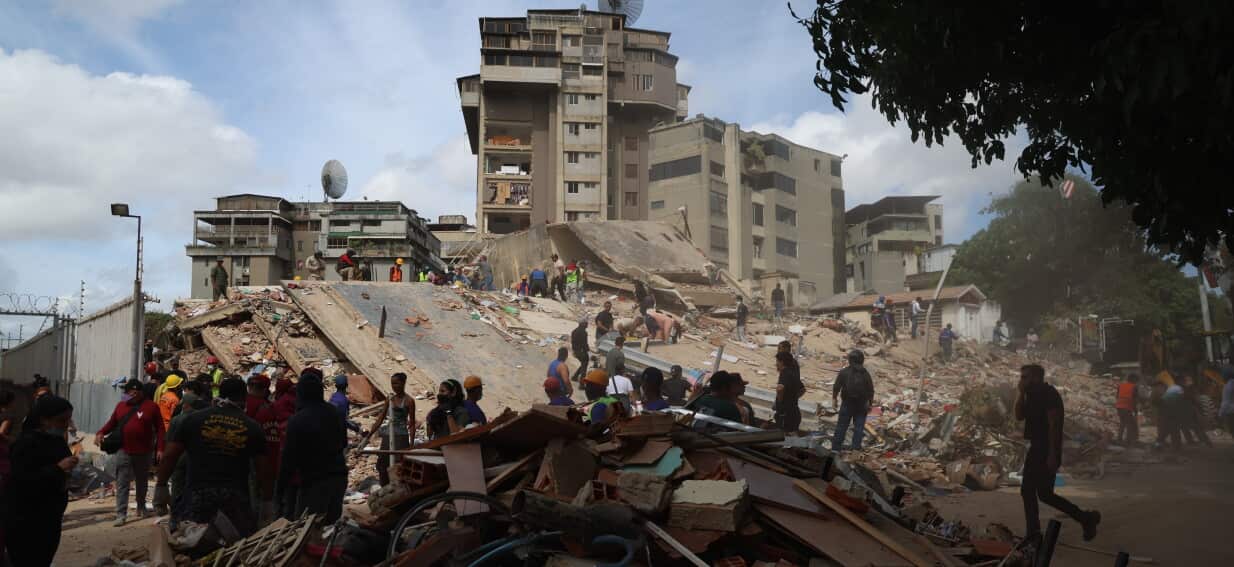
In Millfield, the high street is a checklist of modern British decline. The banks left five years ago. The department store is a boarded-up shell. The only brightly lit storefronts belong to vape shops, betting parlors, and charity outlets. If you stand on the corner at dusk, you do not feel a sense of vibrant community; you feel a heavy, suffocating isolation.
For a long time, the people living here voted along traditional lines. But tradition does not fix a leaky roof or bring back secure manufacturing jobs. When a populist politician arrives in a place like Millfield, they do not talk about GDP growth or fiscal rules. They talk about pride. They talk about betrayal. They point a finger at the distant elites who look down on working-class values.
That message is incredibly potent. It satisfies a hunger to be seen.
The traditional left has often responded to this with lectures. They use complicated sociology to explain why the anger is misplaced. They point to spreadsheets. They talk about global economic forces. But you cannot feed a family on global economic forces, and you cannot build a sense of belonging out of a spreadsheet.
This is where the battle lines are truly drawn. The populist right thrives on the poetry of grievance. To defeat them, the alternative cannot just be a better set of statistics. It has to be a better story.
The King in the North
Andy Burnham did not start his career as a radical outsider. He was the ultimate Westminster insider. A Cambridge graduate, a ministerial advisor, a Cabinet member under New Labour, and a two-time loser of the party leadership race. He was part of the very machine that many northern voters grew to despise.
But his move to the Manchester mayoralty in 2017 triggered a profound transformation. He dropped the stiff, defensive language of Whitehall. He began to speak with a raw, sometimes messy emotionality.
The defining moment of this transformation occurred during the dark autumn of 2020. Standing on the steps of the Bridgewater Hall, surrounded by local leaders, Burnham defied the central government’s lockdown funding package. He accused the government of using the North as a "laboratory for a regional lockdown experiment" that would break businesses and destroy lives.
It was high political drama. More importantly, it was a performance of protection.
For the first time in a generation, people in the North saw a politician willing to take a punch on their behalf. He was no longer just an administrator; he was a shield. That moment cracked open a new way of doing politics. It proved that you could voice the anger of a region without channeling it into hatred of outsiders or minorities.
The Bus as a Weapon
The populist right wins by telling people who to blame. Burnham has attempted to win by showing people what can be built.
His signature achievement is the regulation of the region's buses. For thirty years, private companies ran the routes that made them the most money, leaving poorer estates completely isolated after dark. If you lived in a forgotten suburb, you were effectively trapped.
By bringing the buses back under public control, Burnham did something small that felt massive. He made the daily commute cheaper and more reliable.
This is not glamorous work. It involves thousands of hours of legal battles, contract negotiations, and bureaucratic maneuvering. But the result is deeply human. A grandmother can visit her family without spending a fortune. A young apprentice can take a job across town because the early morning bus actually arrives.
This is the practical counterweight to populist anger. When the right says the system is broken and cannot be saved, Burnham points to the yellow buses and says the system can be made to work for you. It is an argument rooted in utility, not ideology.
But is it enough?
The Limits of the Local
A bus pass cannot cure an identity crisis.
The anger that fuels the populist right goes far deeper than broken infrastructure. It is wound up in a sense of cultural dispossession. People feel that the country they knew is disappearing, that their values are mocked by a metropolitan elite, and that the social contract is completely torn up.
Burnham’s brand of place-based patriotism attempts to answer this. He frequently speaks of northern pride, solidarity, and working-class grit. He positions Manchester as a beacon of fairness.
Yet, as a metro mayor, his powers are fundamentally limited. He cannot rewrite immigration policy. He cannot restructure the national tax system to punish predatory landlords or wealth hoarders. He cannot fix the structural rot of the national social care system.
Consider what happens next: a worker takes a cheap, clean Bee Network bus to a job that still pays minimum wage, on a zero-hours contract, only to return to a damp, rented flat that eats up half their income. The bus is better, but the life remains precarious.
When the structural reality of poverty remains unchanged, the emotional appeals of populism retain their venom. The right offers a grand, national narrative of renewal through exclusion. Burnham offers a regional narrative of renewal through public management. In a straight fight for the soul of an angry nation, the grand narrative often wins.
The Vulnerability of the Middle Ground
The danger for Burnham is that he risks satisfying nobody.
To the hard-bitten Westminster establishment, his emotional outbursts are often viewed with suspicion. They see him as a showman, an opportunist who uses regional grievance to keep himself in the headlines. They worry that his brand of politics fragments national unity, turning region against region in a scramble for resources.
To the radical left, he is still a centrist at heart. They argue that his reforms, while welcome, are mere sticking plasters on the gaping wounds of capitalism. They want a wholesale revolution of the economy, not just cheaper public transport.
Then there are the voters themselves. Trust is a fragile commodity in modern Britain. It takes years to build and seconds to smash. If the Bee Network falters, if crime rises on the trams, or if the economic gap between Manchester's glittering glass towers and the struggling outer towns continues to widen, the narrative crumbles.
The subject is terrifyingly uncertain. We are living through an era where the old political labels have lost their meaning. Left and right are warping into something new, defined more by belonging and alienation than by tax rates and public ownership.
The Long Journey South
Every evening, the trains pull out of Manchester Piccadilly, heading south toward London. They carry students, businesspeople, and politicians back to the center of power.
For decades, the path to political relevance in Britain required you to stay on that train. You had to climb the greasy pole in Westminster, breathe the air of SW1, and conform to the unwritten rules of the capital.
Burnham chose to get off the train.
His gamble is that the future of British politics is not being decided in the division lobbies of Parliament or the television studios of London. It is being decided on the platforms, the high streets, and the factory floors of towns that the elite forgot existed.
The populist right understands this. They have built their entire strategy on exploiting the silence left by Westminster. They are comfortable in the ruins of the old industrial landscape.
The man in the flat cap and the dark coat is trying to build something else in those ruins. He is trying to prove that you can listen to the anger without feeding the dark side of it. He is trying to show that solidarity can be as powerful an emotion as division.
As the rain continues to streak the windows of the Manchester trams, the experiment enters its most dangerous phase. The yellow buses are running. The fares are capped. But the dark tide is still rising at the edges of the city, waiting to see if a coat of paint and a local voice are enough to hold back the storm.