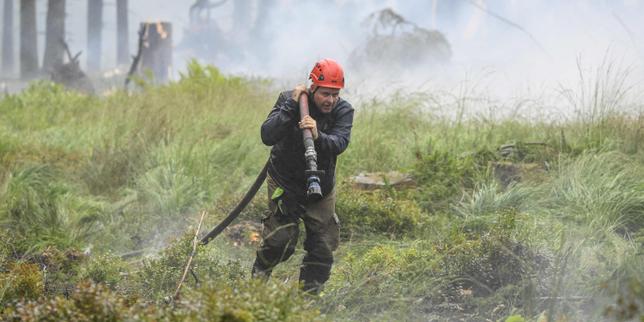
When the smoke clears in Belgium, the public narrative usually focuses on the heroism of the firefighters battling the flames. While these responders risk their lives, the recurring issue of fire flare-ups signals a more systemic fragility in how the nation handles environmental disasters. These incidents are not merely accidents of nature. They are symptoms of outdated infrastructure, strained municipal resources, and a lack of foresight regarding industrial-grade hazards.
The struggle to contain persistent fires often originates in the transition from active suppression to post-incident monitoring. Firefighters are highly trained to knock down walls of flames, but they are frequently forced to pivot to monitoring duties without adequate equipment or personnel to maintain long-term surveillance. When heat sources remain buried under debris, especially in industrial or waste-management zones, oxygen finds a way to feed the embers. The flare-ups reported across various Belgian provinces are rarely unpredictable events. They are the logical result of abandoning sites before they are truly cold.
The Financial Burden Of Exhaustion
Local fire zones operate under tight budgets that prioritize immediate response over prolonged containment. When a major blaze occurs, the financial impact ripples outward. Costs accumulate rapidly as crews are pulled from other stations to cover the gap. This creates a dangerous thinning of services across the region. If a second emergency occurs while the primary site requires constant attention, the response capability is compromised.
The pressure on municipal budgets creates a temptation to declare a site safe prematurely. Public officials want to move on. They want to reopen roads and return to business as usual. Yet, the reality on the ground demands a different approach. Effective management requires sophisticated thermal imaging, heavy machinery to move debris, and personnel dedicated exclusively to monitoring. These components cost money that municipalities rarely have in their emergency contingency funds.
Industrial Hazards And The Urban Blend
Belgium features a dense landscape where industrial zones sit uncomfortably close to residential neighborhoods. A fire at a storage facility or a recycling center is not the same as a structural fire in a home. These sites hold chemical compounds, plastics, and various synthetics that burn at higher temperatures and release toxic plumes.
The strategy of letting these fires burn out or using minimal intervention often backfires. When the toxic runoff seeps into the soil or the persistent smoke forces residents to stay indoors for days, the human cost is high. The authorities struggle because they lack the specific industrial fire expertise needed to stabilize these scenes quickly. Relying on general fire services for complex chemical site management is akin to using a scalpel for open-heart surgery. It is the wrong tool for the task.
The Technological Blind Spot
Despite living in a time of advanced sensors, fire response units often lack access to real-time aerial surveillance or specialized drones that can detect hotspots through deep layers of material. Relying on ground-level visual inspection is a primitive tactic in the face of modern fire risks.
Investment in thermal sensor networks at high-risk facilities would change the equation. If automated systems triggered alerts as soon as temperatures crossed a specific threshold, firefighters could intervene while a problem is still manageable. Instead, the current model requires a massive mobilization once the fire is already visible. This is a reactive posture that guarantees property loss and environmental damage. The technology exists, but the administrative will to mandate its installation across private and public industrial sites is missing.
Training Gaps In Modern Environments
The skill set required to fight a fire today is vastly different from that of twenty years ago. Modern construction materials, insulation, and the widespread use of lithium-ion batteries have fundamentally changed how fires behave and how they must be fought.
Many fire departments in Belgium are built on a tradition of volunteerism and local autonomy. This decentralization was once a strength, allowing for rapid response within tight-knit communities. Now, it acts as a barrier to modernization. Training protocols vary from one station to the next. When a massive incident requires multiple zones to collaborate, the lack of standardized operational procedures leads to communication breakdowns. A cohesive national strategy is absent, leaving individual commanders to improvise solutions on the fly.
Beyond The Heroism Narrative
Media coverage tends to highlight the bravery of the personnel on the front lines. This is necessary, but it diverts attention from the structural failures that put those personnel in impossible situations. Celebrating the effort allows the government to delay systemic reform. It is easier to praise a firefighter than to admit that a department lacks the proper breathing apparatus or the equipment needed to safely excavate a smoldering chemical dump.
The frequency of these fire restarts should serve as an alarm for policymakers. It is time to move away from the model of intermittent emergency intervention toward a model of persistent site management. This requires legislative change that holds industrial owners accountable for the safety of their sites, even after the initial flames are extinguished. It requires regional coordination centers that move beyond local politics to allocate specialized resources where they are actually needed.
We are currently operating on an emergency cycle that is unsustainable. We wait for a crisis, we spend exponentially more to contain it than we would have spent to prevent it, and we repeat the process. True progress will not be measured by how quickly a fire is put out, but by the absence of the conditions that allow it to restart. Until the administrative, financial, and technological barriers are dismantled, the smoke will continue to rise over the Belgian landscape. The risk is not decreasing, and the next large-scale failure is already waiting for the right spark.