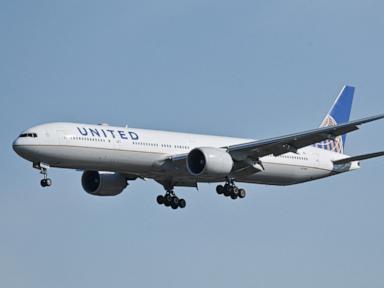
Regulatory Form 13F filings revealed that Berkshire Hathaway significantly increased its equity stake in Delta Air Lines during the third quarter while simultaneously trimming a major holding in the banking sector. For casual market observers, this looks like a standard institutional portfolio rebalance. For anyone who has spent decades tracking the movements of Omaha’s capital allocation machine, it is a glaring contradiction that demands closer inspection.
Warren Buffett and his investment lieutenants, Todd Combs and Ted Weschler, have spent years cultivating a specific philosophy regarding capital-intensive industries and balance-sheet-heavy financial institutions. Buying more of an airline while cutting back on a foundational bank flips two longstanding narratives on their heads.
The Ghost of Airlines Past
To understand the weight of a Berkshire Hathaway airline purchase, you have to remember the history. For nearly three decades, Buffett treated commercial aviation as a financial black hole. After a painful, ill-fated preferred stock investment in USAir in 1989, he famously joked about setting up a toll-free helpline for himself whenever he felt the urge to buy an airline stock.
The core economic flaw of aviation was always obvious. Airlines require massive upfront capital expenditures for aircraft, face volatile and uncontrollable fuel costs, contend with heavily unionized labor forces, and sell a commodity product where consumers routinely book based on the lowest fare.
Then came 2016. Berkshire shocked Wall Street by taking substantial stakes across the four largest U.S. carriers—Delta, American, United, and Southwest. The thesis had shifted. Decades of brutal bankruptcies and mergers had consolidated the domestic market into a functional oligopoly. Capacity discipline had replaced destructive price wars, and ancillary fees had stabilized margins.
That thesis shattered in early 2020. When global air travel ground to a halt, Berkshire dumped its entire airline portfolio at a steep loss. Buffett stepped up to the virtual podium at the annual shareholder meeting and admitted the world had changed for airlines, noting that the future had become far too uncertain to justify holding equity in businesses that might need massive government bailouts or dilutive capital raises just to survive.
Against that backdrop, increasing a position in Delta Air Lines is never a casual trade. It signals that someone inside Berkshire’s inner circle believes the structural economics of Delta have detached from the broader, historically treacherous airline sector.
Why Delta Stands Apart From the Pack
If Berkshire is willing to wade back into aviation, Delta is the only logical entry point. Over the past decade, the Atlanta-based carrier has systematically engineered a business model designed to insulate itself from the traditional cyclicality of passenger travel.
The secret weapon is not flying planes. It is brand loyalty and financial engineering.
Delta’s co-branded credit card partnership with American Express functions less like a travel perk and more like a high-margin financial services business. Through this arrangement, American Express pays Delta billions of dollars annually to purchase SkyMiles, which are then distributed to cardholders as rewards. This revenue stream carries vastly higher margins than selling economy airline tickets and behaves far more predictably during economic slowdowns.
Furthermore, Delta has aggressively segmented its cabin offerings. By leaning heavily into premium seating—Delta One, First Class, and Comfort+—the carrier has reduced its reliance on price-sensitive leisure travelers. Corporate travelers and affluent leisure flyers have proven far more willing to absorb fare increases, allowing Delta to pass along rising labor and maintenance costs without destroying demand.
- Pricing Power: High-margin premium cabins generate a disproportionate share of total passenger revenue.
- Cash Flow Stability: Multi-billion-dollar annual remuneration from American Express acts as a buffer against fuel spikes.
- Operational Reliability: Consistent on-time performance and lower cancellation rates reduce the costly ripple effects of crew displacements and passenger compensation.
When an institutional buyer looks at Delta today, they are not looking at a legacy carrier praying for cheap jet fuel. They are looking at a consumer loyalty powerhouse that happens to operate a fleet of aircraft.
The Mechanics of the Bank Trim
While the Delta accumulation grabs the headlines, the simultaneous reduction in a key bank holding tells an equally critical story about how Berkshire views macroeconomic risk.
Banks have been the bedrock of Berkshire’s equity portfolio for generations. From Wells Fargo and Bank of America to U.S. Bancorp and BNY Mellon, Buffett historically favored well-capitalized lenders with cheap deposit bases and conservative underwriting cultures. Banks print money when the yield curve is normal and credit defaults remain low.
Trimming a major bank stake in the third quarter points to a calculated assessment of valuation, regulatory pressure, and interest rate dynamics.
First, consider the valuation gap. Following strong rallies in financial stocks driven by expectations of economic resilience, major money-center banks began trading at multiples that left little margin of safety. Berkshire rarely holds onto a full position when a stock’s price outruns its underlying intrinsic value growth.
Second, the regulatory environment for large banks has grown increasingly hostile. Proposed capital rules—often referred to as the Basel III Endgame—threaten to force the largest U.S. financial institutions to hold significantly more capital against their risk-weighted assets. When a bank is forced to hoard capital on its balance sheet rather than deploy it into loans or share buybacks, its Return on Equity (ROE) mathematically compresses.
Third, the deposit war is far from over. Even as benchmark interest rates shift, consumers and corporate treasurers have become permanently conditioned to move idle cash out of zero-interest checking accounts and into higher-yielding money market funds or Treasury bills. Banks are forced to pay up to retain deposits, squeezing net interest margins from the bottom up.
Reading the 13F Tea Leaves
A common mistake among retail investors and financial commentators is treating every line item in a Form 13F as a direct edict from Warren Buffett himself. In reality, Berkshire’s equity portfolio is split into distinct buckets.
Buffett manages the massive, multi-billion-dollar core positions—companies like Apple, Coca-Cola, and American Express—where deploying tens of billions of dollars is required to move the needle for a conglomerate of Berkshire’s sheer size. Meanwhile, Todd Combs and Ted Weschler each independently manage multi-billion-dollar sleeves of the portfolio, operating with total autonomy over their buy and sell decisions.
When a position size falls within the low-to-mid single-digit billions, it almost certainly bears the fingerprints of Combs or Weschler. Both managers have demonstrated a greater willingness than Buffett to trade around valuation swings, enter complex turnaround stories, and invest in businesses where the competitive moat is built on modern data, loyalty ecosystems, or technological scale rather than 20th-century industrial dominance.
| Portfolio Factor | Buffett Core Approach | Combs and Weschler Approach |
|---|---|---|
| Position Sizing | $10 billion to $100+ billion | $500 million to $5 billion |
| Holding Period | Decades ("Forever" bias) | Multi-year (Valuation-sensitive) |
| Sector Comfort | Consumer staples, energy, mega-banks | Tech-enabled services, specialized retail, airlines |
| Primary Catalyst | Deep, unassailable brand moats | Free cash flow inflection and capital allocation |
Recognizing who pulls the trigger matters. If Combs or Weschler initiated and expanded the Delta stake, it reflects a medium-term conviction that Delta’s free cash flow yield is drastically mispriced by a market still traumatized by pandemic-era airline losses. Conversely, trimming a massive bank holding often reflects top-down risk management across the entire conglomerate, especially when Berkshire’s insurance subsidiaries already carry immense exposure to interest rates and fixed-income markets through their massive Treasury bill portfolio.
The Overlooked Macro Signal
Strip away the individual stock tickers and look at the broader capital allocation message embedded in these third-quarter moves. Berkshire Hathaway has been steadily building an unprecedented fortress of cash and short-term U.S. Treasury bills, routinely eclipsing $300 billion in liquidity.
Selling down a major bank stock while sitting on hundreds of billions in cash is a clear statement about systemic risk. Banks are inherently leveraged entities. A standard commercial bank operates with roughly ten dollars of assets for every one dollar of tangible equity. If commercial real estate defaults accelerate, or if consumer credit card delinquencies spike due to persistent inflation, that leverage works in reverse with devastating speed.
By reducing exposure to leveraged financial balance sheets, Berkshire insulates itself from credit cycle deterioration. At the exact same time, buying into Delta suggests confidence that the high-end consumer—the demographic driving premium cabin bookings and American Express card spend—remains financially intact.
It is a barbell strategy executed at the highest level. On one end, shed leveraged financial risk where regulatory headwinds cap the upside and credit cycles threaten the downside. On the other end, buy into a cash-generating travel monopoly serving the wealthiest tier of consumers, all while keeping a mountain of dry powder earning risk-free yields in short-term government debt.
The Risks That Could Break the Thesis
No institutional trade is bulletproof, and betting on an airline—even the best-run airline in North America—carries inherent hazards that no loyalty program can entirely erase.
The most immediate threat is labor cost inflation. Pilot, flight attendant, and mechanic contracts signed across the industry over the past few years permanently reset the fixed cost base of commercial aviation. While Delta has successfully absorbed these higher wages during periods of strong travel demand, fixed labor costs become a massive anchor the moment ticket pricing softens.
Geopolitical volatility presents a second, unhedgeable risk. Jet fuel remains one of Delta’s largest operating expenses. Unlike competitors that rely purely on financial derivatives to hedge fuel costs, Delta famously bought its own oil refinery in Trainer, Pennsylvania, back in 2012 to manage crack spreads. Even with that operational hedge, a major supply shock in global crude markets rapidly erodes operating margins before airlines can adjust ticket prices.
Finally, there is the danger of industry-wide capacity indiscipline. Delta does not operate in a vacuum. When ultra-low-cost carriers or rival legacy airlines flood domestic routes with excess seats to defend market share, fare wars inevitably break out. Even premium-heavy carriers feel the gravitational pull when competitors slash prices to fill planes.
For the bank holding being trimmed, the counter-argument is equally straightforward. If the Federal Reserve successfully engineers a soft landing, if yield curves steepen positively, and if regulatory bodies water down the toughest capital requirements, large banks could experience a multi-year boom in investment banking fees, loan growth, and share repurchases. Selling too early means leaving substantial upside on the table.
What Institutional Moves Actually Mean for Individual Investors
Watching Berkshire Hathaway’s quarterly filings is a favorite pastime on Wall Street, but blindly mimicking 13F disclosures is a flawed strategy. By the time a 13F is filed with the Securities and Exchange Commission, the data is already up to 45 days old. The market reacts instantly to the headline, pricing in the "Buffett bump" long before an individual investor can execute an order.
Instead of treating these filings as a shopping list, serious analysts use them as a diagnostic tool to stress-test their own market assumptions.
Look at the underlying logic driving the divergence between Delta and the banking sector. Ask yourself where the true pricing power resides in the current economy. Traditional lenders are fighting a two-front war against regulatory capital constraints and rising deposit costs, turning money itself into an increasingly expensive commodity. Meanwhile, businesses that own direct, deeply entrenched relationships with affluent consumers—and monetize those relationships through recurring, high-margin ecosystem partnerships—command the kind of cash flow durability that value investors prize above all else.
Berkshire’s third-quarter adjustments are not an endorsement of the airline industry as a whole, nor are they a panic-driven exit from American banking. They represent a surgical rotation out of leveraged balance-sheet risk and into a mispriced cash-flow engine. Watch the free cash flow margins, track the credit card remuneration growth, and ignore the noise surrounding the ticker symbols themselves.