Masoud Pezeshkian arrived in New York with a specific, albeit desperate, mandate to resuscitate the Iranian economy by flirting with the West. He left with a bitter taste of diplomatic dust. During a high-stakes encounter with French President Emmanuel Macron, the Iranian leader did not just express disagreement; he leveled a direct charge of treachery. Pezeshkian accused the United States of "stabbing from behind," a phrase that signals a profound breakdown in the back-channel communications that have kept the region from total implosion for years.
This was not a scripted outburst for a domestic audience. It was a raw admission that the reformist wing in Tehran feels it was lured into a trap of restraint while its regional strategic depth was systematically dismantled.
The Architecture of a Diplomatic Ambush
The timeline of this friction is critical. Pezeshkian’s administration took office on a platform of "constructive engagement." For the Iranian hardliners, this was always a fool’s errand, but the Supreme Leader gave it the green light because the internal economic pressure—driven by sanctions and a devalued rial—had become a threat to the regime's survival.
The "stab" Pezeshkian referred to involves a specific sequence of perceived broken promises. Tehran claims that Western intermediaries, primarily via European channels, signaled that if Iran exercised restraint following the assassination of Hamas leader Ismail Haniyeh on Iranian soil, a ceasefire in Gaza would be finalized. Iran waited. The ceasefire never came. Instead, the conflict expanded into Lebanon, and the leadership of Hezbollah was decimated.
From Pezeshkian’s perspective, the U.S. used the prospect of diplomacy as a sedative to keep Iran on the sidelines while Israel fundamentally shifted the regional balance of power.
Macron’s Role as the Fractured Bridge
Emmanuel Macron has long attempted to position France as the "honest broker" between Washington and Tehran. It is a role he relishes, but one that has increasingly little currency in a world of hard-power shifts. During the meeting, Macron reportedly pushed for "de-escalation," a word that has become a trigger for Iranian officials who view it as a synonym for "unilateral surrender."
France finds itself in an impossible bind. It wants to maintain the nuclear non-proliferation framework (the remnants of the JCPOA), but it cannot deviate from the U.S.-led security architecture that views the "Axis of Resistance" as a primary threat. Macron’s inability to offer Pezeshkian any tangible sanctions relief or security guarantees rendered the meeting a theater of the absurd. The French President spoke of peace; the Iranian President spoke of betrayal.
The Death of the Reformist Narrative
The internal fallout in Tehran will be more significant than the diplomatic spat itself. Pezeshkian is now an exposed man. By leaning into the "stab from behind" rhetoric, he is trying to preempt the inevitable onslaught from the Islamic Revolutionary Guard Corps (IRGC).
The IRGC’s argument is simple: diplomacy is a weapon used by the West to disarm the Islamic Republic. They point to the 2015 nuclear deal and the subsequent 2018 withdrawal by the Trump administration as Exhibit A. They will now use the New York failure as Exhibit B. If Pezeshkian cannot prove that "constructive engagement" brings home the bread, his presidency will be reduced to a figurehead role while the security apparatus takes full control of the foreign policy steering wheel.
A Shift Toward the Eastern Bloc
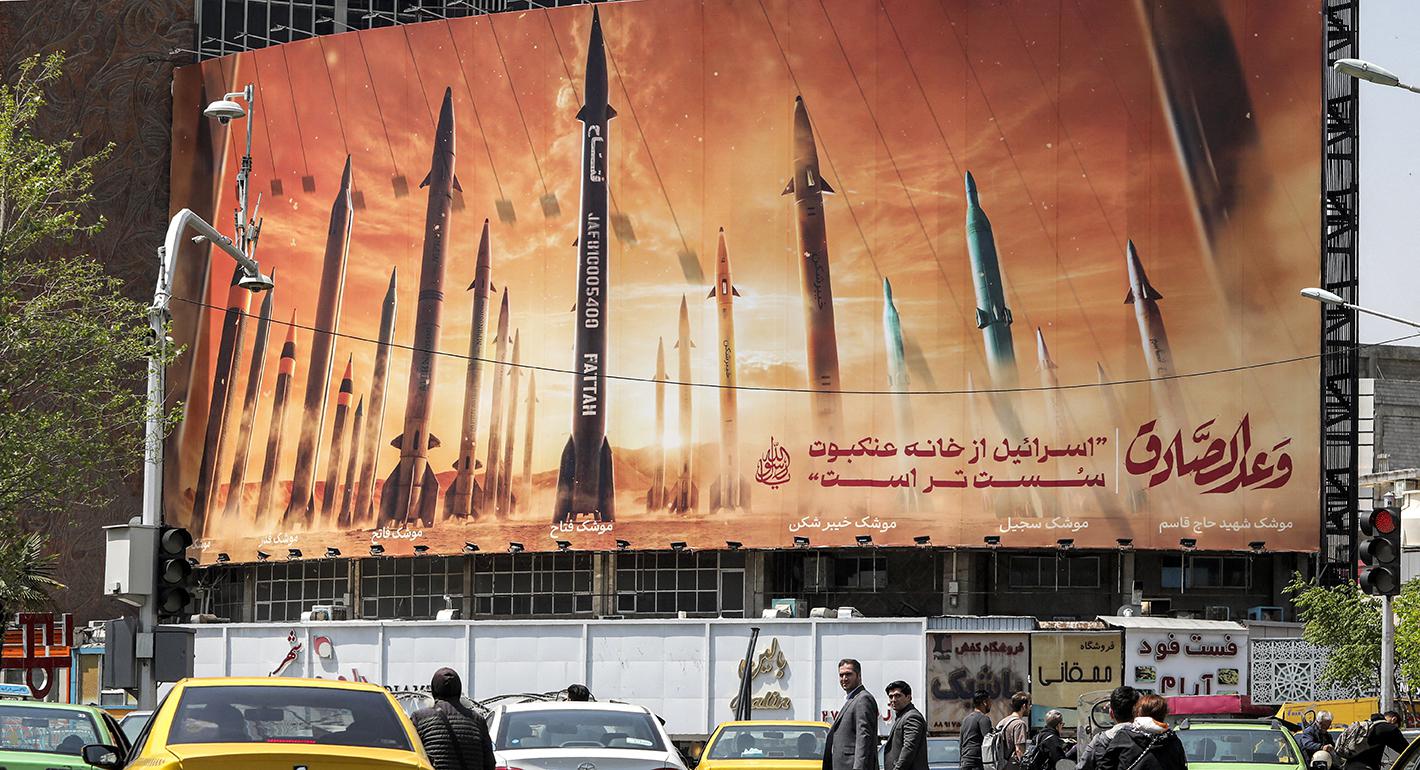
When the West "stabs," the East offers a bandage—at a price. Pezeshkian’s frustration is a direct catalyst for Iran’s accelerated pivot toward Moscow and Beijing. We are seeing a structural realignment where Iran no longer views the European "E3" (France, Germany, UK) as independent actors, but as subordinates to American strategic interests.
The upcoming Comprehensive Strategic Partnership Treaty between Russia and Iran is the logical endpoint of this disillusionment. If Tehran concludes that talks with Macron or U.S. representatives are a dead end, they will double down on military cooperation with the Kremlin. This includes the transfer of ballistic missiles and drone technology in exchange for advanced Russian fighter jets and air defense systems like the S-400. This is not a hypothetical shift; it is the physical manifestation of a failed Western diplomatic strategy.
The Nuclear Brinkmanship Gambit
The most dangerous byproduct of this perceived betrayal is the shortened path to a nuclear weapon. For decades, the debate in Tehran was whether a nuclear deterrent was worth the economic isolation. That debate is ending.
If the Iranian leadership believes that they were "stabbed" while attempting to negotiate, the faction advocating for the "ultimate deterrent" gains total credibility. They argue that if Iran had a nuclear umbrella, Ismail Haniyeh would not have been killed in a Tehran guest house, and the leadership of their closest ally, Hezbollah, would still be intact.
The "stab from behind" isn't just a grievance about a missed ceasefire; it's a realization that the current status quo offers Iran no security.
The Economic Mirage
Pezeshkian’s primary goal was to lift the shadow of the Financial Action Task Force (FATF) blacklisting and the primary oil sanctions. He needed a win to show the Iranian public that their votes mattered. Instead, he returned to a country where the inflation rate hovers near 40% and the youth population is increasingly disconnected from the revolutionary ideology.
The tragedy of the Pezeshkian presidency may be that he is the right man at the wrong time. He is a heart surgeon who wants to operate on a patient that has already decided to walk out of the hospital and join a street fight. By accusing the U.S. of treachery in front of the French, he was effectively shouting into a void. The Western policy toward Iran has shifted from "containment through engagement" to "degradation through attrition."
The Illusion of Private Channels
For years, the U.S. and Iran have utilized the "Oman channel" to trade prisoners and manage tensions. These talks relied on a thin layer of trust—the idea that even if both sides were enemies, they would not lie about the basic "rules of the game."
Pezeshkian’s "stab" comment suggests those rules have been shredded. When trust is removed from the equation, the only remaining language is kinetic. We are entering a phase where the "back-channel" is no longer a tool for peace, but a tool for disinformation. Each side now assumes the other is using the talks to buy time for a military strike or a regional maneuver.
Redefining the Regional Hegemony
The West's calculation seems to be that Iran is too weak to respond effectively. They see an aging Supreme Leader, a fractured economy, and a military whose proxies are under fire. This might be a catastrophic misread of Persian political psychology. History shows that when the Iranian state feels cornered and betrayed, it does not collapse inward; it lashes out.
The "stab from behind" will be the foundational myth for the next decade of Iranian foreign policy. It justifies the "Look to the East" strategy. It justifies the pursuit of high-grade uranium enrichment. And it justifies a more aggressive, less predictable posture in the Persian Gulf and the Bab el-Mandeb strait.
Macron’s fireplace chats cannot fix a relationship where one side believes the other is holding a hidden blade. The diplomatic theater in New York didn't just fail to reach a solution; it clarified the impossibility of one. The era of the "grand bargain" is dead, replaced by a cold, calculated preparation for a confrontation that neither side can afford, yet both sides now view as inevitable.
Iran has stopped looking for a seat at the table and has started looking for the exit.