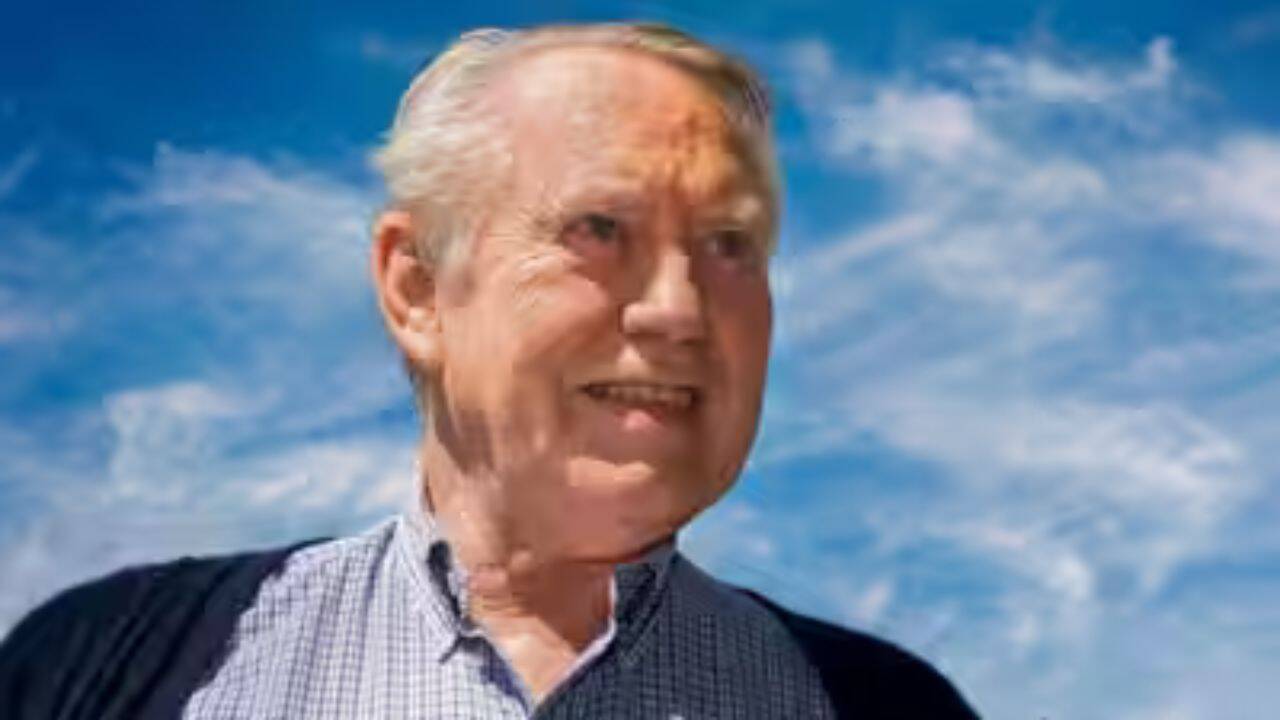
Chuck Feeney did not want your admiration. He wanted your confusion. When the co-founder of Duty Free Shoppers quietly transferred his multi-billion-dollar fortune into an anonymous charitable foundation in the 1980s, he committed an act of financial heresy. He flew economy, wore a fifteen-dollar watch, and lived in rented apartments while moving billions to universities, hospitals, and human rights organizations across five continents.
The corporate press loves to frame Feeney as an eccentric saint, an anomaly in an era of gilded megalomania. That framing is a convenient deflection. Feeney was not an anomaly. He was an indictment. He exposed the structural rot of modern capital accumulation, proving that hoarding wealth past a certain threshold is not a triumph of acumen, but a failure of imagination. Meanwhile, you can find similar events here: Why Banning the Exit Tax Destroys UK Innovation.
We live in a culture that treats net worth as a scoreboard, worshiping individuals who treat national GDPs as pocket change. Yet Feeney understood a fundamental reality that contemporary billionaires actively ignore. Capital stagnates when it pools in too few hands.
The Arithmetic of Absolute Excess
Let us examine the mechanics of extreme accumulation. A person with ten million dollars can buy security, comfort, and options. A person with ten billion dollars owns a distortion field. They distort real estate markets, purchase political influence, and lock vast sums of capital into sterile financial instruments that generate more abstract numbers rather than productive societal output. To see the full picture, check out the excellent report by Investopedia.
Feeney recognized that money has diminishing marginal utility. Past the point where basic survival, security, and comfort are guaranteed, every additional dollar ceases to solve a human problem and instead becomes an administrative burden. His famous maxim that you cannot wear two pairs of shoes at once is often quoted as folksy wisdom, but it is actually a hard economic critique.
Consider a hypothetical scenario. If an executive hoards fifty billion dollars in privately held stock, that capital sits dormant relative to public welfare. It generates wealth for the individual, but it starves public education systems, medical research labs, and infrastructure grids of the liquidity they require to function. Feeney liquidated his multi-billion-dollar stake in Duty Free Shoppers in secret precisely because he knew that holding onto it would corrupt both the money and himself.
He did not wait until his deathbed to disgorge his assets. He invented the operational philosophy of giving while living. The traditional model of philanthropy is inherently self-serving. Dynastic foundations are structured to outlive their creators, acting as perpetual tax shelters and monuments to corporate legacy. They hoard capital under the guise of charity, spending a legally mandated minimum percentage each year while the principal swells unchecked.
Feeney rejected this model entirely. Through The Atlantic Philanthropies, he mandated a spend-down policy. He ordered the foundation to burn through its entire multi-billion-dollar endowment within his lifetime. In 2020, he signed the dissolution papers after the last dollar was deployed.
There is no Atlantic Philanthropies tower today. There is no perpetual endowment feeding bureaucracy or paying exorbitant salaries to professional fund managers. There are only university campuses in Ireland, public health networks in Vietnam, and advanced research facilities in California that exist because one man decided that zero was the ultimate target.
The Pathology of the Modern Megafoundation
Look at how the ultra-wealthy manage their fortunes today. We are treated to high-profile announcements of massive pledges that span generations, managed by layers of bureaucracy that outlive the problems they claim to solve. Modern philanthropy has largely devolved into a public relations exercise, a mechanism for image rehabilitation and systemic preservation.
When a technology titan establishes a perpetual trust, they are retaining control over societal priorities from beyond the grave. They decide which diseases get researched, which schools get funded, and which political ideologies receive backing, all while enjoying tax exemptions subsidized by ordinary workers.
Feeney operated in direct defiance of this paradigm. For decades, his donations were entirely anonymous. He explicitly prohibited recipient institutions from putting his name on buildings. He understood that the moment philanthropy becomes about branding, it stops being about charity and starts being about marketing.
His anonymity was so absolute that when his business partners discovered he had given away his entire share of their retail empire, it triggered a corporate crisis. They thought he had lost his mind. In reality, he had simply recognized that the accumulation game is rigged to become meaningless once won.
Why the Elite Fear the Feeney Model
Modern billionaires praise Chuck Feeney in public while ignoring his blueprint in private. Warren Buffett and Bill Gates cite him as an inspiration, yet the cumulative wealth of the global elite continues to scale to astronomical heights. They adopt the Giving Pledge, promising to give away their fortunes upon death, but their bank accounts continue to multiply faster than they can write checks.
The reason for this hesitation is simple. Giving while living requires a loss of control. It requires dismantling the ego. To spend down an entire fortune while you are still alive means letting go of the levers of power that accompany extreme wealth. Most billionaires would rather retain their dominance and let future committees handle the cleanup.
Feeney understood that money is a tool, not an identity. By stripping himself of his assets, he exposed the profound insecurity of those who believe their worth is tethered to their net worth.
The next time a titan of industry unveils a multi-decade philanthropic initiative with their own name emblazoned across the press release, remember the man who spent his final years living in a modest San Francisco apartment with no car, having deliberately engineered his own financial ruin for the betterment of strangers. He proved that the only ethical way to handle a massive fortune is to destroy it by distributing it.