You sit down. Your phone buzzes. You check a notification. Ten minutes vanish.
Then you open a browser tab. You jump to another app. You find yourself scrolling through things you don't even care about. You feel an itch under your skin. You are restless.
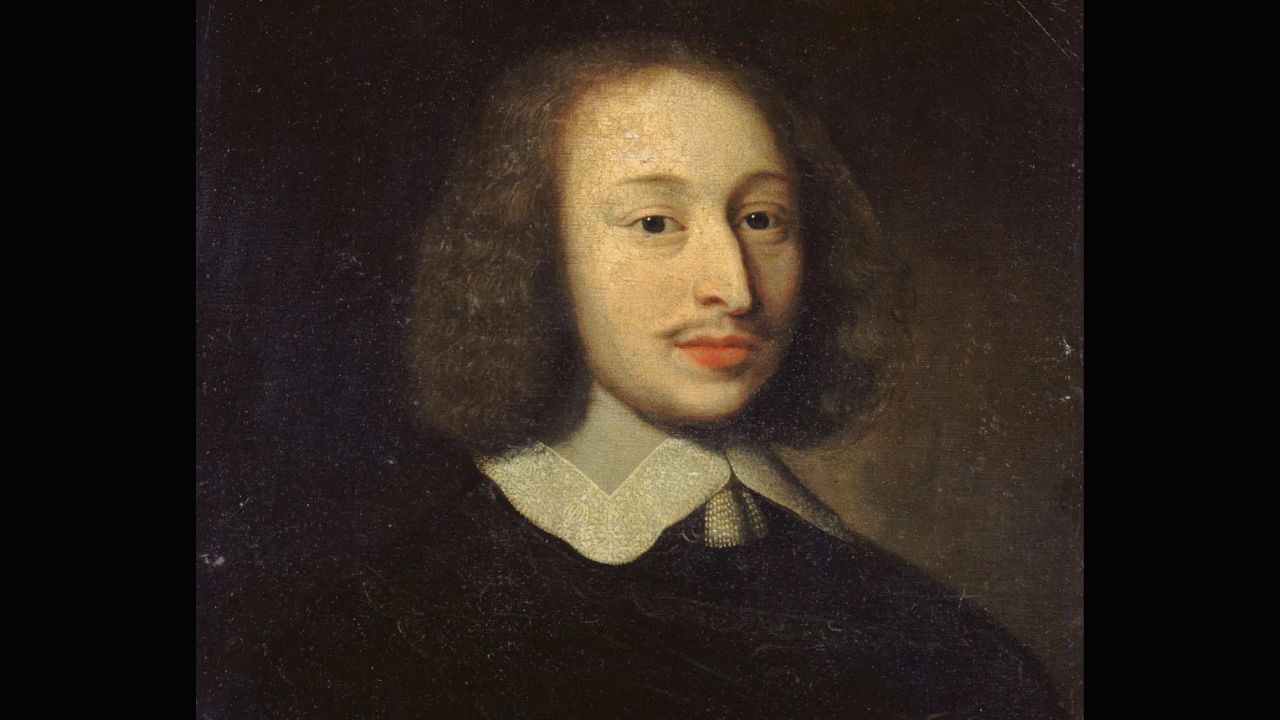
Blaise Pascal diagnosed this exact sickness centuries ago. The French mathematician and philosopher wrote down a sentence that stings today just as much as it did in the seventeenth century. All of humanity's problems stem from man's inability to sit quietly in a room alone.
He wrote that in his collection of thoughts known as the Pensées. He didn't have smartphones, push notifications, or algorithmic feeds pushing infinite dopamine straight into his eyes. Yet he spotted the root cause of human misery. We cannot stand our own company. We will invent wars, chase meaningless status, and bankrupt ourselves just to avoid five minutes of pure, uninterrupted silence with our own thoughts.
Think about how you spend your evenings. Do you walk from your car to your front door in silence? Or do you immediately jam AirPods into your ears? Do you cook dinner with a podcast playing? Do you eat breakfast while scanning headlines?
We treat silence like a threat. We drown out the quiet because the quiet forces us to look inward. And looking inward often hurts.
The Cost of Constant Distraction
Most self-help advice tells you to manage your time better. It hands you a planner or a productivity app. It misses the point entirely.
Your issue isn't time management. Your issue is escape.
When you refuse to sit quietly in a room alone, you outsource your emotional regulation to external noise. Every time you feel a twinge of boredom, anxiety, or doubt, you grab a screen. You treat minor psychological discomfort like an emergency.
Psychologists call this experiential avoidance. You dodge your own internal experiences. But dodging those experiences doesn't make them go away. It just lets them fester in the background while you exhaust your cognitive energy on trivial distractions.
Look at what happens in professional settings. Leaders make terrible decisions because they can't bear a moment of stagnation. They launch unnecessary projects, call endless meetings, and restructure teams just to look busy. They equate motion with progress. Pascal saw this exact panic in the courts of seventeenth-century France. Nobles gambled fortunes and fought duels not because they loved risk, but because sitting still in a room forced them to contemplate their own mortality and insignificance.
We laugh at seventeenth-century aristocrats wearing powdered wigs while doing stupid things for entertainment. But you scroll social media until two in the morning for the exact same reason. You are terrified of the dark corners of your own mind.
What Pascal Actually Meant
People often misinterpret this quote as a call for extreme asceticism. They think Pascal wants everyone to become a monk living in a stone cell with zero stimulation.
That is wrong.
Pascal lived in the real world. He invented an early mechanical calculator, solved complex geometric problems, and engaged in fierce intellectual debates. He knew people had to work, build, and create.
His point was about the motivation behind our actions.
Ask yourself a brutal question. Are you building your career, creating art, or pursuing goals because they matter to you? Or are you just running away from yourself?
If you stripped away every screen, every project, every social obligation, and every distraction for forty-eight hours, what would happen? Would you feel peace? Or would you crawl out of your skin within the first hour?
If the answer is the latter, your life is built on a foundation of avoidance. You are using external achievements as noise-canceling headphones.
The Lost Art of Doing Nothing
We have pathologized stillness. If you sit on a park bench staring at trees for twenty minutes without a phone, people assume you are depressed or having an existential crisis.
Our culture demands constant output. We measure human value in billable hours, steps walked, and tasks checked off a list. Rest has become a luxury brand. You have to earn your right to breathe, or so the marketing tells you.
This mindset creates a chronic state of low-grade panic. You feel guilty when you relax. You feel anxious when you work. You are trapped in a loop of constant motion that leads nowhere of actual substance.
If you want to break this cycle, you have to practice radical stillness. It feels uncomfortable at first. Your brain will throw a tantrum. It will demand entertainment, novelty, and stimulation.
Ignore it.
How to Test Yourself Today
You don't need to book a ten-day silent retreat in the mountains. Start small. Build micro-doses of quiet into your normal day.
- Drive to the grocery store with the radio off. No music. No talk shows. Just the sound of the tires on the asphalt. Notice where your mind wanders. Does it go to anxiety about work? Does it replay an embarrassing conversation from three years ago? Let it go there. Face it.
- Sit on your couch for ten minutes after you wake up without reaching for your phone. Drink your coffee or water in total silence. Watch the light change in the room.
- Eat a meal alone without a podcast or a video playing in the background. Pay attention to how your brain scrambles for entertainment while your fork moves from your plate to your mouth.
Notice the urge to reach for a distraction. That urge is the exact problem Pascal pointed out centuries ago. That twitch in your finger is the symptom of a restless soul.
When you learn to sit quietly in a room alone, something strange happens. The panic starts to fade. You stop running from your own thoughts. You realize that the monsters hiding in the silence aren't as terrifying as you thought they were.
You stop needing constant noise to drown out your own existence. You finally learn how to just be.