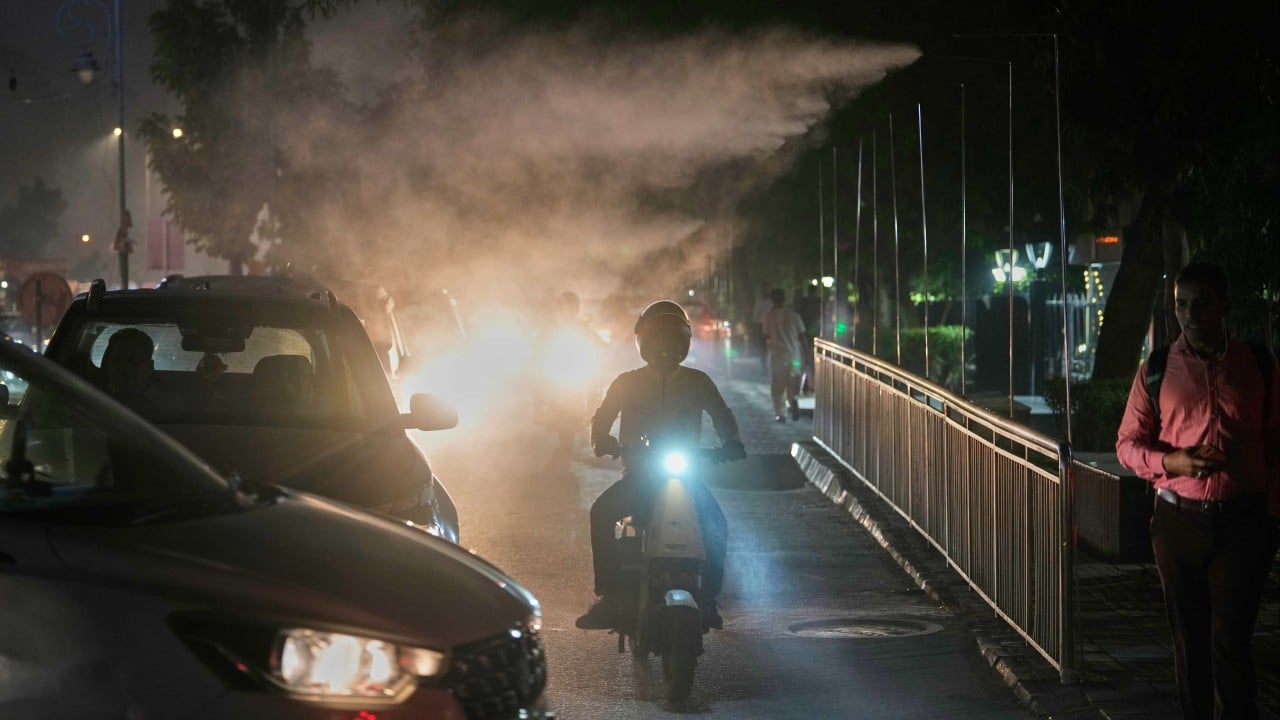
Every October, the headlines write themselves. A sensor in New Delhi flashes purple, a reporter pulls up an Air Quality Index tracker, and within hours, the global press publishes the exact same story: Air in India’s capital ranked world’s most polluted on eve of Diwali.
It is predictable. It is dramatic. And as an explanation of why 30 million people in the National Capital Region are choking on particulate matter every autumn, it is fundamentally dishonest.
Notice the exact phrasing in that headline. On the eve of Diwali.
The firecrackers haven't even been lit yet, and the city is already suffocating. Yet the annual media ritual treats the festival of lights as the primary villain of Delhi’s respiratory crisis, turning a complex, year-round atmospheric and policy failure into a convenient, 48-hour cultural scapegoat.
When you blame a single religious festival for an airshed crisis spanning the entire Indo-Gangetic Plain, you give municipal bureaucrats, industrial polluters, and agricultural policymakers a free pass for the other 363 days of the year.
The Physics of the Indo-Gangetic Trap
To understand why Delhi’s air turns lethal in late October and November, you have to stop looking at firecrackers and start looking at topography and thermodynamics.
Delhi sits in a landlocked basin bordered by the Himalayas to the north. During the summer, intense heat creates convection currents that push pollutants high into the atmosphere, where winds disperse them. By mid-October, the monsoon retreats, temperatures drop, and the entire region experiences a meteorological phenomenon called a temperature inversion.
Normally, air gets colder the higher you go. During an inversion, a layer of warm air acts like a lid over a pocket of cold, dense air trapped near the ground. The boundary layer—the vertical slice of atmosphere where pollutants can mix and dilute—shrinks from several kilometers down to a few hundred meters.
Imagine a scenario where you keep the exact same number of cars, factories, and construction sites running in a city, but you suddenly shrink the ceiling of the room by eighty percent. The concentration of smoke spikes immediately, even if nobody lights a single sparkler.
I have spent over a decade analyzing urban airshed data across South Asia, and the biggest mistake rookie analysts make is treating emissions as static while ignoring atmospheric mixing height. When wind speeds drop below 1 meter per second in late October, Delhi becomes a sealed bowl. Everything emitted inside that bowl stays inside that bowl.
The Baseline Burden Nobody Wants to Audit
If you want to fix a failing balance sheet, you audit the recurring overhead, not the one-off holiday party. Yet the dominant narrative around Delhi’s air quality obsesses over an acute spike while ignoring the chronic baseline.
According to source apportionment studies conducted by institutions like the Indian Institute of Technology (IIT) Kanpur, The Energy and Resources Institute (TERI), and the System of Air Quality and Weather Forecasting and Research (SAFAR), Delhi’s baseline PM2.5 load is driven by four relentless engines:
- Vehicular Exhaust and Road Dust: Over 10 million registered vehicles operate in Delhi, alongside millions of older commercial trucks skirting or entering the city borders. Heavy-duty diesel engines emit black carbon and nitrogen oxides, while poorly paved shoulders churn up resuspended coarse dust.
- Industrial Emissions and Power Plants: Thousands of small- and medium-scale industrial units across the NCR—brick kilns, metal smelters, textile dyers—burn petcoke, furnace oil, and low-grade coal, often operating outside formal regulatory oversight.
- Construction and Demolition: Rapid urban sprawl generates massive amounts of crustal dust. Uncovered building sites and open transport of sand and cement ensure PM10 levels remain hazardous even in the middle of spring.
- Biomass and Municipal Waste Burning: Millions of low-income residents burn wood, dung, and trash for cooking and winter heating because clean alternatives remain unaffordable or inaccessible.
Firecrackers are composed of heavy metals—barium, strontium, copper, potassium—and sulfur compounds. When ignited, they cause a violent, short-term spike in fine particulate matter (PM2.5) and toxic aerosols. Nobody denies that. If you have asthma, Diwali night is genuinely dangerous.
But here is the distinction the clickbait headlines erase: firecrackers are an acute shock layered on top of a chronically poisoned baseline.
When the air quality index is already sitting at 350 ("Very Poor") on the eve of Diwali, pushing it to 450 ("Severe") is not the origin of the crisis. It is the overflow of a bucket that was already filled to the brim by policy negligence.
Why Crop Burning Is a Symptom, Not Just a Crime
Once journalists finish blaming firecrackers, they pivot to their second favorite villain: farmers in Punjab and Haryana burning paddy stubble.
Every autumn, satellite imagery from NASA’s VIIRS sensors lights up with thousands of red dots across northwestern India, showing agricultural fires whose smoke drifts southeast toward Delhi. Depending on wind direction and speed, SAFAR data shows stubble burning can contribute anywhere from 5% to over 35% of Delhi’s daily PM2.5 load during peak burn weeks.
The lazy consensus paints these farmers as reckless arsonists. That view is completely detached from agricultural economics.
In 2009, state governments in Punjab and Haryana passed preservation laws prohibiting farmers from sowing paddy before mid-June to prevent the depletion of groundwater tables before the monsoon arrived. That policy saved water, but it compressed the harvest window. Farmers now have roughly 15 to 20 days between harvesting rice in late October and sowing wheat in November.
If they miss that window, wheat yields plummet.
Manual harvesting is too slow and expensive. Combine harvesters leave behind thick stalks of silica-rich rice straw that cattle cannot easily digest. Renting a Happy Seeder or Super SMS machine—implements that mulch stubble directly into the soil—requires capital and tractor horsepower many smallholders lack, and state subsidies rarely reach them before the planting deadline hits.
For a farmer operating on razor-thin margins, a matchstick costs nothing and clears a field in two hours.
Criminalizing farmers with fines and police cases without fixing the supply chain of crop-residue machinery is pure political theater. You cannot legislate away rational economic behavior when survival is on the line.
Dismantling the Common Myths About Delhi’s Air
People searching for answers about Delhi’s pollution crisis are routinely fed bad science and worse policy prescriptions. Let’s tear down the most persistent misconceptions.
Does banning firecrackers actually clean Delhi’s air?
No. A localized ban on firecrackers prevents a temporary 24-to-48-hour spike in toxic heavy metals, which reduces immediate emergency room visits for acute respiratory distress. However, it does zero to alter the seasonal trajectory of the city’s air quality. In years with strict enforcement and wet weather, Delhi still plunged into the "Severe" category within days because the structural sources—diesel freight, industrial boilers, and agricultural smoke—remained untouched.
Why are smog towers and anti-smog guns a waste of taxpayer money?
Because atmospheric volume is massive, and basic physics laughs at giant outdoor air purifiers. Smog towers cost millions of dollars to build and operate, yet independent monitoring—including reviews by the Delhi Pollution Control Committee itself—has repeatedly shown their filtration impact drops to near zero just a few hundred meters downwind. Anti-smog guns spraying water droplets into the air merely knock down coarse dust temporarily while wasting precious groundwater. Both are visual props designed to look good on television news broadcasts.
Is the Odd-Even vehicle rationing scheme effective?
Barely. Private petrol and CNG cars account for a relatively small fraction of total vehicular particulate emissions compared to aging diesel trucks, two-wheelers, and resuspended road dust. When cities restrict private cars without overhauling last-mile public transit or banning dirty industrial fuels, citizens simply buy second cars, shift travel times, or rely on unregulated ride-hailing fleets.
The Uncomfortable Truth About Airshed Governance
Here is the real reason Delhi stays at the top of the world’s most polluted cities list every winter: pollution does not respect state borders, and Indian governance refuses to operate at the airshed level.
Delhi is a Union Territory surrounded by Uttar Pradesh, Haryana, and Rajasthan. Air blowing into Connaught Place carries smoke from brick kilns in Ghaziabad, thermal power plants in Jhajjar, industrial clusters in Faridabad, and paddy fields in Patiala.
Yet pollution control boards operate like fragmented fiefdoms. Delhi’s municipal government blames neighboring states for crop smoke. Neighboring states point to Delhi’s vehicle density and garbage mountains in Ghazipur and Bhalswa. The Commission for Air Quality Management (CAQM) was created to bridge these jurisdictional gaps, but it still relies heavily on emergency reaction plans—known as the Graded Response Action Plan (GRAP)—that only trigger after the air has already turned toxic.
Waiting until PM2.5 hits 400 to ban construction and diesel generators is like waiting until a house is fully engulfed in flames before installing smoke detectors.
What Actually Moves the Needle
If policymakers actually wanted to dismantle this crisis rather than manage headlines around Diwali, the blueprint is neither mysterious nor glamorous.
- Electrify and Scrap Commercial Freight First: Stop obsessing over private hatchbacks. Mandate zero-emission zones for medium- and heavy-duty commercial vehicles entering the NCR, backed by aggressive scrappage incentives for pre-BS-VI diesel engines.
- Enforce Continuous Emissions Monitoring Systems (CEMS) on Industry: Every industrial boiler and kiln in the Indo-Gangetic Plain needs tamper-proof, real-time stack sensors piped directly into public dashboards, with automatic power cutoffs for violators.
- Fix the Paddy-to-Wheat Transition at the Root: Instead of lecturing farmers in October, subsidize crop diversification out of water-intensive rice into millets, pulses, and oilseeds months earlier, and guarantee minimum support prices for those alternatives.
- Pave Every Inch of Urban Road Shoulders: Mechanical vacuum sweeping fails when unpaved dirt shoulders continuously bleed silt onto asphalt. End-to-end paving and greening of road verges cuts resuspended dust permanently.
To be clear, this approach has steep political downsides. Enforcing industrial fuel bans destroys thousands of informal jobs overnight if transition capital isn't provided. Forcing diesel fleet upgrades drives up freight costs and stokes food inflation. Shifting farmers off paddy requires dismantling decades of procurement guarantees. It is slow, expensive, and deeply unpopular with powerful voting blocs.
That is precisely why politicians and journalists prefer talking about Diwali.
It is much easier to write an annual outrage piece about firecrackers on the eve of a festival than it is to confront a broken agricultural subsidy model, an underfunded public transit grid, and decades of unpoliced industrial sprawl. The headline gets its clicks, the courts issue a temporary ban, the media moves on by mid-November, and 30 million people keep breathing poison until February.
Stop staring at the sparklers while the whole house is on fire.