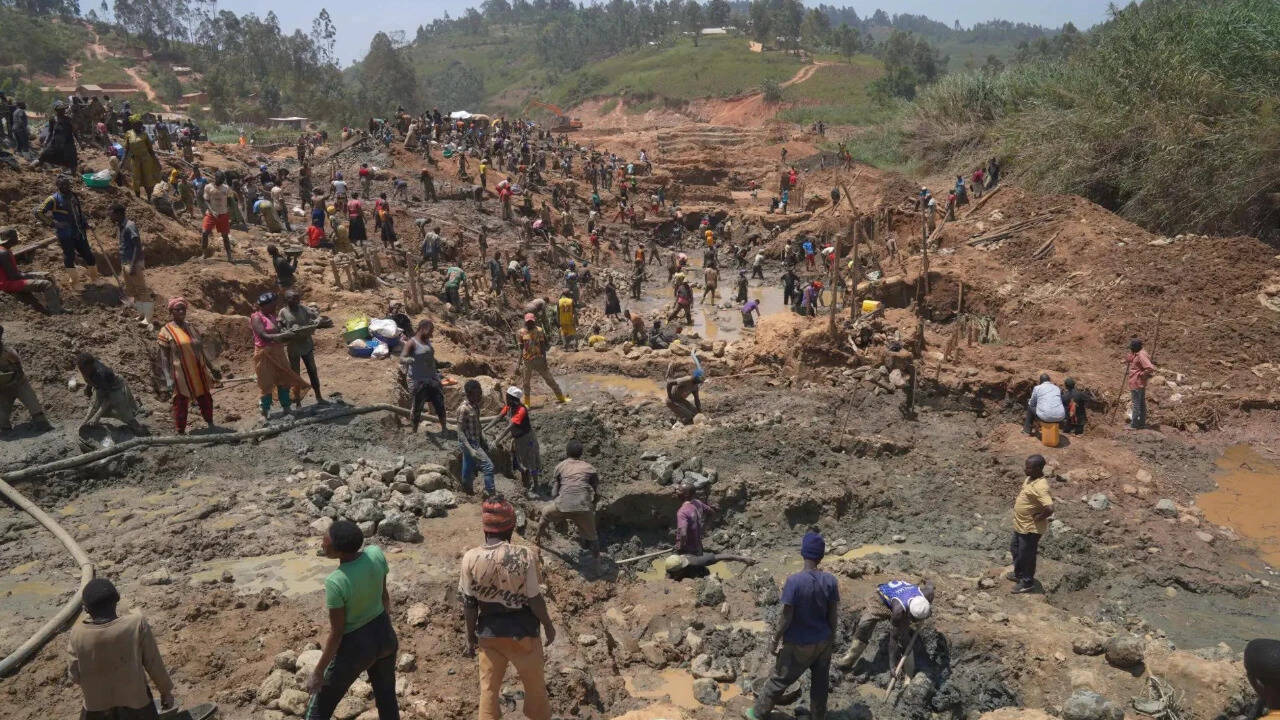
The death toll at the Zamboye mining site near the border of the Central African Republic and Cameroon has surpassed 100, a staggering figure that barely captures the human cost of the collapse. On Tuesday, a massive landslide swallowed an entire section of the open-pit operation, burying workers under tons of earth and debris. This tragedy in the Nana-Mambéré prefecture is not an isolated event but a predictable outcome of a systemic failure within the regional mineral trade. While local authorities scramble to manage the wreckage, the underlying drivers of this catastrophe remain largely untouched.
For the laborers digging in Zamboye, gold is a desperate hedge against terminal poverty. Hundreds of artisanal miners spend their days in hazardous, hand-dug shafts that lack even the most basic structural reinforcement. When the ground shifted this week, the collapse of these interconnected tunnels turned a workplace into a mass grave. Survivors describe a deafening roar followed by silence, the sound of earth sealing off exits that were never truly safe to begin with.
The frequency of these incidents has accelerated at an alarming rate. Just months ago, multiple casualties were recorded at the Be-Mbari site. Earlier in the year, similar events in Ngourroum and Gordi claimed dozens of lives. These numbers are often treated as statistics in a regional crisis, yet they represent a continuous cycle of state negligence and market exploitation. When officials talk about illegal mining, they often frame it as a problem of permits and regulation. In reality, it is a problem of economics.
Consider a hypothetical situation to illustrate how this system functions. An impoverished laborer in the border region chooses between subsistence farming, which offers almost no liquidity, and artisanal mining, which offers immediate, albeit dangerous, cash flow. The miner works a shaft that is technically illegal, selling the ore to middlemen who bypass official customs channels. This gold flows into international markets, often through neighboring states, appearing in global supply chains as legitimate, untraceable metal. The incentive to formalize these operations is virtually nonexistent for those on the ground because the formal system is designed to tax, rather than protect, the producer.
Regional governments are now pledging inquiries and promising to tighten controls. These promises ring hollow to those watching the rescue efforts in Baboua. The current legislative focus, such as the 2023 mining code in Cameroon, emphasizes mineral development and export control but provides little in the way of immediate safety infrastructure for the informal workforce. Without addressing the lack of equipment and the lack of technical training, new regulations simply drive the industry further underground.
The gold recovered from sites like Zamboye eventually loses its history. By the time it reaches a refinery or a luxury jeweler in a distant capital, the association with the landslide in Nana-Mambéré is severed. This distance is what allows the cycle to persist. If the actual cost of gold included the human toll of its extraction, the market might demand change. Instead, the burden of safety falls on those with the least agency.
Rescue operations are currently hampered by a total lack of heavy machinery. The people pulling victims from the dirt are often the miners themselves, armed with little more than shovels and their own grief. Every hour that passes reduces the odds of finding survivors, shifting the focus from rescue to recovery.
Blame is being cast in every direction. Opposition leaders demand accountability from the government, pointing to the obvious lack of oversight. Meanwhile, officials point to the uncontrollable nature of thousands of independent miners operating in remote, porous border zones. Both sides ignore the central reality. The mining sector in this region has become a massive, informal industry that feeds the hunger for gold while ignoring the fragility of the soil and the lives of those who dig into it.
The disaster at Zamboye will likely be forgotten by the global media in a matter of days. Local authorities will finalize their reports, some families will bury their dead, and the shafts will be abandoned until the next group of miners determines that the hunger for gold outweighs the danger of the next collapse. The dirt will settle, but the conditions that buried these 100 men and women remain exactly as they were on Monday.
Until there is a genuine investment in safety for artisanal workers or an alternative economic path for these communities, the next tragedy is not a possibility but a certainty. The ground in Nana-Mambéré remains unstable, and the pipeline that carries this blood-stained gold into the world economy continues to flow unabated.