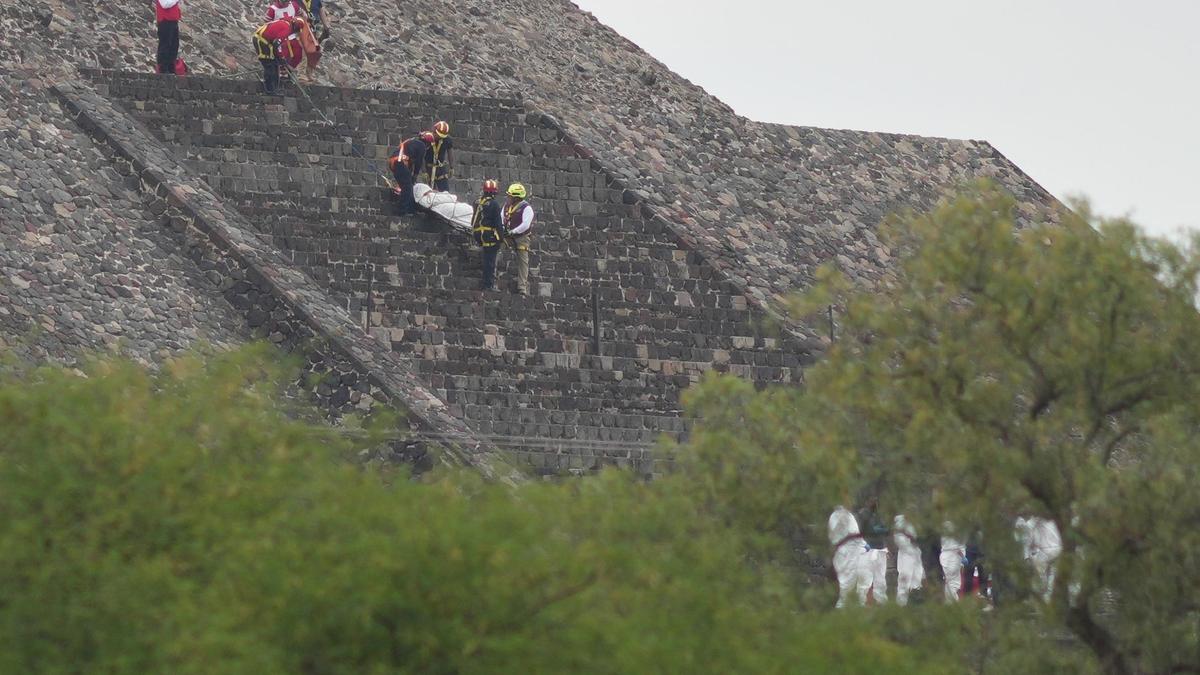
The sun over the Yucatán Peninsula usually illuminates the gold and gray of ancient limestone, but yesterday it highlighted a far grimmer reality. At a prominent archaeological site near the heart of Mexico’s tourist corridor, a Canadian traveler was killed and thirteen others were wounded when gunfire erupted near the base of a world-famous pyramid. This was not a random accident. It was the predictable outcome of a security strategy that prioritizes the appearance of safety over the actual suppression of organized crime.
For years, the Mexican government has maintained a thin veil of normalcy across its primary tourism zones. They deploy National Guard troops to beaches and historic sites, creating a visual deterrent that often lacks operational teeth. This latest tragedy proves that the presence of uniforms is no longer enough to keep the escalating wars between rival cartels from spilling into the literal footsteps of history. The "safe zones" are shrinking.
The Illusion of the Iron Ring
When you visit a Mexican landmark today, you see soldiers. They carry high-caliber rifles and wear tactical vests, standing in the shade of ancient temples. This is known locally as the "Iron Ring" strategy. It is designed to make international travelers feel protected, but in practice, it often serves as little more than a backdrop for vacation photos.
The shooting occurred during peak hours, a time when hundreds of families were navigating the grounds. Witnesses describe a scene of absolute chaos where the supposed security infrastructure buckled instantly. The attackers did not fear the military presence. In fact, the audacity of the assault suggests they viewed the guards as static obstacles rather than active threats.
The fundamental flaw lies in the rules of engagement. Soldiers stationed at tourist sites are often instructed to avoid any escalation that might cause a scene or frighten the crowds. This creates a paradox. The very people tasked with protection are handcuffed by the optics of the industry they are trying to save. Criminal organizations, well aware of these limitations, have moved their turf wars directly into the heart of the "protected" areas because they know the state is hesitant to turn a UNESCO World Heritage site into a free-fire zone.
The Economics of Targeted Violence
To understand why a Canadian tourist died at a pyramid, you have to follow the money. Tourism in Mexico is not just about hotels and tours; it is a massive shadow economy for money laundering and retail drug sales. The "Plaza"—the territory controlled by a specific cartel—now includes the souvenir stalls and the artisanal markets surrounding archaeological ruins.
Criminal groups are no longer content staying in the shadows of border towns or mountain hideouts. They want the high-volume cash flow generated by millions of international visitors. When two groups claim the same "Plaza," the conflict is settled where the customers are.
- Retail Drug Markets: Cartels fight for the right to sell to tourists in clubs, beaches, and even historic sites.
- Extortion Rackets: Local tour operators and vendors pay "piso" (protection money) to whichever group controls the geographic coordinates of the site.
- Intelligence Gaps: Local police are often outgunned or, more frequently, compromised by the same groups they are meant to investigate.
The victims in these scenarios are rarely the intended targets, but that is cold comfort to the families of those caught in the crossfire. The phrase "wrong place at the wrong time" is a convenient excuse used by officials to downplay systemic failure. If an ancient monument is a designated tourist zone, there should be no such thing as a "wrong place."
A Pattern of Distorted Reporting
Following the incident, the regional government’s communication machine went into overdrive. The initial reports focused on the speed of the medical response rather than the failure of the prevention. This is a classic tactic used by the Ministry of Tourism to control the narrative. They want the world to see a responsive government, not a vulnerable one.
But the data paints a different picture. Violent crime in the tourist corridors of the Riviera Maya and surrounding archaeological zones has seen a steady uptick over the last thirty-six months. While the majority of these incidents involve local rivals, the proximity to international travelers has reached a breaking point. The killing of a foreign national creates a diplomatic nightmare that the Mexican government usually settles with a flurry of arrests—often of low-level "fall guys"—to satisfy international headlines.
We have seen this cycle before. A tragedy occurs, the government promises "unprecedented" security measures, more troops are sent to stand in the sun, and the news cycle moves on. Meanwhile, the underlying power structures of the cartels remain untouched. They simply wait for the heat to die down before resuming operations.
The Myth of the Isolated Incident
State officials often claim these events are "isolated." This is a statistical lie. When a shooting happens at a pyramid, it is the culmination of weeks or months of rising tensions in the nearby towns. The violence radiates outward from the urban centers where the cartels live and work, eventually reaching the landmarks that fund the local economy.
True security would require deep-cover intelligence and the dismantling of the financial networks that support these groups. Instead, the government offers "security theater." They give you the image of safety while the foundations are rotting.
The Traveler’s Dilemma
For the international community, the question is no longer whether Mexico is beautiful or culturally significant. It is whether the risk is worth the reward. The Canadian government, along with the U.S. State Department, frequently updates travel advisories, but these documents are often written in the cautious language of bureaucracy. They tell you to "exercise a high degree of caution," which is a vague instruction that provides no real tactical value to a person standing in a ticket line at a Mayan ruin.
The reality is that the safety of a tourist in Mexico is currently tied to the stability of the local criminal underworld. If the cartels are at peace, the tourists are safe. If the cartels are at war, the "Iron Ring" of soldiers offers little more than a false sense of security.
Moving Beyond the Backdrop
The Mexican tourism industry accounts for nearly 9% of the country’s GDP. It is too big to fail, yet it is being managed with a short-term mindset that ignores the encroaching shadows. If the government continues to treat security as a PR problem rather than a structural one, the pyramids will eventually stand empty.
Investors and travel agencies need to demand more than just more soldiers. They need to demand transparency regarding the infiltration of organized crime into the tourism supply chain. They need to ask why local police forces are consistently bypassed by federal troops who don't know the terrain.
The death of a visitor at a historic site is a failure of the state’s most basic duty. It is an admission that the government has ceded control of its most sacred ground to the highest bidder or the most violent actor. You cannot build a sustainable industry on the hope that the bullets will always miss the bystanders.
Stop looking at the soldiers and start looking at the gaps between them.