Wall Street analysts love a simple narrative. They see a headline about Boeing cutting 5% of its commercial airplane workforce due to slower production ramp-up plans, and they immediately reach for the panic button. They frame it as another symptom of a broken giant bleeding out.
They are wrong. Completely, fundamentally wrong.
If you actually understand heavy industrial manufacturing, you know that bloated headcount during a supply-chain choke point is not a sign of strength. It is a slow-motion suicide pact. Boeing’s decision to trim 5% of its commercial staff is not a retreat; it is the first mathematically sane thing the company has done in years.
Most business commentators treat aerospace assembly like a software startup. They think throwing more bodies at a delayed product magically accelerates the timeline. In reality, adding unutilized labor to a starved production line destroys margins, fractures accountability, and masks the actual operational bottlenecks.
The Lazy Consensus About Aerospace Headcount
The mainstream financial press operates on a kindergarten-level equation: More workers equals more planes. Fewer workers equals a dying company.
When an outlet reports that Boeing is cutting 5% of its commercial plane staff because of slower ramp-up schedules, the implied subtext is failure. Readers are nudged to believe that demand has evaporated or that Boeing is gutting its core engineering muscle to appease short-term shareholders.
Let’s look at the actual mechanics of an aircraft assembly line.
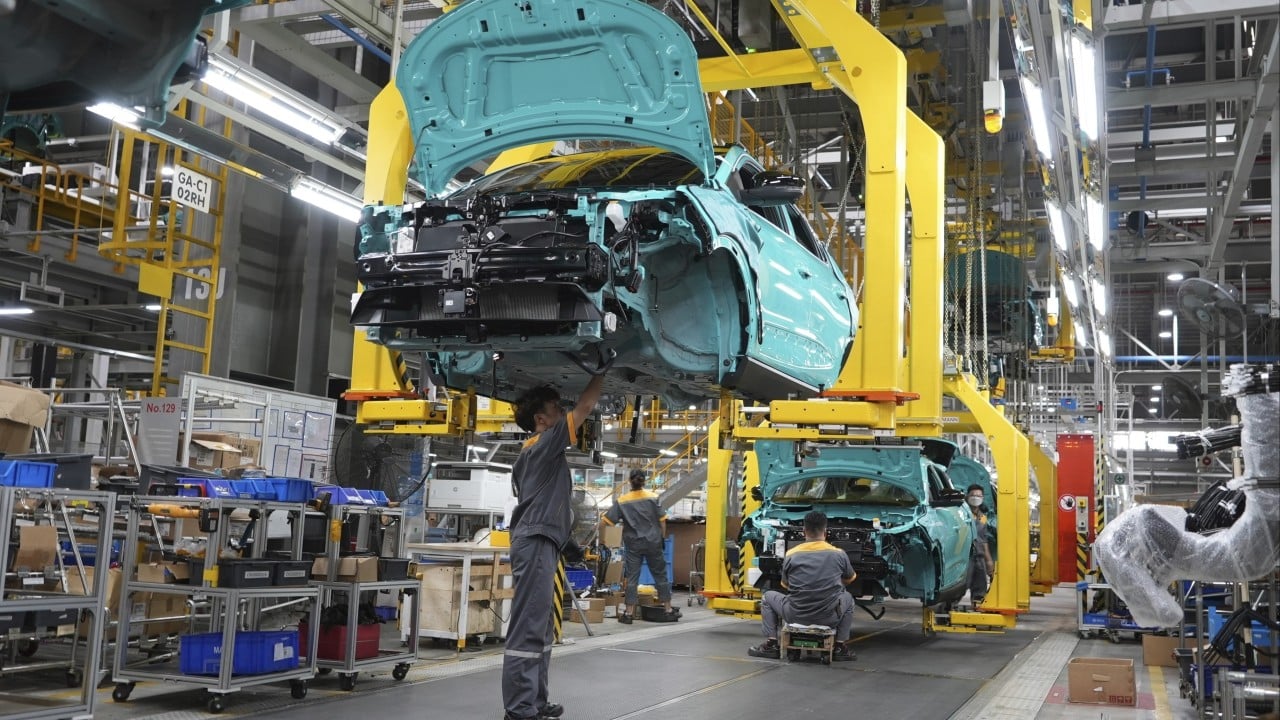
You cannot bolt a wing onto a fuselage that hasn’t arrived. You cannot wire an avionics bay when the sub-tier supplier in Ohio is six weeks behind on wiring harnesses. When Boeing holds onto maximum headcount while waiting for parts, those technicians do not sit idly reading manuals. They get pulled into "traveled work"—the industry term for installing components out of sequence because a part arrived late.
Traveled work is the exact poison that nearly killed Boeing’s reputation. It introduces human error, forces mechanics to tear apart already-assembled sections, and turns a predictable assembly line into a chaotic custom-build shop.
By reducing commercial staff by 5% to match the realistic pace of incoming parts, management is finally synchronizing labor capacity with supply-chain reality. Keeping those workers on the floor without the components to build planes wouldn't speed up deliveries by a single day. It would only guarantee worse quality control and higher cash burn.
Why The "Demand Problem" Myth Falls Apart
A common question popping up across investor forums right now is: Does Boeing’s layoff mean airlines are canceling orders?
No. The premise of that question ignores the basic math of the global aviation duopoly.
Boeing and Airbus have backlogs stretching deep into the next decade. Airlines are desperate for narrow-body and wide-body lift to replace aging, fuel-guzzling fleets. Even if an airline wanted to cancel a 737 MAX or 787 Dreamliner order out of frustration, where would they go? Airbus is completely sold out of A320neo family delivery slots for years.
Boeing does not have a demand problem. It has a throughput problem.
When you have a multi-year backlog and a constrained supply chain, your primary financial metric is not top-line revenue growth—it is unit cost discipline and free cash flow preservation. Carrying excess overhead while your output is capped by the Federal Aviation Administration (FAA) or sub-tier casting shortages is financial malpractice.
I have watched industrial manufacturers blow tens of millions of dollars clinging to "hoarded labor" during supply crunches. Executives convince themselves that if they lay off trained technicians, they will never get them back when the bottleneck clears. So they pay people to sweep floors, attend redundant safety seminars, or perform busywork. Six months later, the cash reserves are gone, morale is in the gutter because skilled workers hate having nothing to do, and the best talent quits anyway to go work for competitors who actually have parts to assemble.
The Brutal Truth About Modern Aerospace Labor
Let’s strip away the corporate PR and talk about who actually gets cut in a 5% commercial workforce reduction.
Critics immediately scream that Boeing is firing the veteran machinists and safety inspectors who keep planes in the air. That makes for great cable news outrage, and it is largely detached from how aerospace restructuring works.
In a unionized manufacturing environment—especially one governed by agreements with the International Association of Machinists and Aerospace Workers (IAM) and the Society of Professional Engineering Employees in Aerospace (SPEEA)—you do not just walk onto the factory floor and arbitrarily fire senior mechanics. Layoffs follow strict seniority rules, bumping rights, and contractual buffers.
Furthermore, a massive percentage of a 5% headcount reduction in commercial aviation comes from three specific buckets:
- Administrative and middle-management bloat: Layers of project coordinators, compliance trackers, and internal liaisons hired during previous expansion pushes who produce zero physical output.
- Contract and contingent labor: Temporary staff brought in to handle surge capacity that no longer exists under a slower ramp-up schedule.
- Natural attrition and voluntary buyouts: Accelerating the exit of personnel who were already near retirement, avoiding forced layoffs on the primary assembly line.
Does a 5% cut sting? Yes. Does it create friction? Undoubtedly. But pretending that trimming fat from an over-indexed corporate structure is equivalent to gutting flight safety is pure intellectual dishonesty.
The Cost of Out-of-Sequence Manufacturing
To understand why matching headcount to ramp-up speed is non-negotiable, consider the economics of learning curves in aerospace, a concept famously quantified by Theodore Paul Wright in 1936. Wright’s Law proves that every time cumulative aircraft production doubles, the labor hours required per unit drop by a predictable percentage.
That curve only works when the process is repeatable.
Imagine a scenario where a factory is staffed to build 50 jets a month, but parts only arrive fast enough to finish 30. Management, desperate to show progress, pushes the 50-plane workforce to start work on unfinished airframes anyway. Now you have 20 half-built jets sitting on the tarmac outside Everett or Renton, waiting for seats, engines, or bulkheads.
Every time a missing part finally arrives, a crew has to walk out to the flight line, open up sealed panels, install the part in cramped conditions, and re-test adjacent systems. Your labor hours per plane skyrocket instead of falling. You invert Wright’s Law. You lose money on every single delivery.
Cutting staff by 5% forces management to accept the slower cadence. It removes the temptation to over-produce unfinished inventory just to keep hands busy.
What Critics Get Wrong About The Supply Chain
Another flawed narrative circulating right now is that Boeing is solely responsible for the slower ramp-up, and therefore the workers are paying the price for executive incompetence.
Executive missteps over the past two decades are well documented—from the disastrous outsourcing model of the 787 program to the short-sighted stock buybacks of the 2010s. Nobody is defending historical C-suite hubris.
However, looking at the current slowdown solely through the lens of internal Boeing drama misses the macro reality of global manufacturing. Aerospace supply chains are fragile ecosystems made up of thousands of Tier 2 and Tier 3 suppliers. Many of these smaller machine shops never recovered from the pandemic-era exodus of skilled machinists.
If a single supplier in Kansas or Northern Ireland fails to deliver titanium forgings or lavatory modules on time, Boeing cannot magic those components into existence. Raising headcount in Washington State or South Carolina will not make a furnace in Europe melt titanium any faster.
When the upstream river runs dry, the downstream mill has to slow its waterwheel. It is basic physics, not a corporate conspiracy.
The Real Risk Nobody Is Talking About
If you want to criticize Boeing’s 5% staff reduction, stop crying about the headline number and look at the execution risk. There is a very real downside to this contrarian play, and if management fumbles it, the consequences will be severe.
Here is the trap: The institutional knowledge drain.
Whenever a large industrial company offers voluntary buyouts or trims non-union salaried staff by 5%, the people who take the deal are rarely the dead weight. The dead weight knows they cannot get a comparable salary elsewhere, so they hunker down and survive the cuts.
The people who leave are the A-players—the senior stress engineers, the veteran manufacturing planners, and the sharp supply-chain troubleshooters who can walk onto a competitor’s payroll at Blue Origin, SpaceX, Northrop Grumman, or Lockheed Martin the next Monday morning.
If Boeing executes this 5% cut with a blunt instrument—using across-the-board percentage targets for every department rather than surgical cuts—they will accidentally bleed out the exact mid-career technical leads needed to fix their quality problems.
You cannot automate judgment. You cannot replace a 25-year fuselage structures veteran with two junior engineers fresh out of college and an AI scheduling tool. If Boeing’s leadership lets their top technical talent walk out the door to hit an arbitrary headcount metric before the end of the quarter, they will win the short-term cash flow battle and lose the long-term engineering war.
How Smart Operators Navigate A Slower Ramp-Up
If you are running a manufacturing operation, investing in aerospace suppliers, or managing a team through a forced slowdown, stop copying the panic of financial pundits. Use the slowdown as a weapon.
1. Kill Traveled Work Immediately
Use the reduced cadence to enforce a strict "no part, no start" rule on the assembly floor. If a station is missing a component, stop the line rather than working around it. Use the extra breathing room to clear out existing backlog traps and restore baseline discipline.
2. Audit The Middle, Protect The Edge
Never apply flat percentage cuts across an organization. In heavy industry, value is created at the edge—where engineers design parts and technicians assemble them. Protect the direct labor and core technical architects at all costs. Cut the layers of middle-management bureaucracy that exist solely to generate slide decks about why the edge is moving slowly.
3. Cross-Train During The Lull
With production rates capped, use the remaining workforce’s excess capacity for aggressive cross-training. A technician certified on three stations instead of one is worth their weight in gold when the supply chain finally unblocks and rates accelerate again.
4. Re-Engage Sub-Tier Suppliers On The Ground
Take your sharpest manufacturing engineers—the ones temporarily freed up by slower internal line speeds—and embed them directly inside your struggling Tier 2 and Tier 3 suppliers. Don't send procurement lawyers to threaten penalties; send tooling experts to fix their floor bottlenecks.
Stop Measuring Industrial Health By Headcount
The obsession with constant, uninterrupted headcount growth is a disease imported from Silicon Valley and applied carelessly to physical industries. Software scales with near-zero marginal cost; airplanes do not.
A lean, synchronized factory operating at 85% capacity with zero rework will crush an overstaffed, chaotic factory operating at 100% capacity every single time. Boeing’s decision to shed 5% of its commercial workforce is an admission that reality dictates the schedule, not Wall Street’s quarterly fantasies.
The market will eventually stop rewarding companies for how many people they employ and start rewarding them again for how reliably they build things. Boeing just took the first painful step toward surviving that transition.