Uganda just shut down its official border crossings with the Democratic Republic of the Congo. The headlines are predictably panicked, tracking close to 1,000 suspected cases of the rare Bundibugyo ebolavirus strain. The mainstream press frames this line in the dirt as a vital shield. They treat the border closure as a decisive lever pulled by Vice President Jesca Alupo to protect health systems.
It is theater.
Political optics are overriding basic epidemiology. Having worked alongside regional containment teams during previous outbreaks in North Kivu and Ituri, I have seen exactly how this script plays out. Treating an international border in East Africa as a solid wall is a catastrophic miscalculation. The assumption that a bureaucratic shutdown halts a hemorrhagic fever is dangerously naive. It actively accelerates the crisis it claims to solve.
The Illusion of the Hard Border
Geopolitical maps show clear lines. The reality on the ground between Uganda and the DRC is a porous network of hundreds of informal footpaths cutting through dense vegetation, fields, and waterways. For centuries, communities here have traded, intermarried, and moved daily without consulting official immigration desks.
When you slam the official gates shut, you do not stop human movement. You simply blindfold your own medical surveillance teams.
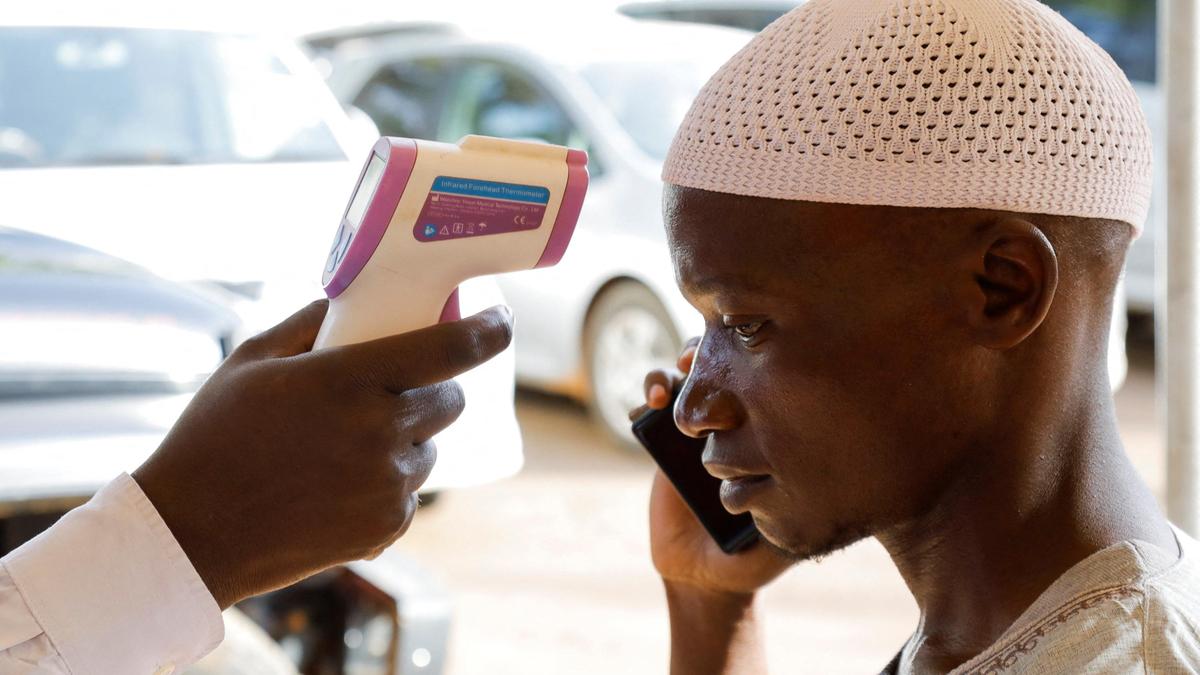
- Official Crossings: Monitored, equipped with infrared thermal scanners, chlorine washing stations, and trained isolation staff.
- Informal Paths: Completely unmonitored, bypass health checkpoints entirely, and force symptomatic individuals into the shadows.
The World Health Organization explicitly warns against these closures for a reason. By criminalizing the act of crossing, governments incentivize infected individuals to slip through the bush undetected. Instead of walking into a designated border post where a fever can be flagged, a patient with early-stage Bundibugyo symptoms walks straight into a hidden village market or a back-alley clinic.
The Bundibugyo Reality Check
The media is obsessing over the "rare" label of this Ebola type to generate clicks. Let us look at the actual clinical mechanics. Unlike the more common Zaire strain, Bundibugyo typically carries a lower case fatality rate. Historically, Zaire sits around 60% to 90%, whereas Bundibugyo hovers closer to 30% to 40%.
The real danger is not that it is inherently more lethal. The danger is that we have zero approved vaccines or specific therapeutics for it.
The highly publicized Ervebo vaccine used to stamp out previous outbreaks? Completely useless here. It targets the Zaire glycoprotein. Facing Bundibugyo means relying entirely on aggressive contact tracing, strict infection prevention and control, and basic supportive care.
When Dr. Diana Atwine notes that Ugandan health workers are getting exposed and bringing the virus home to their families, the solution is not to block refugees fleeing M23 rebel violence. The solution is massive, immediate scale-ups of personal protective equipment (PPE) and rapid testing kits at the local clinic level. Right now, frontline centers are underfunded and underprotected because Western aid cutbacks last year left the region structurally hollowed out.
Blind Spots in Current Containment Strategies
The standard international response framework operates under a major logical flaw: the assumption that local populations trust state directives.
In eastern DRC, decades of conflict and exploitation have left residents deeply suspicious of outside intervention. When health teams arrive in hazmat suits accompanied by military escorts, it does not look like medical aid. It looks like an occupying force. This distrust leads to communities hiding the sick, bypassing official hospitals, and conducting secret traditional burials—the primary super-spreader event for Ebola, where contact with infected bodily fluids is guaranteed.
If a patient dies of Ebola in an isolated village, forcing their family to use informal routes to transport the body or seek cross-border care ensures the virus spreads unmapped.
Imagine a scenario where a family in Bunia has a sick relative. Under normal operations, they might risk bringing them to an isolation unit. But with airspace closed, flights to Bunia suspended by Kinshasa, and the Ugandan border locked down, the message to the population is clear: You are on your own. Isolation breeds panic. Panic breeds evasion. Evasion is how a localized outbreak in Ituri ends up causing deaths in Kampala.
Dismantling the Panic Narrative
Let us address the questions standard reporting gets wrong.
Does a rising case count mean international catastrophe?
No. A spike in suspected cases—nearing 1,000—frequently points to intensified contact tracing and expanded case definitions finally catching up to the true scope of the infection. The outbreak was declared on May 15, but retrospective testing shows it was circulating weeks earlier disguised as a more common virus. The surge is an accounting correction, not a sudden explosion.
Will isolation protocols at the border save Uganda?
A 21-day mandatory self-isolation protocol sounds rigorous on paper. In practice, forcing people into state-run quarantine centers without economic compensation guarantees they will run. If a day laborer cannot cross the border to earn food for their family without facing a three-week lockdown, they will find a footpath through the forest. The protocol creates the exact behavior it seeks to avoid.
What actually works?
Defund the border theater and fund the periphery clinics. Stop spending resources deploying soldiers to formal gates that locals already know how to avoid. Instead, decentralize mobile testing labs and deploy community-led surveillance teams directly to the informal trading hubs along the border lakes and rivers.
Give local communities the resources to manage their own health security. Provide clean water, protective gear, and direct financial support for families entering isolation voluntarily. When you remove the punitive nature of quarantine, compliance skyrockets.
Relying on physical borders to stop a biological pathogen is an antique strategy from a bygone century. Viruses do not respect sovereign lines, and neither do the desperate populations trying to survive them. Shutting the gates looks strong on evening television, but it leaves the back door wide open to a silent, unmonitored spread.