For decades, the rhythm of Hong Kong wealth was written in the rhythmic thud of a wooden auction gavel. A government official would stand at a podium, read out a plot of land, and the city’s billionaire tycoons would signal with a nod or a raised paddle, committing billions of dollars in seconds. It was the ultimate, high-stakes game of a city built on vertical ambition.
But on a Friday afternoon in early July 2026, when the clock struck noon at the Development Bureau, the silence was deafening.
The land up for grabs was not just any plot. It was an 11-hectare expanse in Hung Shui Kiu, the crown jewel and first pilot area of the Northern Metropolis—a massive, 30,000-hectare government mega-project designed to reshape Hong Kong's entire economic identity and weld it directly to the tech engine of Shenzhen.
When the tender box closed, only two hands had been raised.
To anyone who understands the traditional hierarchy of Hong Kong real estate, the list of those who sat on their hands is staggering. CK Asset, New World Development, Sun Hung Kai Properties—the legacy dynasties that carved out the city’s skyline—simply walked away. Only Henderson Land Development submitted a solo bid, while Sino Land joined a multi-firm consortium anchored by mainland enterprises and the e-commerce titan JD.com.
To look at this as merely a story of a sluggish property market is to miss the tectonic shift happening beneath the soil. This is not just about a dip in apartment prices. This is about a profound, systemic clash between the old way of building wealth and a new, unfamiliar world order.
Consider the perspective of a traditional Hong Kong developer. For two generations, the business model was beautifully simple. You buy a plot of dirt, you construct a high-rise tower of luxury apartments, you sell the units at a premium, and you walk away with a massive, predictable return. The risks were financial, but the mechanics were deeply understood.
Now, look at what the government placed on the table at Hung Shui Kiu.
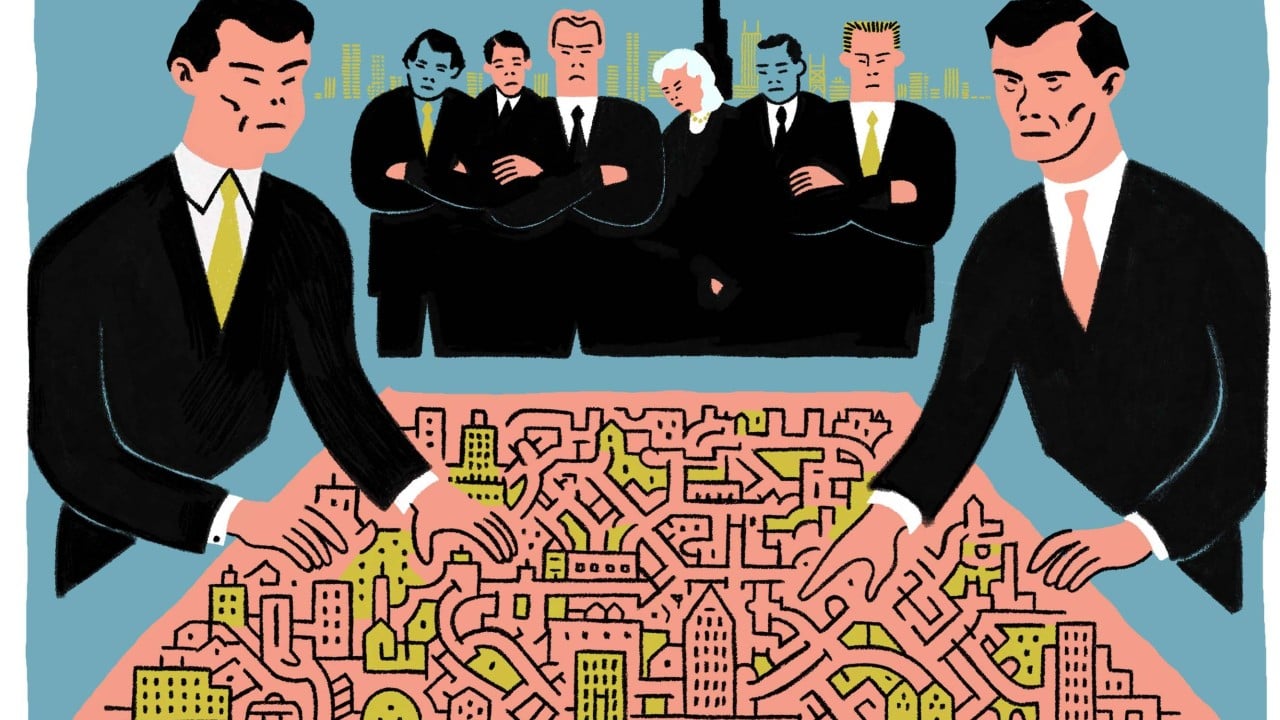
The pilot area is an intricate, mixed-use jigsaw puzzle. Yes, it contains 2.6 hectares of residential land. But it also demands the construction of 5.5 hectares of industrial and technology facilities, alongside public amenities and pedestrian walkways. The government is no longer just selling real estate; they are trying to buy an ecosystem.
The real friction lies in how the winner is chosen. In the old days, the highest price won. Period. But for the Northern Metropolis pilot, the government deployed a strict "two-envelope approach."
The rules of this new game are jarring for traditionalists. The financial premium—the actual cash bid for the land—counts for a mere 30 percent of the total score. The remaining 70 percent is judged entirely on non-monetary, strategic proposals. To win, a bidder must prove they can build strategic tech industries, lure global enterprise giants to the area, guarantee rapid operational timelines, and create a sustainable hub of local jobs.
Imagine a master watchmaker suddenly being asked to build, launch, and navigate a commercial satellite. The skill sets do not match. Hong Kong’s property barons know how to pour concrete and market luxury penthouses. They do not know how to run an innovation and technology park, nor do they want the long-term, high-risk operational burdens that come with it.
But the real problem lies elsewhere, rooted deeply in the changing relationship between the city and the mainland.
The Northern Metropolis is explicitly designed to integrate Hong Kong into the Greater Bay Area, erasing the psychological and economic distance across the Shenzhen River. In doing so, the government has become a "matchmaker," actively encouraging cross-industry consortia. It is why Sino Land did not bid alone; they partnered with a fleet of mainland firms and JD.com. The six-company consortium pooled their specialized knowledge because no single traditional developer possessed the operational DNA to run a tech park.
This leaves the legacy titans in an existential bind. If they refuse to adapt to these sweeping, policy-driven megaprojects, they risk becoming irrelevant in a city that is pivoting its gaze entirely toward the north. But if they dive in, they must swallow lower profit margins, complex joint-venture structures, and unfamiliar operational risks.
The two bids sitting on the government's desk are a stark reminder that the old playbook has expired. The destiny of the city’s northern borderlands will not be written by solitary tycoons chasing quick residential margins, but by complex coalitions trying to build a future that Hong Kong has never seen before. The gavel has fallen, but the new masters of the skyline are still deciding if they even want to play.