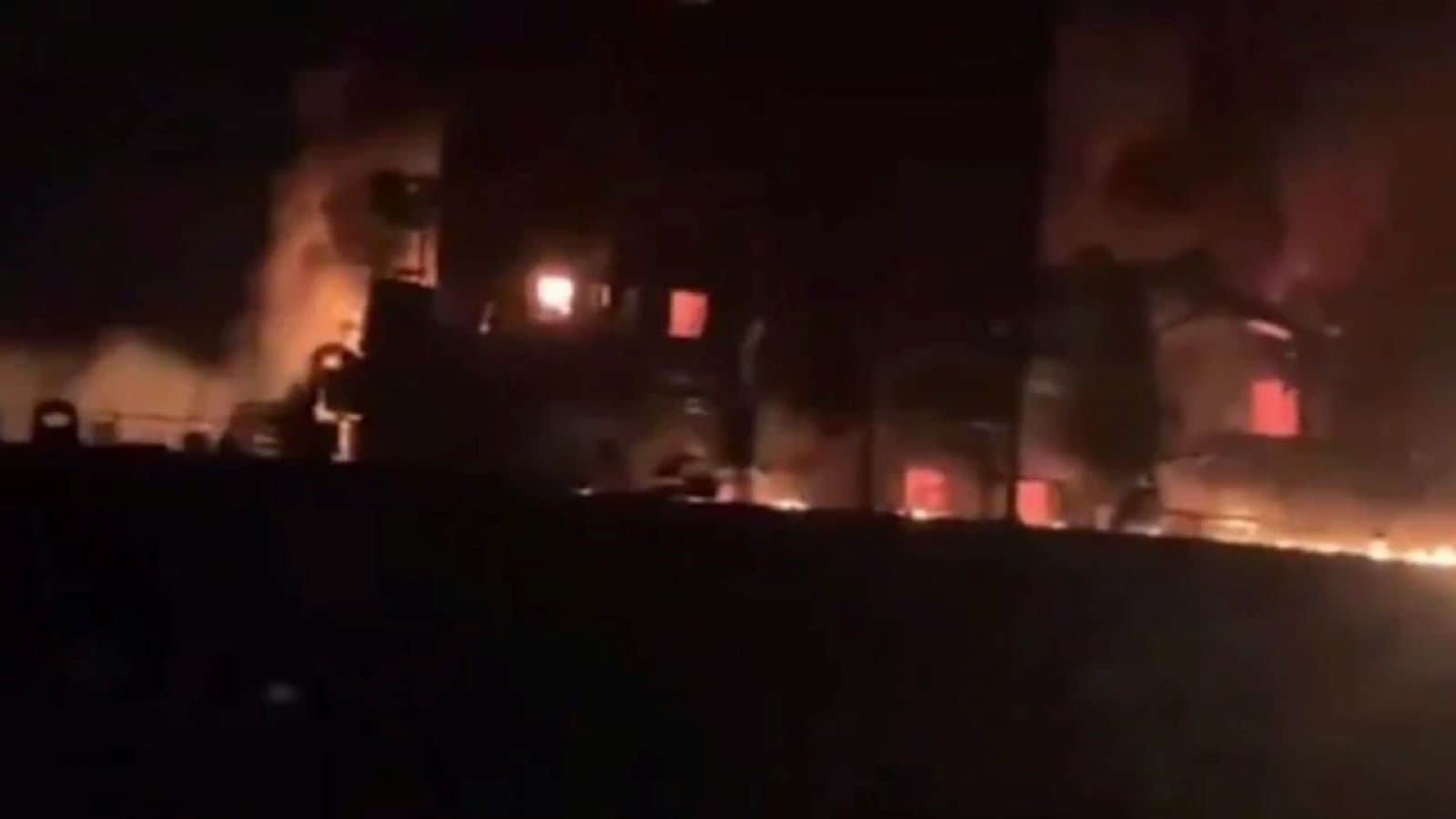
Salt hangs in the air over the Persian Gulf even at two in the morning, heavy enough to coat the inside of your nostrils and leave a faint crust on your lips after a single watch on the bridge. You hear the diesel hum of the auxiliary generators before you hear the sea. Below your boots, two million barrels of crude oil slosh slowly inside double-hulled compartments, a dark, warm pulse keeping rhythm with the swell.
Quiet. If you enjoyed this article, you should read: this related article.
Then came a sound that does not belong to wind, wave, or engine—a dull, wet thud transmitted straight through the steel plating into the soles of the crew’s boots, followed a heartbeat later by the shriek of tearing metal and a pillar of orange flame that turned midnight into noon over open water.
When a supertanker hits a naval mine and explodes in the Strait of Hormuz, the headlines arrive in neat, clipped packages. Words like closure, escalation, and warning flash across screens in London, Tokyo, New York, and Mumbai. Tehran issues another stern declaration that the waterway remains shut, warning vessels away from a channel barely twenty-one miles wide at its narrowest navigable point. Markets twitch. Analysts pull up charts of global crude flows. For another perspective on this story, refer to the recent coverage from Associated Press.
Yet sitting with a cold mug of coffee in a newsroom or scrolling past an alert between errands, it is easy to treat a naval mine as an abstraction—a red dot on a map or a spike on a commodities ticker. It is not. A naval mine is a cheap, patient piece of steel and explosive sitting in dark, warm water, waiting for human routine to carry three hundred meters of ship right over its fuse. And the Strait of Hormuz is not merely a strip of water between Iran and Oman; it is one of the tightest arteries of modern life.
A Narrow Throat for a Thirsty World
To understand why a single blast in the Gulf reverberates through factory floors in Germany, bus depots in Manila, and kitchen tables in Ohio, picture a crowded stadium funneling forty thousand people toward a single revolving door during a sudden downpour. (Note: This stadium crowd is a metaphor to illustrate physical chokepoint dynamics, not an actual event.) Even if everyone walks calmly, the bottleneck dictates the pace. Now imagine someone drops a crate of glass right in the doorway and shouts that nobody should step near it.
Geography built Hormuz long before modern geopolitics arrived. The strait links the oil-rich Persian Gulf—home to major producers including Saudi Arabia, Iraq, Kuwait, the United Arab Emirates, and Iran itself—with the Gulf of Oman and the wider Indian Ocean. A substantial share of the world’s seaborne petroleum and liquefied natural gas passes through lanes that are only a couple of miles wide in each direction, hemmed in by shallow waters, islands, radar posts, patrol craft, and sea lanes that leave ships with precious little room to maneuver.
History has seen tension here before. During the Tanker War of the 1980s, in the shadow of the Iran–Iraq War, merchant ships were mined, strafed, and hit by missiles, forcing naval escorts and re-flagged vessels to pick their way through perilous waters. Over the decades since, crises have flared and ebbed—seizures, limpet mines, drone strikes, diplomatic standoffs—each one reminding the world how fragile energy transit can be when regional hostility meets narrow geography.
What makes a closure paired with an active mine strike so unsettling is the combination of physical danger and psychological paralysis. A missile is fast and dramatic; a naval mine is quiet and patient. Once reports spread that a supertanker has detonated on a mine and Tehran insists the route remains closed, the threat is no longer just what happened to one hull. The threat is every captain wondering whether the chart they trust is outdated, every insurer recalculating war-risk premiums overnight, and every shipowner staring at a multi-million-dollar vessel and asking whether sending it forward is bravery or madness.
I have stood on enough steel decks at night to know what fear looks like among seasoned mariners. It rarely looks like panic. It looks like quietness. Men speak in lower voices on the bridge wing. Binoculars stay glued to the dark horizon a little longer than usual. Someone checks the lifeboat release mechanism twice without saying why.
Inside the Blast Radius
Consider a hypothetical crew aboard a Very Large Crude Carrier—let’s call her the MV Horizon Star, though this specific ship and crew are fictionalized to show how these events unfold on the ground. (Note: This crew and vessel are a hypothetical composite created to ground the operational and human realities of a mine strike in concrete detail.)
Third Officer Tariq has spent eleven years at sea, sending money home every month to pay for his younger sister’s university tuition and his parents’ blood pressure medication. At 01:40 local time, the sea is glassy and deceptively calm. Radar shows faint returns along the coast; VHF radio crackles with clipped exchanges and tense warnings from regional authorities asserting control over the passage.
Then comes the shockwave.
In the engine room, two decks down, the lighting flickers and dies before emergency circuits kick in with a harsh white glare. Acrid smoke creeps through vents. A ruptured ballast line hisses somewhere forward. Alarms begin to chime—not all at once, because blast damage does not care about neat wiring diagrams, which makes the silence between certain sensors almost worse than the noise.
On the bridge, Tariq grips the console as the hull shudders and lists a few degrees. Nobody on a supertanker has time to philosophize about geopolitics in the first ninety seconds after an explosion. Your hands move from muscle memory: check heading, check watertight integrity reports, verify position, call the master, prepare distress and status messages, account for every soul on board.
Even when a tanker does not sink immediately—and modern double-hulled vessels are tough, engineered to absorb punishment that would break smaller ships—an explosion near cargo tanks or machinery spaces turns a floating workplace into a tinderbox. Heat, fumes, damaged steering or propulsion, and the constant dread of a secondary ignition hang over every minute until tugboats or naval units arrive.
And ashore, thousands of miles away, families wait on fragments of news. A headline says a supertanker exploded after hitting a naval mine in Hormuz. To a spouse in Cebu or a mother in Mumbai, "supertanker" is not an asset class. It is the place where their husband or son was standing watch an hour ago.
Why a Mine in the Gulf Reaches Your Receipt
But the real problem lies elsewhere—in how tightly our daily lives are braided into maritime supply chains that most people never see.
Oil and gas do not move in a vacuum. Crude extracted from the Gulf feeds refineries across Asia and beyond, turning into diesel for freight trucks, jet fuel for commercial flights, marine fuel for container ships carrying electronics and clothing, and feedstocks for petrochemicals that go into plastics, fertilizers, medicines, and industrial coatings. Liquefied natural gas shipped out of the region helps power grids and heat homes and factories.
When Hormuz is effectively closed and mines are in play, the shock travels along several tracks at once:
- Physical bottlenecks: Even if some alternative pipelines exist in the region—such as overland routes bypassing parts of the strait—they cannot instantly absorb every barrel that normally moves by sea. Rerouting takes time, capacity limits bite quickly, and delays ripple across schedules.
- Risk and insurance freezes: Commercial shipping runs on trust, navigation safety, and marine insurance. When a naval mine detonates and threats escalate, war-risk insurance rates can soar or coverage can become scarce overnight, halting voyages even before physical blockades are absolute.
- Price volatility and anxiety: Energy markets trade on expectations as much as current barrels. A confirmed mine strike paired with an uncompromising warning from Iran signals that de-escalation is not guaranteed, prompting traders, refiners, and governments to hedge against prolonged disruption.
Think of the global economy like a long freight train moving steadily across a plain. (Note: This freight train is a metaphor for interconnected supply chains.) The engine is at the front, pulling dozens of cars behind it. If a rock slides onto the tracks at a mountain pass, the front car stops first, yet the jolt runs all the way down the couplings. By the time the caboose feels it, schedules are broken across the entire line.
For a small business owner running a delivery fleet, a sharp jump in diesel costs is not a macroeconomic statistic. It is choosing between raising prices on customers who are already stretched thin or watching thin margins evaporate. For a commuter, it is watching fuel and grocery bills creep up while paychecks stay flat. For a developing country that imports most of its energy, a prolonged squeeze in the Gulf can strain foreign currency reserves and push inflation higher on basic essentials.
Warnings, Brinkmanship, and the Fog of Conflict
Iran’s renewed warning that Hormuz remains closed is more than a boast or a tactical bluff; it is a signal of leverage and resolve in a high-stakes standoff. Throughout modern history, states facing military, economic, or strategic pressure have looked to geography when they wanted to raise the cost of confrontation for adversaries and bystanders alike.
Yet brinkmanship carries a sharp double edge.
Closing—or attempting to enforce the closure of—a vital international waterway through mines and warnings invites retaliation, miscalculation, and broader regional entanglement. Naval forces operating in confined waters face hair-trigger decisions: every radar blip, unmanned drone, fast-attack craft, or floating object can look like a threat in the dark. A misread signal or an errant strike can widen a localized crisis into something far harder to contain.
There is also a bitter irony woven into any disruption of the Persian Gulf. The waters themselves border nations whose economies depend heavily on oil exports and maritime trade. When confidence in safe passage collapses, nobody escapes the chill entirely—even those who claim to hold the keys to the gate.
I will be honest with you: when situations like this unfold, even people who watch maritime security and energy markets for a living have to admit how much remains uncertain hour by hour. Sometimes a crisis peaks quickly with intense diplomatic backchannels and careful naval de-escalation. Other times, a single mine strike is the opening act of a grinding standoff that drags on for weeks or months, testing patience, stockpiles, and nerves.
Anyone who claims to know with absolute certainty how a mined strait and a hardened warning will play out tomorrow is selling confidence they do not have. What we can see clearly is the pattern of human behavior under pressure: governments trying to project strength without triggering all-out war, shipping companies trying to protect crews and assets, and ordinary households bracing for the knock-on costs.
What Happens When the Tide Turns
So what separates a terrifying spike from a manageable storm?
It starts with clarity rather than noise. When a supertanker is hit and warnings fly, rumor travels faster than verified facts. Knowing the difference between a confirmed incident, a broader blockade, and a temporary pause in transit helps businesses and households avoid panic-driven mistakes while still taking sensible precautions—like reviewing fuel budgets, checking supply lead times, and relying on credible reporting rather than sensationalized social media clips.
Diplomacy and maritime security matter just as much behind the scenes as they do on television. Historically, keeping critical lanes open or restoring confidence after mining incidents has depended on a mix of stern deterrence, clear communication channels to prevent accidental clashes, mine-countermeasure operations, and quiet negotiations that give parties an off-ramp before pride locks everyone into disaster.
Consider what happens next: if regional tensions cool and safe passage is gradually restored, relief will not arrive all at once. Ships will wait for route clearances and updated intelligence. Insurers will price risk cautiously. Refineries will rebalance crude grades and schedules. Recovery in maritime logistics looks less like flipping a light switch and more like easing a heavy vessel back up to cruising speed so you do not tear the hull apart with sudden torque.
And if the closure holds longer than hoped, resilience comes from diversification, strategic reserves, disciplined energy use, and steady leadership—the unglamorous work of keeping lights on, ports moving, and tempers from boiling over.
Out on the water, far from the cable news panels and trading screens, the night eventually gives way to a pale, copper-colored dawn over the Gulf. Smoke from a stricken tanker drifts low across the swells. Somewhere in a wheelhouse, a watch officer looks out over empty, glittering water—knowing that peace at sea is never guaranteed by the calmness of the waves alone, and that every ship passing through a narrow passage carries the weight of a world that depends on it arriving whole.


