Silence.
That is the first thing survivors always mention, long before they remember the heat, the blinding plume of pulverized drywall, or the sudden, terrifying weight of a ceiling dropping out of the sky. Before the sirens begin their frantic wail across the neighborhood, there is a fraction of a second where the air itself seems to have been vacuumed out of the world, leaving behind an unnatural, ringing void where a normal afternoon used to be. Expanding on this theme, you can find more in: Behind Enemy Lenses Why Russian Photographer Victoria Ivleva Chose Ukraine.
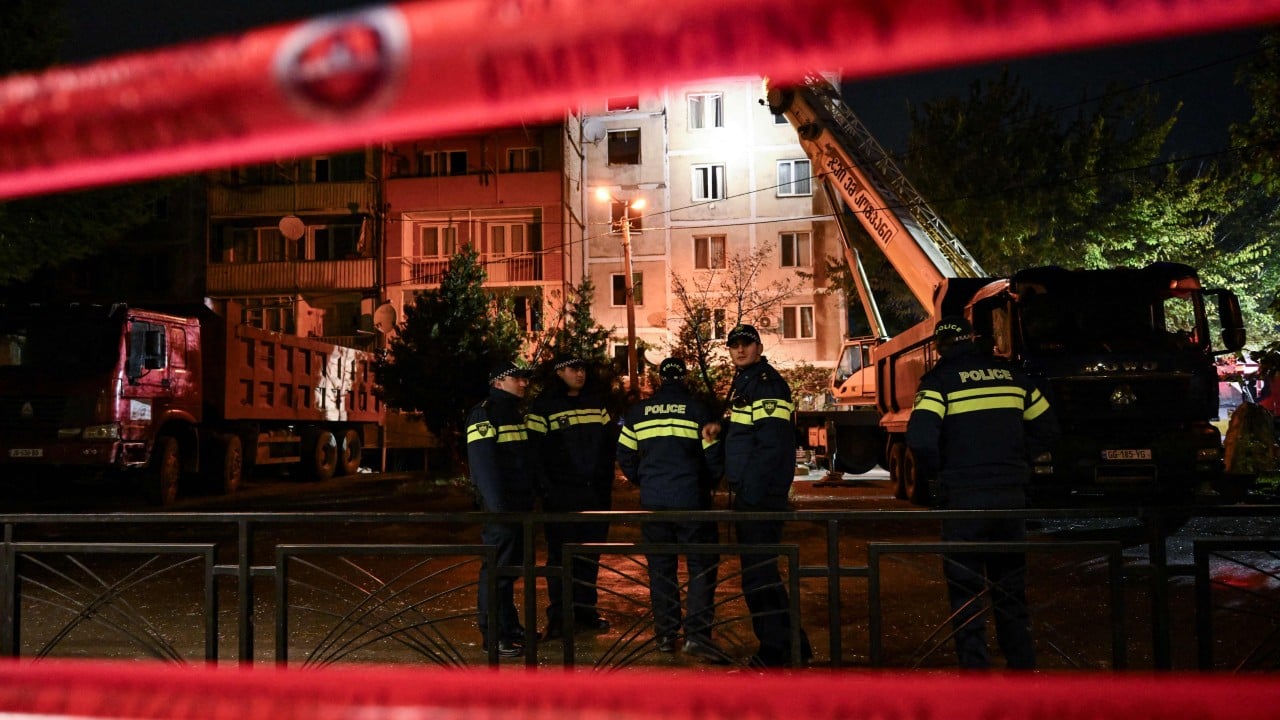
When a residential building in Georgia recently tore itself apart from the inside out—claiming three lives instantly and pinning three more beneath tons of splintered timber and concrete—the breaking news alerts reduced the tragedy to six words and two numbers. Three dead, three trapped. To the casual reader scrolling past a headline over morning coffee, it registers as a localized accident, a sudden statistical blip in the daily ledger of misfortune.
We read the numbers, feel a brief pang of sympathy, and move on. Yet to understand what actually happened in Georgia, you have to look past the casualty count and examine the invisible, pressurized lifelines woven beneath almost every street in the modern world. Observers at USA Today have also weighed in on this matter.
The Anatomy of an Unseen Threat
Consider a hypothetical morning inside a multi-family building much like the one that collapsed. Let us call the resident on the second floor Elena. At 7:15 AM, Elena is standing at her kitchen counter, waiting for the kettle to whistle, completely unaware that three floors below her feet, a hairline fracture in a corroded supply pipe—or perhaps a compromised joint behind a basement water heater—has been quietly bleeding natural gas into an unventilated crawlspace since midnight.
Natural gas, in its raw state, is entirely odorless and colorless. Utility companies inject a chemical compound called mercaptan into the supply specifically to give it that sharp, unmistakable stench of rotten eggs. It is a brilliant piece of behavioral engineering designed to trigger an immediate biological alarm in the human brain.
Yet that alarm system relies on a fragile chain of luck. It requires someone to be awake, to be in the right room, to have a functioning sense of smell, and to recognize the danger before the concentration of gas hits a very specific threshold.
To grasp how a single spark levels a multi-story structure, think of a closed room filled with gas not as a pile of firewood waiting to burn, but as a tightly coiled spring. Natural gas only ignites when mixed with air at a precise ratio—roughly between five percent and fifteen percent gas. Below five percent, the mixture is too lean to catch. Above fifteen percent, there isn't enough oxygen to feed a flame.
Inside Elena’s building, the gas pools quietly in the dark, rising toward the floorboards because methane is lighter than air. It seeps into wall cavities, elevator shafts, and utility chases, turning the entire architectural skeleton of the building into a single, interconnected fuse. All it takes is the mundane click of a refrigerator compressor cycling on, the filament of a toaster heating up, or a finger flipping a bathroom light switch.
When that microscopic arc of electricity meets the gas, the spring releases.
The Physics of Collapse
A gas explosion does not push outward evenly like a balloon popping; it creates a violent, supersonic pressure wave that hunts for the path of least resistance. Load-bearing walls, built to withstand the downward pull of gravity, are notoriously weak against sudden lateral force. The blast blows the exterior walls outward, kicking the structural legs out from under the upper stories.
In Georgia, that chain reaction unfolded faster than the human nervous system can process pain. One moment, people were sitting in living rooms, checking their phones, or preparing meals; the next, the floors beneath them vanished, collapsing downward in what structural engineers call a "pancake" failure.
For the three individuals trapped beneath the wreckage, survival became an agonizing test of endurance and geometry. When a building falls, it rarely flattens completely. Heavy furniture, bathtubs, doorframes, and intersecting steel beams often catch the falling slabs at sharp angles, creating tiny, triangular pockets of breathable air known as "void spaces."
Lying in the pitch dark, pinned by concrete and choked by plaster dust, a trapped survivor experiences time differently. Every groan of settling timber sounds like a secondary collapse. Every breath draws in microscopic particles of fiberglass and pulverized masonry. Meanwhile, above them, first responders face an impossible arithmetic: they must move tons of unstable debris as fast as humanly possible, knowing that lifting the wrong beam by two inches could shift the weight and crush the very people they are trying to reach.
Why It Keeps Happening
I have walked through the aftermath of structural failures before, and the detail that always haunts me is never the twisted metal—it is the sheer ordinariness of the debris. You see a child’s sneaker resting on top of a shattered cinderblock. You see a half-read paperback novel lying open next to a sheared gas main. These scenes strip away the illusion that our homes are permanent fortresses.
If you feel a quiet knot of anxiety tightening in your stomach right now, you are paying attention. We have built our entire modern comfort around piping volatile hydrocarbons directly into the walls where our children sleep, trusting that aging infrastructure and decades-old municipal codes will hold the line forever.
And most of the time, they do. Millions of miles of distribution pipelines and residential hookups operate without incident every single day. Yet history—from the devastating 2014 East Harlem collapse in New York to the 2018 Merrimack Valley gas explosions in Massachusetts—reveals a stubborn, recurring vulnerability. Infrastructure ages silently. Soil shifts after heavy rains, putting lateral stress on buried service lines. Contractors digging in adjacent lots nick pipes without reporting the damage. Inside older buildings, flexible brass connectors degrade, and DIY renovations accidentally puncture hidden lines behind drywall.
Even more troubling is a psychological blind spot known as "olfactory fatigue." When a gas leak starts slowly over several hours, the human nose gradually adapts to the smell of mercaptan, muting the warning signal until the concentration has already reached dangerous levels. People assume the faint odor is coming from a neighbor's cooking, a sewer backup, or a temporary pilot light issue. They open a window instead of evacuating, or worse, they turn on a stove burner to check if the gas is still working.
The Rules That Save Lives
When emergency investigators sift through the rubble in Georgia over the coming weeks, they will trace the blast back to its point of origin—a failed regulator, a cracked union, or an unpermitted repair. They will write a technical report detailing pressure readings and metallurgical fatigue.
For the rest of us living behind walls fed by gas lines, the lessons cannot wait for a final engineering report. Survival in the face of a gas leak comes down to overriding our natural instinct to investigate.
If you ever catch even a fleeting whiff of sulfur or rotten eggs inside a building, or hear a faint hissing sound near an appliance or utility meter, you are already inside the blast radius. Do not touch a single electrical switch—not to turn a light on, and not to turn one off, because breaking a circuit creates a spark just as easily as completing one. Do not unplug appliances. Do not use your phone inside the building, and do not linger to gather keys, wallets, or pets.
Walk out immediately, leave the door open behind you so the gas can vent rather than build pressure, and keep walking until you are well down the block before dialing 911. Installing battery-operated explosive gas detectors near ceiling level—distinct from standard carbon monoxide alarms, which sit lower and detect a completely different hazard—adds an electronic sentry that never suffers from nose blindness while you sleep.
Down in Georgia, heavy cranes and urban search-and-rescue teams worked through the dust and tangled rebar, listening with acoustic sensors for the faintest tap of a knuckle against a pipe, fighting to turn three trapped souls into three survivors while grieving the three who never had a chance to run.
Tonight, millions of furnaces will kick on across the country with a soft, familiar whoosh, warming bedrooms and kitchens against the chill, separated from catastrophe by nothing more than a thin wall of steel and the fragile vigilance of the people sleeping upstairs.