A single titanium blade sits on a velvet-lined workbench in a facility outside Shanghai. It is thin, curved with the elegance of a bird’s wing, and smooth enough to reflect the fluorescent lights of the hangar like a mirror. To a casual observer, it is a beautiful piece of industrial art. To the engineers standing over it, it is a ghost.
This is the heart of the C919, China’s first domestic narrow-body passenger jet. On the outside, the plane is a triumph of national pride, a sleek white-and-green challenger to the decades-old duopoly of Boeing and Airbus. But as the aircraft climbs through the clouds, it breathes through lungs borrowed from the West.
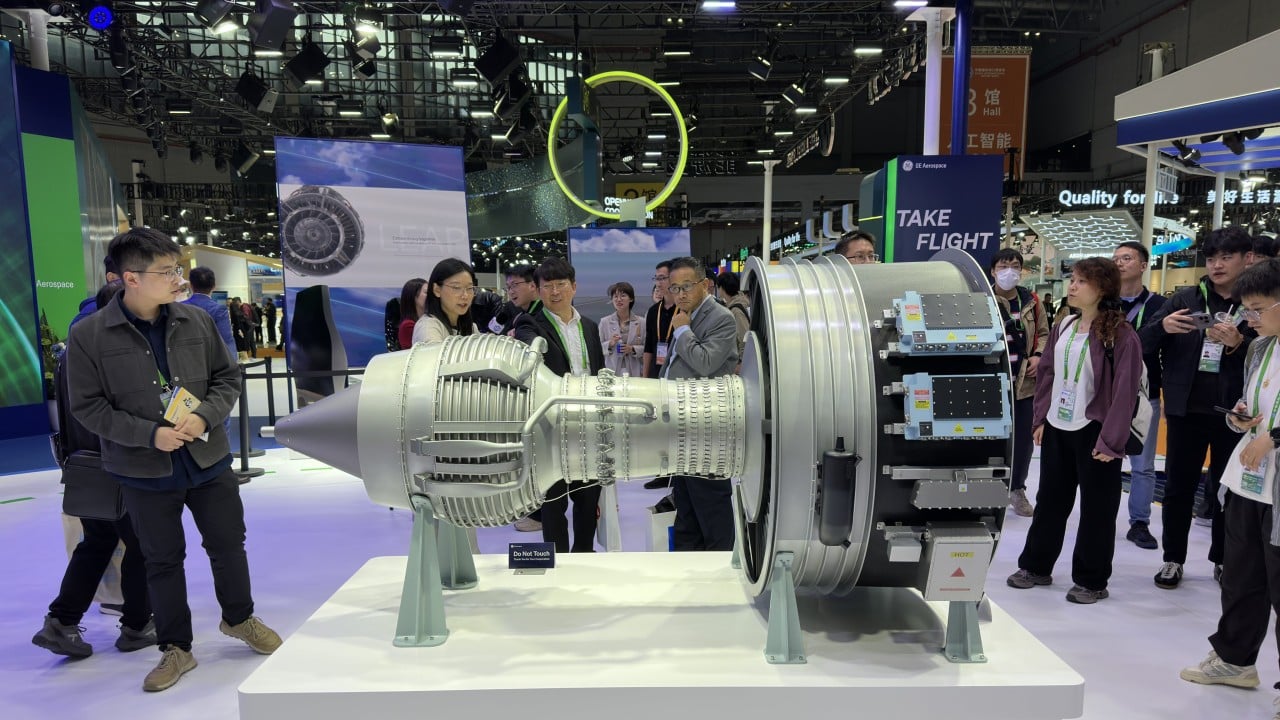
The C919 does not fly on Chinese fire. It flies on the LEAP-1C engine, a masterpiece of engineering produced by CFM International—a joint venture between GE Aerospace in the United States and Safran Aircraft Engines in France.
This is the dilemma. China has built the body, the wings, and the soul of a global competitor, but it has yet to master the mechanical heartbeat that makes the whole machine come alive.
The Metal That Refuses to Melt
Think of an jet engine not as a machine, but as a controlled explosion. Inside the core of a LEAP-1C, the air is compressed until it is white-hot, mixed with fuel, and ignited. The temperatures inside reach levels that would instantly liquefy most common metals.
Consider a hypothetical lead engineer named Zhang. He has spent twenty years in the state-owned aerospace sector. He watches the C919 take off from Shanghai Hongqiao International Airport and feels a swell of pride. But when he goes back to his desk, he stares at the blueprints for the CJ-1000A—the homegrown engine meant to replace the Western imports.
He knows the physics. To keep the engine from melting itself from the inside out, the turbine blades must be grown as single crystals of a superalloy. If a single grain boundary exists in the metal, the blade will shatter under the centrifugal force of thousands of rotations per minute. It is a feat of materials science that sits at the very edge of human capability.
The Americans and the French have had sixty years to fail, learn, and perfect this. China is trying to bridge that sixty-year gap in a decade.
The Invisible Strings of Supply
Success in the skies is often measured by "on-wing time." For an airline like China Eastern, a plane is only making money when it is moving. The LEAP-1C is a miracle of reliability. It can stay on the wing for years without needing a major overhaul. This efficiency is why the C919 can realistically compete with the Boeing 737 Max or the Airbus A320neo.
However, using Western engines means the C919 is tethered to a global supply chain that is increasingly fragile.
Geopolitics is a cold wind. If trade relations sour or export licenses are revoked, the C919 becomes a very expensive museum piece. The engines are the lever. Without them, the wings have no purpose. This is why the push for the CJ-1000A is not just about engineering; it is about survival. It is about ensuring that a domestic aviation industry cannot be grounded by a signature in a foreign capital.
But the CJ-1000A is still in the "testing and certification" phase. In the world of aviation, that is a polite way of saying it is years away from carrying a grandmother and her grandson across the country with the same safety rating as a GE engine.
The Sound of Trust
When you sit in seat 14A of a C919, you hear a low, rhythmic hum as the plane taxis. That sound is the result of billions of dollars in research and development. It is the sound of trust.
Passengers do not care about the origin of the single-crystal superalloys. They care about getting to Beijing for a 2:00 PM meeting. They care about the fact that the engine has been tested against bird strikes, volcanic ash, and torrential ice storms.
For the C919 to be a global success—not just a domestic one—it must convince the world's regulators that its homegrown alternatives are just as boringly reliable as the ones made in Ohio or Derby.
The difficulty lies in the "dark art" of engine integration. An engine is not just bolted onto a wing. It must talk to the flight computer. It must respond to the pilot’s throttle with a specific, predictable curve of thrust. It must bleed off air to pressurize the cabin so the passengers can breathe.
When China eventually swaps the Western engine for the Chinese one, they aren't just swapping a part. They are rewriting the nervous system of the aircraft.
The Weight of Ambition
Critics often point to the slow rollout of the C919 as a sign of failure. They see the small number of deliveries and the heavy reliance on foreign components as proof that the project is more PR than progress.
But look closer.
The C919 has already broken the psychological barrier. It has proven that China can manage the massive, multi-tiered complexity of a modern commercial jet. It has forced Boeing and Airbus to look over their shoulders.
The engine dilemma is the final boss in this particular game of industrial development. It is the most difficult piece of the puzzle because it leaves no room for error. A software bug can be patched. A leaky window can be sealed. But if a turbine blade fails at 35,000 feet, the story ends.
Zhang knows this. Every engineer in Xi'an and Shanghai knows this. They are working in a tradition where "good enough" is a death sentence. They are chasing a standard set by companies that have been building engines since the dawn of the jet age.
A Sky Full of Three Suns
For decades, the aviation world has been a binary system. You were either a Boeing person or an Airbus person. The C919 represents the birth of a third sun in that sky.
The heat of that sun depends entirely on the fire in its engines.
Right now, the C919 is like a world-class athlete wearing someone else's shoes. It can run, it can compete, and it can win. But it will never truly be the master of its own pace until it creates its own stride.
The journey from the LEAP-1C to the CJ-1000A is the story of a nation trying to master the most unforgiving physics on the planet. It is a story of heat, pressure, and the quiet, obsessive pursuit of a metal that refuses to melt.
As the white jet disappears into the haze over the East China Sea, the Western engines roar, pushing it forward. The engineers on the ground watch it go, already thinking about the day when the roar they hear is entirely their own.
They are waiting for the dragon to take its first true breath.