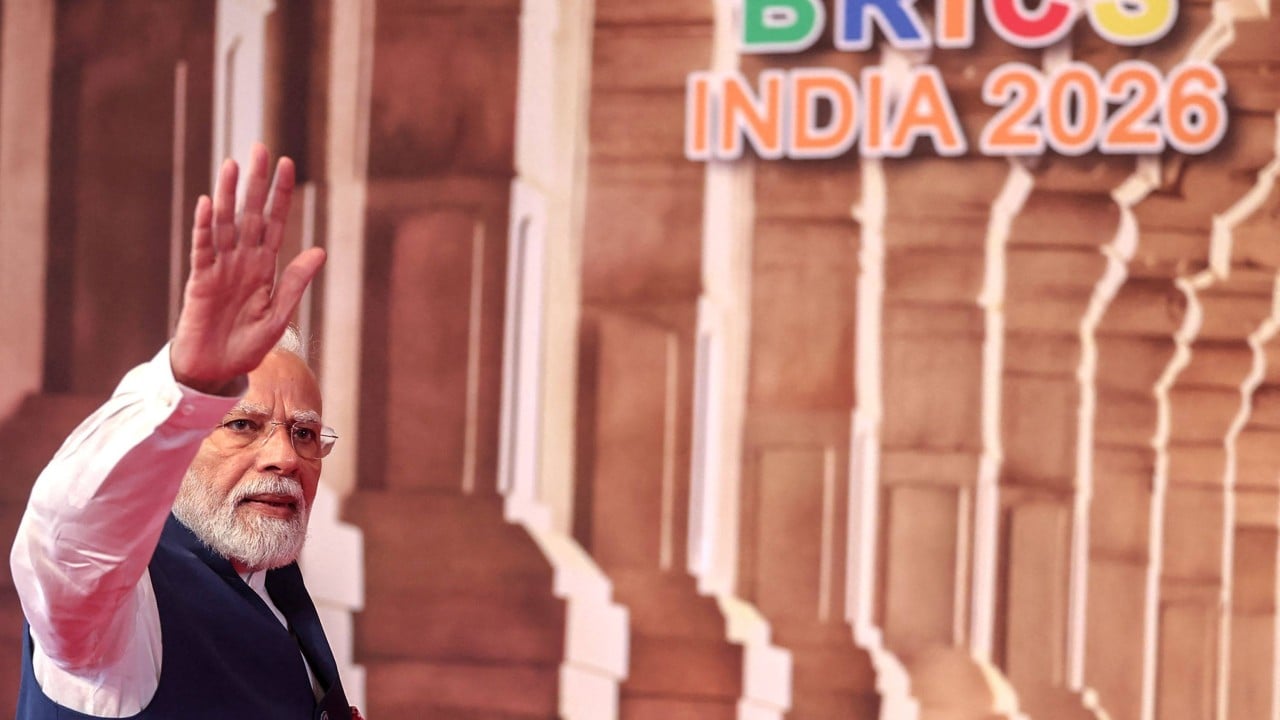
Every international relations analyst in Western capitals is currently hyperventilating over the latest BRICS joint declaration, wringing their hands about the death of the dollar-dominated world order because New Delhi signed a consensus text. It is a masterclass in missing the forest for the trees. India scored a diplomatic win? Please. What actually happened is that New Delhi signed a bureaucratic paper tiger containing precisely zero binding mechanisms, all to appease a room full of competing autocrats while quietly pursuing an aggressive bilateral hedging strategy that makes the entire multilateral block look like a photo-op club.
For months, mainstream pundits treated the BRICS summit as an existential showdown. The lazy consensus went like this: India walked into the lions' den, balanced between Moscow and Beijing, and extracted a diplomatic victory by preserving its strategic autonomy within a joint declaration. Don't miss our earlier article on this related article.
That narrative is kindergarten geopolitics.
A joint declaration in multilateral diplomacy is not a treaty; it is a ceasefire of competing ambitions packaged as shared rhetoric. When you look past the diplomatic perfume sprayed over the communique, the fundamental fractures between New Delhi and Beijing remain as jagged as the Line of Actual Control. India did not score a win by signing a declaration. India survived a diplomatic trap by ensuring the declaration lacked teeth. To read more about the context here, The New York Times offers an informative breakdown.
Let us look at the structural mechanics of how these summits operate. I have spent years watching bureaucrats draft these communiques line by line in windowless rooms at three in the morning. Everyone walks away happy because everyone compromises on substance. China wants anti-Western posturing and a parallel financial architecture to bypass sanctions. India wants sovereign breathing room, zero commitments to de-dollarization that would wreck its currency reserves, and a platform to remind Washington that New Delhi has options. The resulting text is a linguistic compromise designed for press releases, not execution.
Call it the diplomacy of strategic ambiguity.
The core deception of the mainstream narrative is the assumption that shared signatures equal shared vision. They do not. Beijing views BRICS as an anti-hegemonic battering ram designed to construct a Sino-centric global alternative. New Delhi views BRICS as a necessary hotel lobby where you must check in to keep an eye on your rivals, but you never sleep in the room. If you think India is about to ditch the dollar to adopt a BRICS currency backed by yuan-managed trade arrangements, you fundamentally misunderstand New Delhi's foreign policy calculus. India's central bank and Ministry of External Affairs are terrified of becoming junior partners in a Beijing-led monetary bloc.
The Currency Illusion
Consider the obsession over de-dollarization. Every headline surrounding these summits screams about the imminent collapse of greenback hegemony. Analysts point to paragraphs in the joint declaration praising local currency settlements as proof of a changing tide.
Wake up. Bilateral trade settlements in rupees and rubles or yuan are not a revolutionary strike against Western finance. They are accounting headaches born out of emergency sanctions. When Russia sells discounted oil to India, Moscow accumulates billions of rupees that it cannot easily repatriate or spend outside of Indian markets. That is not a triumphant new monetary system; that is a high-stakes barter economy driven by structural trade imbalances.
India's trade deficit with China sits at massive proportions, while its trade with Russia is heavily skewed toward energy imports. If India attempts to settle broad multilateral trade through a BRICS mechanism dominated by Beijing, New Delhi simply trades Washington's hegemony for Beijing's financial cage. Indian policymakers know this better than anyone. That is why India's External Affairs Minister, S. Jaishankar, routinely pours cold water on notions of a unified BRICS currency.
The joint declaration uses safe, non-binding language about exploring payment systems precisely because it commits nobody to anything. It is diplomatic theater. It allows the host country to claim a sweeping geopolitical triumph while actual trade continues to be dictated by hard-nosed national interest, naval logistics, and semiconductor supply chains.
The Quad Paradox
You cannot analyze India's diplomatic gymnastics at a BRICS summit without acknowledging its opposite-number alignment: the Quad.
While Western commentators hyperventilate over New Delhi shaking hands with Moscow and Beijing, India is simultaneously conducting high-tech naval exercises with the United States, Japan, and Australia. This is not hypocrisy; it is multi-alignment executed at a Grandmaster level.
India operates on the Kautilyan principle that your neighbor is your natural enemy, and your neighbor's neighbor is your friend. China is India's existential land threat. The United States is India's critical balancing weight for high-end technology, defense transfers, and Indo-Pacific security. Russia is India's historical defense hardware supplier and a hedge against total isolation.
To manage this impossible triad, New Delhi must attend BRICS summits, sign innocuous communiques about multilateralism, and play the role of the voice of the Global South. But behind closed doors, India's real strategic investments run through Washington, Tokyo, Paris, and Canberra.
Pretending that a BRICS joint declaration alters this reality is analytical laziness. It mistakes the noise of the summit circuit for the signal of structural statecraft.
Why The Global South Rhetoric Falls Flat
Another favorite talking point of the commentariat is that these declarations cement India's leadership of the Global South.
Let us be brutally honest. The Global South is not a monolith; it is a collection of developing economies with wildly divergent interests, debt burdens, and geopolitical fears. Many smaller nations in the expanded BRICS roster joined not out of ideological fervor against the West, but out of opportunistic desperation for development loans and diplomatic leverage against traditional donors.
When India signs a text alongside nations deeply indebted to Chinese infrastructure financing, New Delhi is not leading them; it is managing them. India wants to prevent Beijing from weaponizing the BRICS platform into an explicitly anti-Western military or economic alliance. By staying inside the tent, India dilutes Chinese hegemony from within.
That is the real Indian victory. Not some sweeping ideological triumph enshrined in a press release, but the quiet, grinding diplomatic containment of Chinese ambitions inside a multilateral body that Beijing hoped to dominate entirely.
The Cost of Strategic Hedging
Every policy choice carries a price tag, and India's masterclass in multi-alignment is no exception. By playing across multiple tables, New Delhi invites deep suspicion from Western risk analysts who wonder if India can truly be relied upon as a long-term democratic anchor in Asia.
When Western capitals see India refusing to join anti-Russian sanctions and signing broad BRICS communiques, alarm bells ring in policy circles. Critics argue that India is trying to have its cake and eat it too—taking Western technology, intelligence sharing, and market access while undercutting Western-led sanctions and governance frameworks.
This criticism misses the structural reality of twenty-first-century middle-power politics. India is too big to be a client state and too constrained by geography to be a formal Western ally. New Delhi will not outsource its strategic autonomy to Washington any more than it will surrender it to Beijing.
The downside of this approach is friction. Trade negotiations stall. Defense interoperability hits political ceilings. Western media runs hit pieces questioning India's democratic trajectory. Yet, Indian foreign policy leadership accepts these friction costs because the alternative—subordinating national interest to a rigid bloc alignment—is infinitely more dangerous.
Dismantling The Myth of Multipolar Harmony
The fundamental flaw in how the world reads these declarations is the romantic notion that multipolarity equals peace. It does not. Historically, multipolar systems marked by rising regional powers, contested borders, and shifting alliances are profoundly unstable.
The BRICS joint declaration is a symptom of that instability, not a cure for it. It is a paper shield used by diverse regimes to project an image of solidarity while they eye each other warily across disputed borders and competing trade corridors.
Stop reading the preamble of these declarations as if they are sacred texts. Look at the balance sheets, the naval deployments, the semiconductor fabs, and the mineral supply chains. That is where the real game is played.
India did not score a win by signing a piece of paper in a conference hall. India won by ensuring that the paper meant nothing at all.