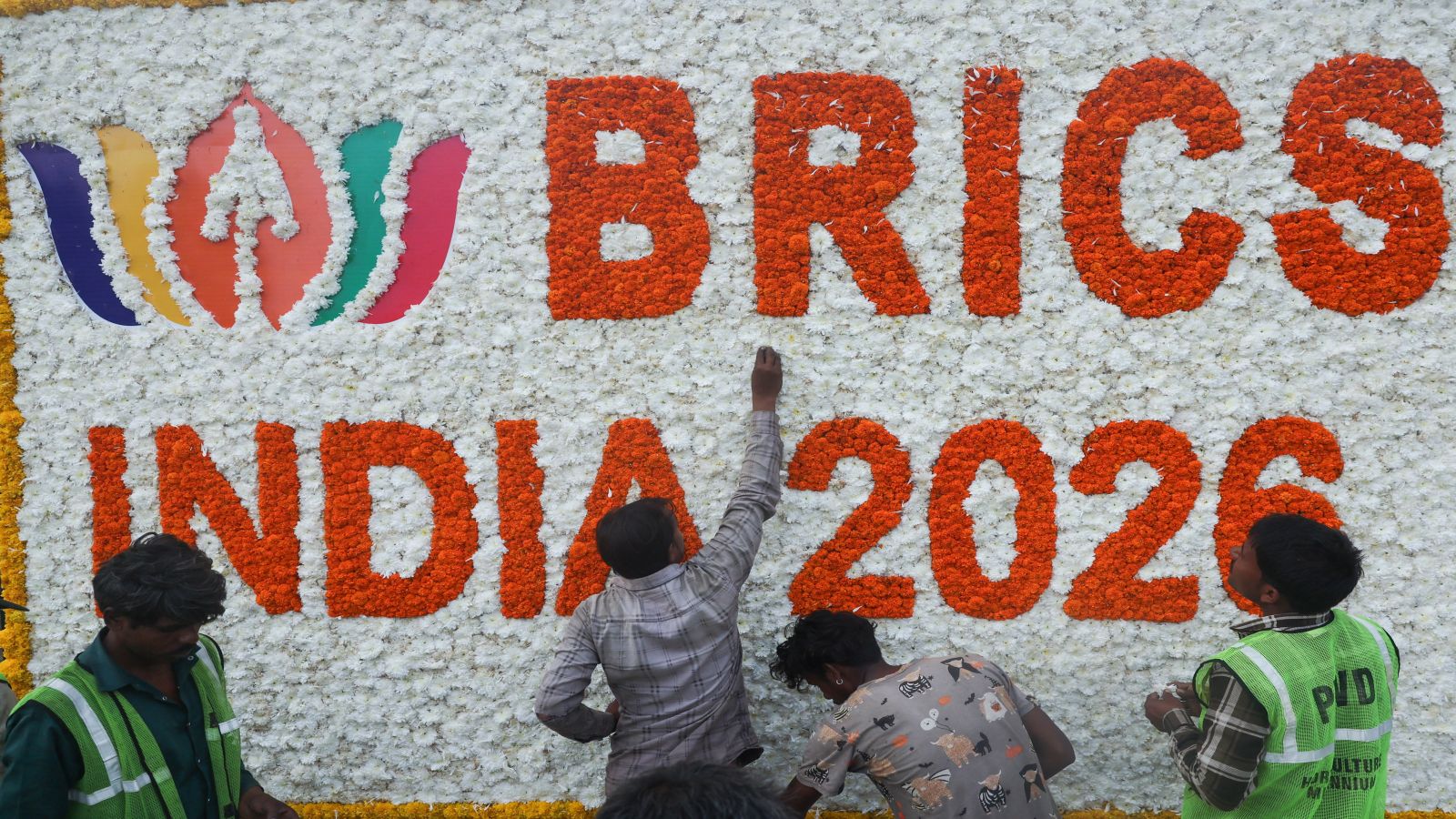
Every major financial desk on Wall Street spent the week hyperventilating over a handshake in Kazan. When Iranian President Masoud Pezeshkian sat down across from Abu Dhabi Crown Prince Sheikh Khaled during the BRICS Summit, the mainstream narrative wrote itself: a historic realignment, an anti-dollar axis forming in real-time, the geopolitical map being violently redrawn.
It is a fantastic story for television ratings. It is also fundamentally illiterate regarding how global capital and sovereign risk actually operate.
I have spent the better part of two decades advising sovereign wealth funds and multinational energy desks on cross-border exposure. I have sat in the private antechambers where Gulf leadership evaluates currency risk while public ministers pose for state television. The lazy consensus dominating global financial media is that petrodollars are fleeing Western custody en masse for an alternative clearinghouse engineered by Moscow and Beijing.
The reality is far more cynical, far more transactional, and entirely divorced from ideological solidarity. Abu Dhabi is not joining an anti-Western crusade; it is running the ultimate financial arbitrage.
The Mirage of De-Dollarization
Let us dismantle the core delusion driving modern geopolitical commentary: the imminent death of the United States dollar via multilateral trade blocs.
When commentators look at BRICS expansion, they see a unified monetary bloc. This assumes that the United Arab Emirates, a nation whose security architecture relies entirely on Western defense umbrellas and whose sovereign balance sheet is denominated in deep, liquid Western debt markets, is suddenly ready to anchor its long-term financial stability to the Iranian rial or the illiquid capital controls of emerging economies.
That is not a strategy. That is financial suicide, and nobody in Abu Dhabi is suicidal.
What actually happened between Pezeshkian and Sheikh Khaled was not an ideological merger. It was bilateral risk management. The Emirates are diversifying their diplomatic optionality while keeping their actual capital safely anchored where the rule of law still functions. Trade settlements in local currencies sound wonderful on press releases, but try parking fifty billion dollars of surplus sovereign capital in a currency that cannot be freely converted or exited without state permission. You will find out very quickly why central bankers quietly laugh off these summits over scotch while their PR departments issue breathless statements about multipolarity.
The Emirati Playbook
To understand why the Abu Dhabi Crown Prince is entertaining bilateral talks with Tehran while simultaneously deepening tech and financial ties with Western markets, you have to look past the summit optics and examine the incentives.
Middle power diplomacy in the current decade is about hedging against a unipolar decline without triggering a premature rupture. Abu Dhabi knows the global order is fragmenting. They see the weaponization of SWIFT, the freezing of Russian foreign reserves, and they realize that keeping all their eggs in a single Washington-centric basket is negligent risk management.
So, what do they do? They play both sides with ruthless precision. They show up to BRICS, shake hands with sanctioned leadership, sign non-binding memoranda of understanding on logistics and energy corridors, and signal to Washington that they have alternative suitors. It is a classic sovereign negotiation tactic: create an alternative to drive up the value of your primary partnership.
To call this a pivot away from the West is to misunderstand Gulf pragmatism entirely. The Dirham is pegged to the dollar. The vast majority of Emirati foreign assets are managed through Western financial centers. The infrastructure powering their AI investments, their aviation hubs, and their maritime logistics relies on Western intellectual property and supply chains. A handful of bilateral meetings at a multilateral summit do not erase structural economic gravity.
Follow the Capital, Ignore the Communiques
If you want to know where power actually lies, stop reading joint communiques and start tracking where sovereign balance sheets deploy dry powder.
Look at where Abu Dhabi's investment authorities are actually wiring their capital. They are buying stakes in Western semiconductor fabrication, partnering with Silicon Valley venture funds, and locking down long-term artificial intelligence infrastructure partnerships with American tech giants. They are not parking generational wealth in non-convertible bloc currencies.
The media wants you to believe we are entering a clean bipolar or multipolar financial architecture where alternative blocs clear trade independently of Western oversight. The truth is messier and more fragile. We are living through an era of transactional opportunism. Every regional power is maximizing its leverage by playing multiple boards simultaneously.
Iran needs diplomatic rehabilitation and economic oxygen to survive internal pressures, using any bilateral channel it can secure. The UAE needs regional de-escalation to protect its domestic real estate and tourism boom, making handshakes with Tehran a cheap insurance policy against maritime disruption in the Strait of Hormuz.
None of this requires a new global currency. None of this requires dismantling the international monetary system.
The next time you see a headline about historic realignments at an emerging markets summit, ask yourself a simple question: where are the principals keeping their own money? When the answer is still New York and London, pay zero attention to the handshakes in front of the cameras.


