The water in Passamaquoddy Bay doesn’t care about flags. It rises and falls by twenty-eight feet twice a day, the highest tides in the world, churning up cold Atlantic brine between Maine and New Brunswick with a rhythmic, indifferent violence.
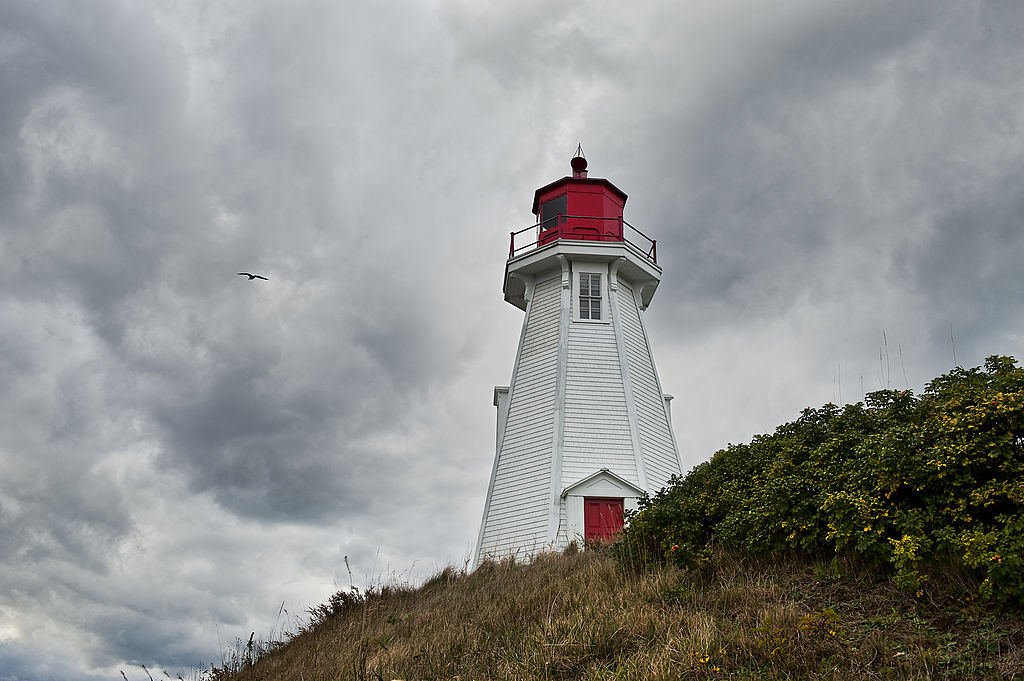
On the Canadian side of that churn sits Campobello Island.
If you look at a map, Campobello looks like a geographical typo. It belongs to New Brunswick, Canada. Its residents pay Canadian taxes, carry Canadian health cards, and cheer for Canadian hockey teams. Yet, for nine months of the year, there is no way to drive from Campobello to the rest of Canada without leaving the country first. The Franklin Delano Roosevelt Memorial Bridge—a modest, two-lane span of steel and concrete—connects the island exclusively to Lubec, Maine. To buy a carton of milk on the Canadian mainland, a resident of Campobello has to clear U.S. Customs, drive forty miles through rural Washington County, Maine, and clear Canadian Customs at St. Stephen.
For decades, that quirk of cartography was a charming piece of trivia, the kind of thing tourists smiled about while eating lobster rolls near Roosevelt’s old summer cottage. The border was a formality. A wave to the guard. A quick question about alcohol or tobacco.
Then came the tariffs.
When trade wars erupt between Washington and Ottawa, economists talk in abstractions. They debate basis points, retaliatory schedules, steel quotas, and supply chain elasticity. They look at spreadsheets in air-conditioned offices in D.C. and Ottawa, moving billions of dollars around like chess pieces.
They rarely look at a woman trying to bring a bag of groceries across a bridge in the rain.
The Geography of a Chokehold
To understand what happens when a trade war hits an island like Campobello, you have to strip away the macroeconomics and look at the refrigerator.
Consider a hypothetical resident—let’s call her Sarah—who has lived in Welshpool, one of the island's small fishing villages, for thirty years. Sarah isn't a policy analyst. She is a retired schoolteacher living on a fixed pension. On a Tuesday morning in November, when the seasonal ferry to Deer Island has been pulled from the water for the winter, Sarah needs lumber to fix a rotted porch step, new tires for her Honda, and basic groceries that the island’s single, modest convenience store doesn't carry.
In a normal world, Sarah drives ten minutes across the Roosevelt Bridge into Maine, hits the hardware store in Machias or Calais, grabs her groceries, and drives home.
In a trade war, that ten-minute drive becomes an obstacle course of punitive taxation.
When the United States slaps tariffs on Canadian aluminum, softwood lumber, or dairy, Canada inevitably retaliates. Ottawa draws up a list of American goods—everything from orange juice and bourbon to washing machines, tires, and household hardware—and slaps a 10 percent or 25 percent surtax on them at the border. The goal is political pain. Ottawa wants to hurt the districts of American lawmakers so they pressure the White House to back down.
It is a blunt instrument. And on Campobello Island, it swings right into the faces of Canadians.
Because Sarah cannot reach a Canadian hardware store without crossing the U.S. twice, she buys her supplies in Maine. When she drives back across the bridge onto Canadian soil—her own soil—the Canada Border Services Agency is legally obligated to treat her trunk full of groceries and porch repair supplies as American imports. If those items are on the retaliatory tariff list, Sarah pays the tax.
She isn't trying to undercut Canadian manufacturing. She has no choice. Yet she is penalized for buying food in the only town she can reach by road.
"It feels like being grounded in your own house," one longtime islander told me years ago during a similar flare-up, leaning against the counter of a local shop while the fog rolled in off the bay. You could hear the exhaustion in his voice, a specific kind of fatigue that comes from explaining your existence to people who only understand maps in straight lines. "Ottawa forgets we're here until they want our taxes, and Washington doesn't care because we can't vote."
The Invisible Tax on Survival
The absurdity deepens when you follow the supply trucks.
Campobello’s economy runs on the water—lobster, herring, scallops, salmon aquaculture—and the seasonal trickle of tourists coming to see where FDR contracted polio in 1921. Everything else has to be trucked in. Heating oil. Propane. Mail. Medical supplies.
When a Canadian delivery truck leaves St. John, New Brunswick, bound for Campobello, it has to cross into Maine at Calais, drive south down Route 1, and cross back into Canada over the bridge at Lubec. Under normal customs rules, goods moving "in transit" from one part of Canada to another through the U.S. are bonded and sealed, exempt from duties.
Trade wars poison the air around those rules.
Suddenly, border enforcement tightens. Paperwork requirements balloon. A truck carrying Canadian-made goods to a Canadian island gets flagged because a manifest isn't stamped correctly, or because a mixed load contains items subject to new cross-border scrutiny. Delays at the crossing stretch from twenty minutes to three hours. For a lobsterman trying to get live catch to a processing plant on the mainland before the market closes, three hours in a customs line isn't an inconvenience. It is the difference between a profitable season and a ruined harvest.
Meanwhile, the local businesses on the island get squeezed from both sides.
Think of the island’s general store, the lifeline for elderly residents who can't make the long drive to the mainland. If the store owner orders inventory from a wholesaler in Maine, they get hit with Canadian retaliatory tariffs at the bridge. If they order from a wholesaler in New Brunswick, the freight costs skyrocket because the delivery driver has to navigate international customs protocols twice just to drop off three pallets of canned soup and paper towels.
Either way, the price on the shelf goes up. A gallon of milk costs more. A loaf of bread costs more. Heating oil—the lifeblood of a Maritime winter where the wind howls straight off the North Atlantic—becomes a luxury calculation.
Why Nobody Fixes the Map
You might ask the obvious question: Why doesn't Canada just build a bridge to the mainland?
Look at the water between Campobello and the rest of New Brunswick. To the north lies Deer Island, separated by Head Harbour Passage—a deep, treacherous channel where the Bay of Fundy tides funnel through narrow rock walls, creating whirlpools and currents that chew up boats and laugh at bridge pilings. Even if you bridged that gap, you would still only be on Deer Island, which itself relies on a ferry to reach the mainland.
Building a year-round bridge network across those passages would cost hundreds of millions of dollars. For a community of roughly nine hundred year-round residents, the math simply doesn't work in the ledger books of provincial bureaucrats in Fredericton or federal ministers in Ottawa.
Instead, the government subsidizes a seasonal ferry that runs from late June to late September. For the other nine months of the year, the island is tethered to the United States by a single umbilical cord of steel.
This is the hidden architecture of modern trade disputes. Politicians love the theater of tariffs. They stand behind podiums, jaws set, promising to protect domestic workers and punish unfair trade practices. The rhetoric is muscular, clean, and binary. Us versus them.
Campobello proves that us and them is a fiction.
On that island, families are braided across the border. People from Campobello marry people from Lubec. Canadian kids go to school in Maine because the bus ride to a Canadian high school would take two hours each way through a foreign country. Volunteer fire departments cross the bridge to help put out house fires on the other side without stopping to ask whose flag is flying on the porch.
When a trade war lands on a community like this, it doesn't act like a shield protecting national industry. It acts like a wedge driven straight into a living room.
The Precedent of Fear
History offers a grim warning about what happens when border friction becomes the norm rather than the exception.
Before September 11, 2001, crossing the Roosevelt Bridge required little more than a nod. Residents didn't even carry passports; a driver's license or a birth certificate—or simply being recognized by the guard—was enough. After 2001, the Western Hemisphere Travel Initiative mandated passports and hardened the border. Suddenly, a neighbor who forgot their wallet couldn't go to the clinic in Machias. Cross-border youth sports leagues withered because parents didn't want the hassle of customs interrogations for a Tuesday night basketball game.
The community adapted, as resilient coastal towns always do, by absorbing the friction into their daily routines. They kept their passports in the glove box. They budgeted extra time. They swallowed the frustration.
A trade war adds a financial penalty to that psychological toll.
When tariffs linger—whether on softwood lumber, which has been a recurring battlefield between the U.S. and Canada for four decades, or on broad swathes of consumer goods—they create an atmosphere of low-grade paranoia. You start second-guessing every purchase. You stand in the aisle of a grocery store in Calais, holding a jar of peanut butter or a bag of apples, trying to remember if it’s on the retaliatory tariff list. You calculate whether the 25 percent duty at the bridge makes it cheaper to drive an extra eighty miles through the woods to St. Stephen, burning gas and half your afternoon just to avoid a border tax.
I remember talking to a fisherman near North Road whose hands were scarred from forty years of hauling traps. He wasn't angry at Americans; half his cousins lived in Maine. He wasn't even particularly angry at Ottawa. He just looked bewildered by the sheer carelessness of it all.
"They draw a line on a piece of paper," he said, nodding toward the water, "and then they act surprised when the tide washes over it."
The Quiet Erosion
The real danger to Campobello isn't a dramatic collapse. Islands don't go bankrupt overnight. They hollow out.
It happens one family at a time. A young couple with two kids looks at the cost of heating their home, the price of groceries inflated by cross-border tariffs, and the uncertainty of whether their lobster catch will get stuck in a customs dispute at the border. They look at the ferry schedule that shuts down just as the weather turns cold. And eventually, they pack up a U-Haul, drive across the Roosevelt Bridge, turn north at Calais, and never come back.
When they leave, the island loses more than two taxpayers. It loses a volunteer firefighter. It loses two kids in the elementary school, pushing the enrollment dangerously close to the threshold where the province decides to close the doors. It loses the quiet, stubborn continuity that keeps a remote community alive.
Trade negotiators rarely calculate the value of a volunteer fire department. There is no column in a tariff schedule for the slow death of a fishing village.
A Carving Knife in the Dark
There are solutions, of course, if anyone in power cared enough to look closely at the map.
Ottawa could create a permanent, automatic tariff exemption for residents of geographically isolated border communities like Campobello, Point Roberts in Washington State, or the Northwest Angle in Minnesota—places where geography forces citizens to buy daily necessities across an international line. A simple registry tied to a driver’s license or license plate would allow islanders to bring home groceries, building materials, and household goods without being taxed as international importers.
Customs agencies on both sides could establish a dedicated fast-track lane for domestic freight moving in transit between Canadian points, stripping away the retaliatory red tape that chokes local supply chains.
It wouldn't cost Washington or Ottawa a dime in political leverage. It wouldn't undermine a single trade objective. It would simply require acknowledging that a border is a human construct, and that when you swing a tariff like a broadsword, you shouldn't cut off your own fingers.
Until that happens, the people of Campobello will keep doing what they have always done. They will watch the tides rise and fall in Passamaquoddy Bay. They will pack their passports next to their grocery lists. And every time they drive across that two-lane bridge into Maine, they will glance up at the flags snapping in the Atlantic wind, wondering how much it is going to cost them just to come home.