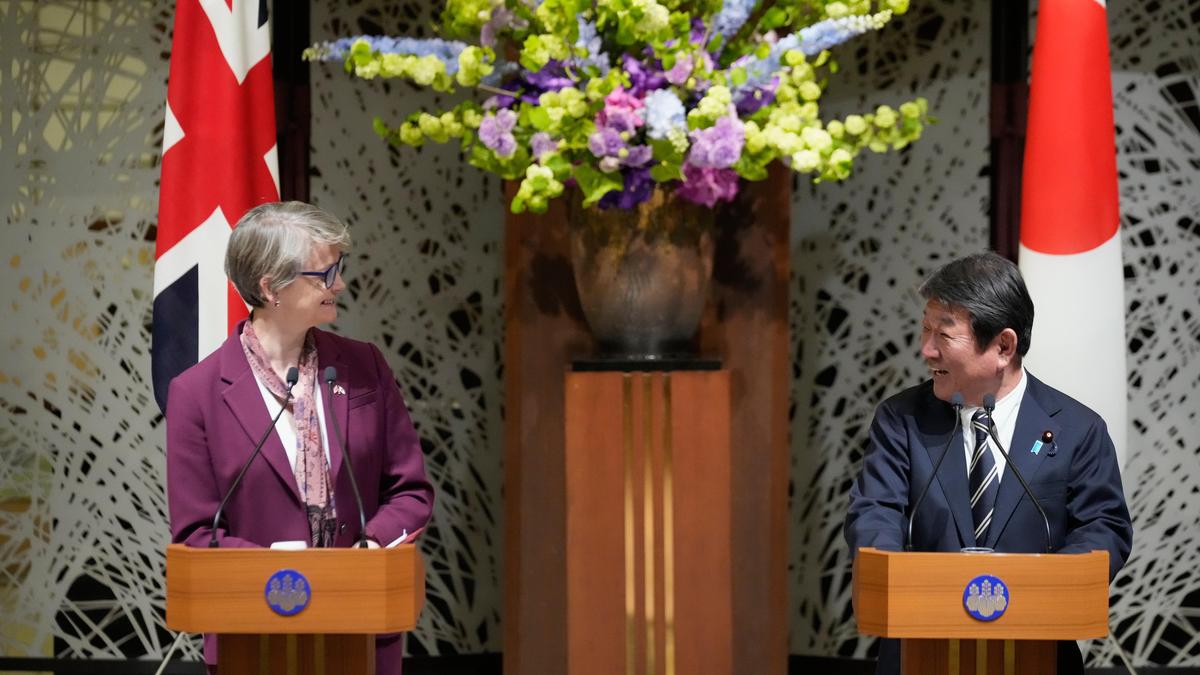
The United Kingdom has stepped directly into the center of a brewing maritime crisis, demanding that the Strait of Hormuz remain a "toll-free" international artery. While the language sounds like standard diplomatic posturing, the reality is far more desperate. London is attempting to prevent a total breakdown of global energy security as regional tensions threaten to turn the world’s most vital oil transit point into a private toll booth for paramilitary interests. This isn't just about ships passing through a narrow stretch of water; it is a fight for the survival of the current maritime order that keeps global inflation from spiraling out of control.
The Mirage of Free Passage
For decades, the Strait of Hormuz has operated under a fragile understanding of "transit passage" defined by the United Nations Convention on the Law of the Sea. This allows vessels to move through the territorial waters of coastal states—specifically Iran and Oman—as long as their passage is continuous and expeditious. But that legal framework is currently being shredded.
The U.K. government’s recent demand for a toll-free strait is a direct reaction to a new, more aggressive form of maritime extortion. We are seeing a shift from traditional state-on-state friction to a "shadow tax" system. When tankers are harassed, seized, or forced to pay "protection" through redirected insurance premiums and private security fees, the strait is no longer free. The U.K. recognizes that if a single nation can effectively charge for entry through intimidation, the entire concept of international waters becomes a relic.
The Mechanics of the Squeeze
How do you charge a toll on a body of water without a physical gate? You do it through risk.
Every time a drone is spotted near a commercial vessel or a naval patrol forces a ship to change course, the cost of doing business spikes. Global shipping companies aren't just paying for fuel and labor. They are paying for War Risk Insurance, which can fluctuate wildly based on the news cycle in London or Tehran. By demanding a toll-free strait, the U.K. is calling for the removal of these artificial financial barriers that act as a de facto tax on every barrel of oil that moves through the region.
Why the U.K. is Leading the Charge
It is no accident that Britain is the loudest voice in this room. While the United States has the raw naval power, the U.K. remains the global hub for maritime law and insurance. Lloyd’s of London and the International Chamber of Shipping are the invisible nervous system of world trade. When the U.K. speaks about "tolls" in the Gulf, it isn't just talking about missiles; it is talking about the spreadsheets that determine the price of gasoline in Ohio and electricity in Berlin.
The British strategy involves a two-pronged approach. First, there is the deployment of Royal Navy assets to provide a physical "shield" for British-flagged vessels. Second, there is a diplomatic offensive to codify that any interference with commercial transit—whether through physical boarding or electronic jamming—is an act of economic warfare.
The stakes are immense. Roughly 20% of the world’s liquid petroleum passes through this narrow gap. If the "toll" becomes too high, or if the passage is closed entirely, the global economy faces a shock that makes the 1970s oil crisis look like a minor market correction.
The Invisible Counter-Argument
There is, of course, a perspective that the West often ignores. Iran argues that it bears the brunt of the security costs for the strait. From their view, the presence of foreign navies is the actual source of instability. They see the U.K.’s call for a "toll-free" passage as a way for Western powers to exploit regional resources without paying for the regional infrastructure of security.
However, this argument falls apart when you look at the methods being used. Hijacking a commercial tanker and holding its crew hostage is not "security." It is piracy rebranded as geopolitics. The U.K. is betting that by framing the issue as a "toll" or a "tax," they can build a broader international coalition. Even countries that don't want to get involved in Middle Eastern wars can agree that they don't want to pay extra for their shipping.
The Failure of Current Deterrence
We have to be honest: the current system isn't working. Operation Prosperity Guardian and other maritime task forces have struggled to provide a 100% guarantee of safety. The "toll" is already being paid in the form of diverted ships. Many tankers are now taking the long route around the Cape of Good Hope.
- Fuel Costs: Adding 10 to 14 days to a journey increases fuel consumption by hundreds of thousands of dollars.
- Supply Chain Lag: The delay in delivery creates a "bullwhip effect" in global manufacturing.
- Carbon Footprint: The longer routes are a disaster for international climate goals.
The U.K. is pointing out that a strait that is "free" but too dangerous to use is not actually free.
Beyond the Warships
To truly fix the Hormuz crisis, the solution cannot be entirely military. You cannot park a destroyer next to every single cargo ship. The U.K.'s call for a toll-free strait must be backed by a new digital and legal architecture for maritime transit.
This includes the implementation of hardened GPS systems to prevent "spoofing"—where ships are tricked into drifting into territorial waters so they can be legally seized. It also requires a global agreement on the status of autonomous vessels, which are increasingly being used for both trade and surveillance in the region.
The Risks of Escalation
There is a dark side to this hardline stance. By demanding a toll-free strait, the U.K. is drawing a line in the sand. Lines in the sand are invitations for someone to cross them. If the U.K. or its allies feel forced to back up this rhetoric with kinetic force, we move from a trade dispute to a hot war in a matter of hours.
The "toll" then becomes measured in lives and sunken hulls rather than insurance premiums. The British government knows this, yet they have decided that the alternative—allowing a strategic chokehold to be privatized by hostile actors—is a greater long-term risk.
The New Rules of the Sea
The era of taking the "High Seas" for granted is over. We are entering a period where every major maritime artery, from the Suez Canal to the Malacca Strait, will be contested. The U.K.'s demand for a toll-free Strait of Hormuz is the first major move in a much larger struggle to define who owns the horizon.
If the U.K. succeeds, it will preserve the neoliberal order of free trade for another generation. If it fails, we will see the fragmentation of the ocean into "green zones" and "red zones," where the cost of passage is determined by your flag and your firepower.
The immediate next step is not another speech in Parliament. It is the quiet, aggressive expansion of naval escorts and the hardening of maritime insurance protocols. The U.K. must move beyond words and ensure that the "toll" for interfering with trade is higher than any profit that can be gained from it. This requires a level of sustained naval commitment that Britain hasn't shown in decades. It means staying in the Gulf, not just as a visitor, but as a permanent guarantor of the right to move.