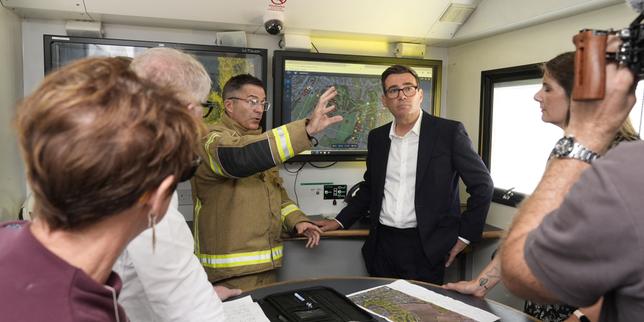
The British landscape was never supposed to look like a tinderbox. Yet, over recent consecutive summers, swathes of southern heathland, suburban back gardens, and ancient peat reserves have erupted into fast-moving wildfires that mock the traditional image of a damp, temperate island. When the Prime Minister stepped up to the microphone to issue urgent warnings about the escalating climate crisis, the rhetoric felt heavy. It also felt decades late.
Beneath the political declarations lies a harsher reality. Britain is facing an unprecedented convergence of prolonged drought conditions and volatile, extreme weather events that outstrip the capacity of its civil infrastructure. Reservoirs drop to critical percentages. Public utilities plead for voluntary water rationing while leaking billions of liters through cracked, Victorian-era pipes. The threat is no longer a distant projection mapped out by academic climate scientists for the year 2050. It is arriving in real-time, catching local authorities, emergency services, and national policymakers entirely flat-footed.
The Anatomy of a Man-Made Drought
Water scarcity in the United Kingdom is widely blamed on an uncooperative sky. Less rainfall during winter recharge periods and scorching heatwaves certainly exacerbate the problem. However, assigning the blame solely to meteorology ignores decades of systemic institutional neglect.
Consider the infrastructure governing distribution. Private water companies operating across England and Wales have extracted billions in dividends for shareholders while systematically underfunding capital investment projects. The result is a distribution network riddled with structural leaks. Millions of gallons of treated drinking water vanish underground every single day before ever reaching a household tap. When drought conditions strike, these same private entities rush to impose hosepipe bans on ordinary citizens. The burden of conservation falls squarely on the public, while the structural wastage of water remains largely unaddressed by regulators.
Furthermore, housing development policies continue to greenlight massive construction projects in the driest regions of the country, particularly the Southeast. Aquifers are being over-abstracted to supply these expanding developments, draining natural water tables below sustainable thresholds. Chalk streams, which are rare and fragile freshwater habitats found almost exclusively in southern England, are literally drying up. They are dying not just from a lack of rain, but from excessive human extraction driven by short-sighted regional planning.
When Grasslands Become Kilns
Fire services in the United Kingdom were built for structural fires in urban environments. They possess world-class expertise in tackling kitchen blazes, commercial warehouse fires, and multi-vehicle traffic accidents. They were never equipped to fight sprawling, fast-moving wildfires across millions of acres of parched moorland and urban-wildland interfaces.
During the record-breaking heatwaves that pushed temperatures past forty degrees Celsius, fire control rooms were overwhelmed by simultaneous emergency calls. Firefighters found themselves deployed in heavy structural gear designed for smoke-filled rooms, battling intense heat out in the open sun without adequate hydration protocols or specialized wildfire suppression equipment. Rural brigades, many of which have suffered severe budget cuts over the past fifteen years of local government austerity, lacked the all-terrain vehicles and mobile water tankers necessary to access remote blazes.
The traditional British approach to land management has also backfired. For centuries, drainage ditches were dug across peatlands and wetlands to maximize agricultural productivity. While this successfully dried out land for livestock grazing and crop cultivation, it fundamentally disrupted the natural water retention capacity of the soil. When dry conditions hit, these drained landscapes dry out completely, transforming rich organic matter into concentrated fuel for subsurface fires that can smolder for weeks beneath the surface.
The Politics of Empty Gestures
Political rhetoric regarding climate change in Westminster follows a predictable script. High-profile speeches acknowledge the severity of the threat, name-check international treaties, and promise a greener, more resilient future. Then the administrative machinery grinds to a halt.
Long-term infrastructure projects require sustained capital commitment that spans multiple political cycles. Because politicians are bound by short-term electoral horizons, funding is routinely prioritized for quick-win announcements rather than unglamorous, subterranean engineering. Fixing water grids, constructing major new reservoirs, and restoring natural peat bogs do not win elections on a three-year cycle. They are expensive, disruptive, and politically risky.
Instead, the government relies on public awareness campaigns. Citizens are told to take shorter showers, turn off the tap while brushing their teeth, and let their lawns turn yellow. While individual conservation efforts matter, focusing exclusively on personal responsibility creates a convenient smokescreen. It allows corporations and governments to evade accountability for structural failures. Asking a family to use a bucket to wash their car while thousands of gallons leak from a broken municipal water main down the street is not environmental policy. It is an insult.
The Cost of Inaction
The economic toll of this complacency is mounting rapidly. Agricultural yields are plummeting as farmers struggle to irrigate crops during critical growth periods. Livestock producers face skyrocketing feed costs because pastures have burned away to dust. Infrastructure buckling under extreme heat causes rail lines to warp, roads to melt, and power grids to strain under the sudden demand for cooling.
Insurance markets are beginning to reprice risk across the United Kingdom. Properties located near vulnerable heathlands or in low-lying flood-and-drought zones are finding it increasingly difficult to secure affordable coverage. If the current trajectory continues, entire communities could become uninsurable, triggering a sharp decline in property values and trapping homeowners in unsellable assets.
Addressing this crisis demands a radical shift in perspective. Water must be treated as a strategic national security asset rather than a basic consumer commodity managed by profit-driven utilities. National regulators need the legal teeth and political backing to enforce aggressive infrastructure modernization, backed by mandatory financial penalties for companies that fail to plug their leaks. Land-use policies must be overhauled to prioritize water retention, large-scale wetland restoration, and the strict protection of depleted aquifers.
The smoke on the horizon is not an anomaly. It is a warning. Until policymakers abandon the comforting illusion that Britain is immune to environmental collapse, the country will continue to burn while its leaders talk about the weather.