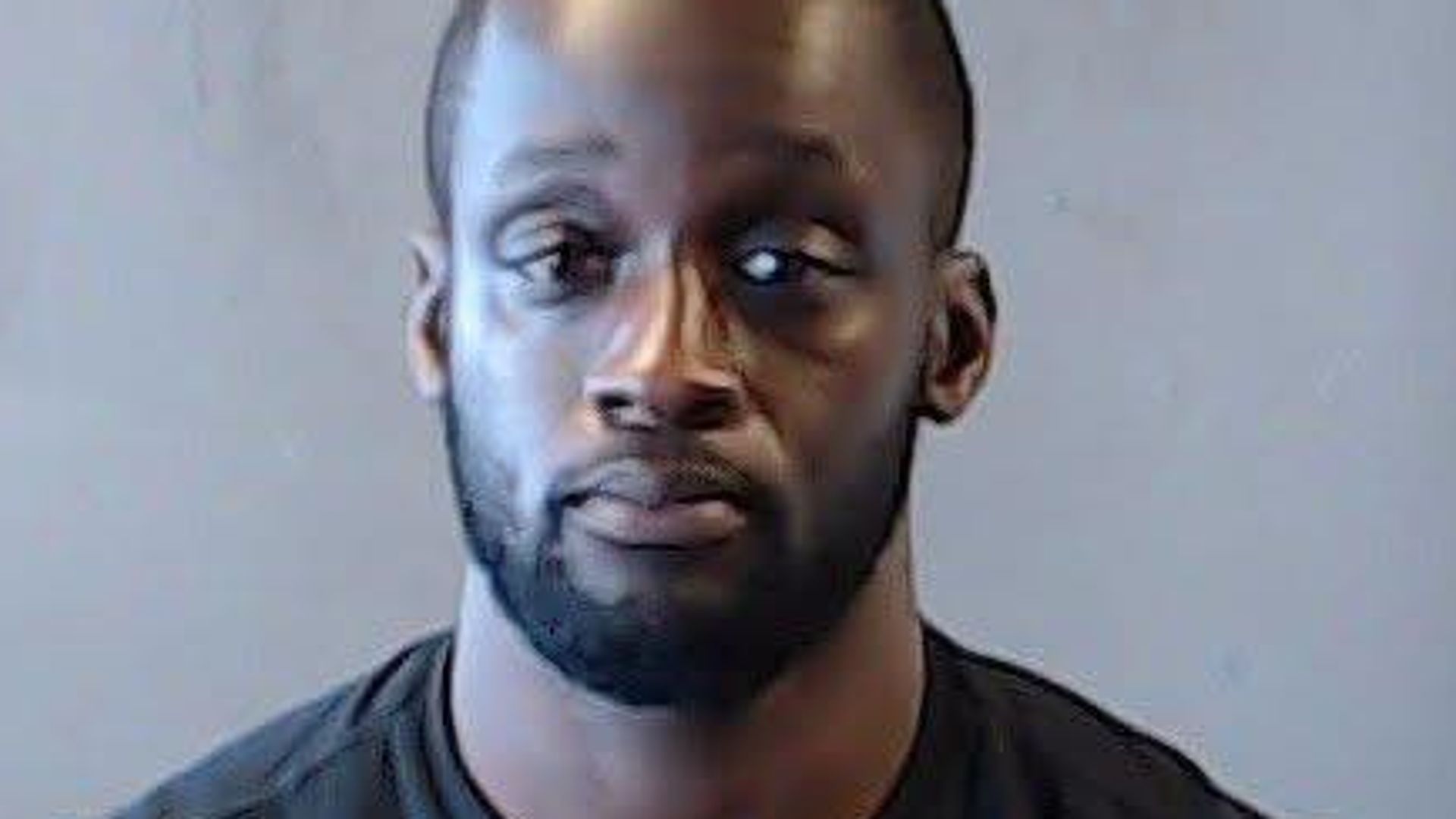
The arrest of a UK-born man in connection with a violent multi-state rampage has exposed more than just a localized crime spree. It has highlighted the terrifying ease with which a single individual can exploit the gaps in interstate security and mental health monitoring. When 23-year-old Alexandru S. Radulescu was taken into custody, the trail of carnage left behind in Florida and Georgia didn't just point to a random act of violence. It pointed to a systemic failure to identify a ticking time bomb. This wasn't a heist gone wrong or a targeted gang hit. It was a chaotic, high-velocity descent into nihilism that left three families shattered and a community questioning its safety.
Public records and initial police reports paint a picture of a man who moved through the world with a growing sense of detachment. Born in the United Kingdom before relocating to the United States, Radulescu's path to the present moment is a case study in how quickly a life can unravel. Investigators are currently pieceing together a timeline that suggests the violence began with a fatal shooting in a quiet residential area, before spiraling into a series of carjackings and further homicides.
The Anatomy of a Cross Border Rampage
Criminal profiling suggests that spree killers differ from serial killers in their lack of a "cooling-off period." They operate on adrenaline and a perceived lack of future. In Radulescu's case, the transition from the first shooting to the subsequent murders happened with a speed that suggests he had already committed to a scorched-earth policy for his own life.
The first victim was found in a suburban driveway, a location that offered no tactical advantage for a criminal but plenty of shock value. This was the trigger point. Once the first shot was fired, the suspect didn't flee to hide; he fled to continue. Law enforcement agencies across state lines often struggle with real-time data sharing when a suspect is mobile. By the time Georgia authorities were alerted to a person of interest from Florida, the suspect had already crossed the border, allegedly claiming more lives along the way.
The mechanics of the manhunt were fraught with tension. Local deputies in Georgia spotted a vehicle matching the description of one stolen during a violent encounter in Florida. The pursuit ended not with a dramatic shootout, but with a calculated takedown that prevented further loss of life. Yet, for the victims, the intervention came far too late.
The Problem of Transatlantic Identity
Radulescu’s British origin adds a layer of complexity to the investigation. In many cases involving foreign nationals, the sharing of prior criminal records or psychiatric histories between the UK and the US is inconsistent. If an individual has no major felony record in their home country, they often pass through immigration and background checks with ease.
- Information Silos: International law enforcement databases like INTERPOL focus on high-level organized crime and terrorism, often missing the "minor" red flags that precede a spree killing.
- Cultural Dislocation: While not an excuse for violence, the isolation often felt by young men moving between drastically different cultures can be a contributing factor to radicalization or mental collapse.
- Access to Weaponry: The contrast between the UK’s stringent firearm laws and the relatively open access in states like Florida and Georgia provides a lethal opportunity for those with violent intent.
Evaluating the Mental Health Defense
As this case moves through the court system, the defense will almost certainly lean on a narrative of mental instability. It is the standard play. However, the level of planning required to evade initial detection and successfully hijack multiple vehicles suggests a degree of executive function that complicates a "temporary insanity" plea.
The prosecution will likely focus on the deliberate nature of the acts. Choosing a victim, firing a weapon, and then making the conscious decision to drive to a new location to repeat the act indicates a sequence of choices, not a blackout. The term "pure evil" has been used by local sheriffs to describe these events, but in a courtroom, that term carries no legal weight. The state must prove intent, and the trail of stolen property provides a sturdy foundation for that argument.
Security Gaps in the Interstate System
We often think of the United States as a unified security block, but for a moving target, the borders between states act as a veil. Radulescu managed to put hundreds of miles between his crimes because local departments were still processing the first crime scene while he was committing the third.
The integration of License Plate Recognition (LPR) technology is the only reason this chase ended when it did. Without those automated hits, a silver sedan on an interstate is just another grain of sand on a beach. The fact that he was caught alive is a testament to the restraint of the arresting officers, but it also means we are now headed for a long, painful trial that will force the families of the deceased to relive every second of their nightmare.
The Victims and the Void
Beyond the tactical analysis lies the human cost. The victims were not combatants; they were people going about their daily lives—walking to their cars, sitting in their homes, working their jobs. The randomness of the selection is what breeds the most fear. If there is no motive, there is no way to predict the next strike.
This case mirrors a disturbing trend of "displaced violence," where the perpetrator has no connection to the victim. In previous decades, most murders were domestic or related to specific grievances. Today, we see an uptick in "stranger danger" of the most extreme variety. The suspect didn't want their money; he wanted their lives and their vehicles to facilitate the next killing.
The Role of Digital Footprints
Investigators are currently scrubbing Radulescu’s social media and digital history. In the hours leading up to the first shooting, did he post a manifesto? Was he part of an online community that glorifies "lone wolf" violence? Usually, these events are preceded by "leakage"—a term used by the FBI to describe the inadvertent sharing of violent intentions before an attack.
If leakage occurred and went unreported, the failure isn't just with the police, but with the digital platforms that host these echo chambers. We have built a world where someone can be screaming for help or threatening a massacre in a digital space, while their physical neighbors see nothing but a quiet young man from England.
Future Implications for Law Enforcement
This incident will likely spark a renewed debate over the "red flag" laws in the Southeast. If the suspect had shown signs of instability, could his access to firearms have been restricted? In Florida, such laws exist but are only as effective as the reporting behind them. If a person hasn't been involuntarily committed, they stay under the radar.
The UK-born suspect now faces a mountain of charges including multiple counts of first-degree murder, carjacking, and aggravated assault. Because the crimes spanned multiple jurisdictions, the legal proceedings will be a logistical nightmare, involving multiple District Attorneys and potentially federal oversight if any civil rights violations are identified.
The tragedy in the heartland serves as a grim reminder that the distance between a normal afternoon and a national headline is often just one person’s decision to stop following the rules of civilization. We can build higher walls and faster databases, but we cannot easily fix the internal rot that leads a man to cross an ocean only to end up in a jail cell, leaving a trail of bodies in his wake.
The focus now shifts from the "how" to the "when"—when will the justice system deliver a verdict that reflects the gravity of these acts? For the survivors, no sentence will be enough, but a conviction is the only way to ensure this particular threat never walks the streets of any country again.
The evidence is mounting. The ballistics are being matched. The only thing left is the cold, hard reality of the courtroom.