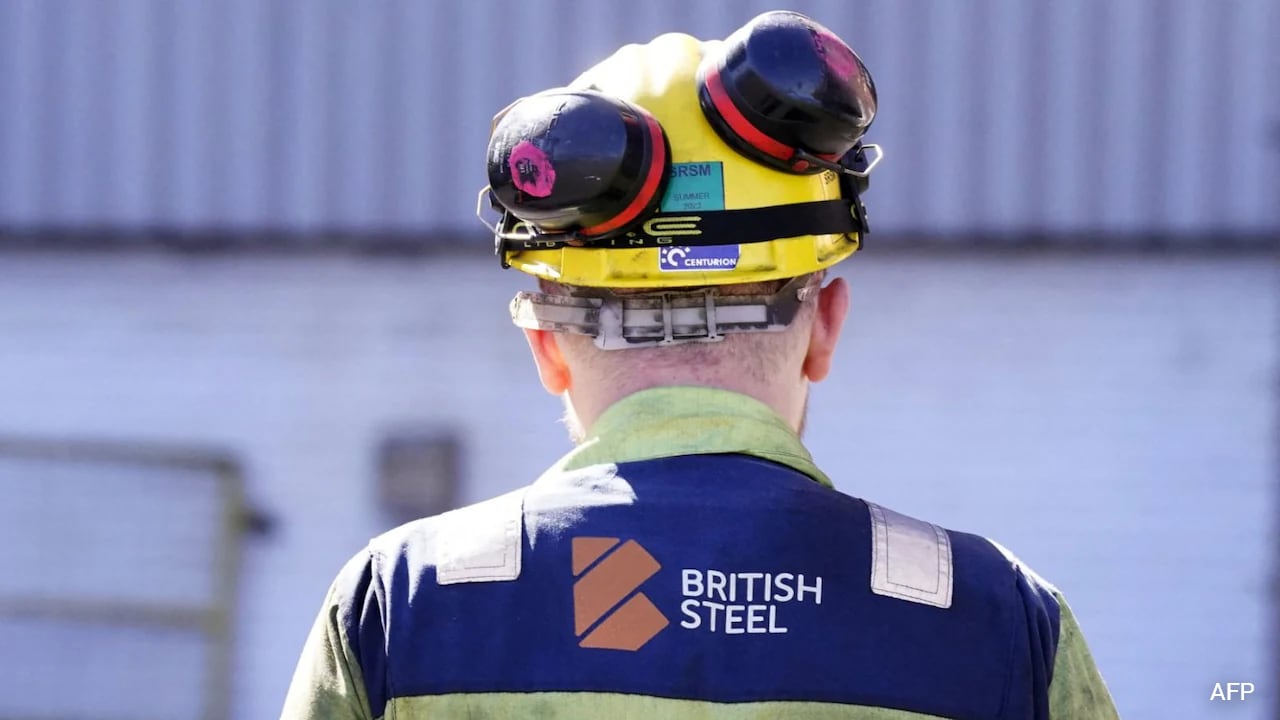
The British press is celebrating a victory that does not exist.
If you read the mainstream financial coverage, the narrative is comfortably uniform: Westminster has stepped in, rescued a foundational British asset from the clutches of China’s Jingye Group, and secured the sovereign future of UK steel production. It sounds noble. It sounds strategic.
It is a economic disaster in the making.
The lazy consensus treats nationalisation as a triumph of industrial strategy. In reality, the UK government did not "take control" of a vital asset. It agreed to underwrite a structural liability that private capital has spent decades trying to escape. By taking British Steel off Jingye’s hands, the state did not protect a sovereign industry. It bought a museum.
The Fatal Flaw of Strategic Asset Nostalgia
The core argument for the bailout rests on a flawed premise: that producing raw steel via blast furnaces in Scunthorpe is essential for national security and economic independence.
This is emotional sentimentality masquerading as economics.
For years, British Steel has lost hundreds of thousands of pounds every single day. Jingye Group, which bought the company out of liquidation in 2020, quickly realised what Tata Steel and Greybull Capital learned before them. Operating blast furnaces in the UK is a financial suicide mission. The primary drivers are structural, permanent, and entirely unaffected by a change in ownership:
- Industrial Energy Asymmetry: UK industrial electricity prices are consistently higher than those in continental Europe and Asia. You cannot compete in a low-margin commodity market when your baseline power costs are artificially inflated by domestic regulatory policy.
- The Carbon Tax Squeeze: High-emissions blast furnaces face escalating penalties under carbon pricing mechanisms. The state is now in the absurd position of penalising itself for running the asset it just bought.
- Global Overcapacity: The global steel market suffers from a chronic supply glut, primarily driven by state-subsidized production in Asia. A state-owned British Steel cannot out-subsidize China.
When a private conglomerate walks away from an asset, it is a clear market signal. When the state steps in to buy it, it is not saving the business; it is shielding the market from reality at the expense of the public purse.
Dismantling the Sovereignty Argument
Proponents of the takeover ask a standard question: Can a major G7 economy rely entirely on foreign steel imports for its critical infrastructure and defence?
The question itself is a distraction.
First, British Steel does not produce the high-grade, specialist steel required for advanced military hardware or aerospace engineering. That comes from specialized suppliers, often overseas or from highly technical domestic facilities like Sheffield Forgings. Scunthorpe primarily produces structural steel, rails, and wire rods. These are commodities, not top-secret military components.
Second, the "sovereignty" argument completely ignores where the raw materials come from. The UK does not mine iron ore or metallurgical coal in quantities sufficient to feed these furnaces. Every ounce of raw material must be imported via global supply chains.
Imagine a scenario where global shipping lanes are completely blocked, rendering the UK isolated. A nationalised Scunthorpe plant still fails within weeks because it lacks the imported raw inputs to fire its furnaces. True industrial sovereignty cannot be achieved by nationalising the final, most expensive step of a completely dependent supply chain.
If the goal is genuine resilience, the strategy is backwards. The UK would be far more secure building deep strategic stockpiles of finished steel bought at cheap global prices, rather than funding an inefficient domestic furnace that relies on constant foreign imports of iron ore just to stay warm.
The Electric Arc Furnace Illusion
The state’s proposed fix involves transitioning Scunthorpe away from coal-fired blast furnaces toward Electric Arc Furnaces (EAFs). This is marketed as a win-win: green steel that saves jobs and hits net-zero targets.
This plan contains a massive contradiction.
EAFs do not make steel from iron ore. They melt down recycled scrap steel. While the UK generates millions of tonnes of scrap steel each year, the vast majority of it is highly contaminated with copper and other residual metals. Refining domestic scrap to the purity level required for high-end infrastructure is an incredibly energy-intensive process.
Worse, EAFs require far fewer workers than traditional blast furnaces. A full transition to electric arc technology inherently means cutting the workforce by up to 70%.
Let that sink in. The government has nationalised a business to save jobs, but to make the business viable, it must immediately eliminate the majority of those jobs. The state has trapped itself in a political corner where it must choose between two disasters: run an obsolete, hyper-polluting blast furnace at a loss of millions per day, or spend billions on a green transition that terminates the very workers it promised to protect.
What the State Should Have Done Instead
The hardest truth for politicians to admit is that some industries should be allowed to die.
I have seen governments pour billions into failing manufacturing sectors under the guise of "regeneration," only to watch the capital evaporate without creating a single self-sustaining job. It is a repeatable cycle of political cowardice. The money is never spent on building the future; it is spent on delaying the inevitable.
Instead of nationalising British Steel, the state should have executed a hard pivot:
Fund People, Not Furnaces: Take the billions allocated for the purchase, operational subsidies, and EAF conversion, and deploy it directly into retraining grants and local infrastructure for the affected communities.
Repurpose the Grid Infrastructure: The Scunthorpe site possesses one invaluable asset: a heavy industrial grid connection. Instead of using that power to melt metal at a loss, the site should be cleared and converted into a massive hub for data centres, nuclear small modular reactors (SMRs), or grid-scale energy storage.
Acknowledge Comparative Advantage: Accept that the UK’s economic strengths lie in high-value design, systems integration, and advanced materials engineering—not the energy-starved smelting of primary commodities.
The Ultimate Cost of the Bailout
By choosing nationalisation, Westminster has set a dangerous precedent. It has signaled to every struggling, foreign-owned industrial asset in the country that if things get bad enough, the British taxpayer will act as the buyer of last resort.
Jingye Group did not lose this round. They managed to extract years of subsidies, navigate complex political waters, and ultimately hand a depreciating, environmentally toxic asset back to the British public right as the carbon penalties were about to break their balance sheet. It was a masterclass in corporate risk offloading.
The UK did not reclaim its industrial heritage. It fell for a classic trap, buying a liability disguised as an asset, ensuring that taxpayers will spend the next decade paying for the privilege of keeping a dying industry on life support.
Stop celebrating the rescue. Start calculating the bill.


:max_bytes(150000):strip_icc():focal(999x0:1001x2)/taylor-swift-albums-1-93026ca98408417097660e117a10a6a9.jpg)