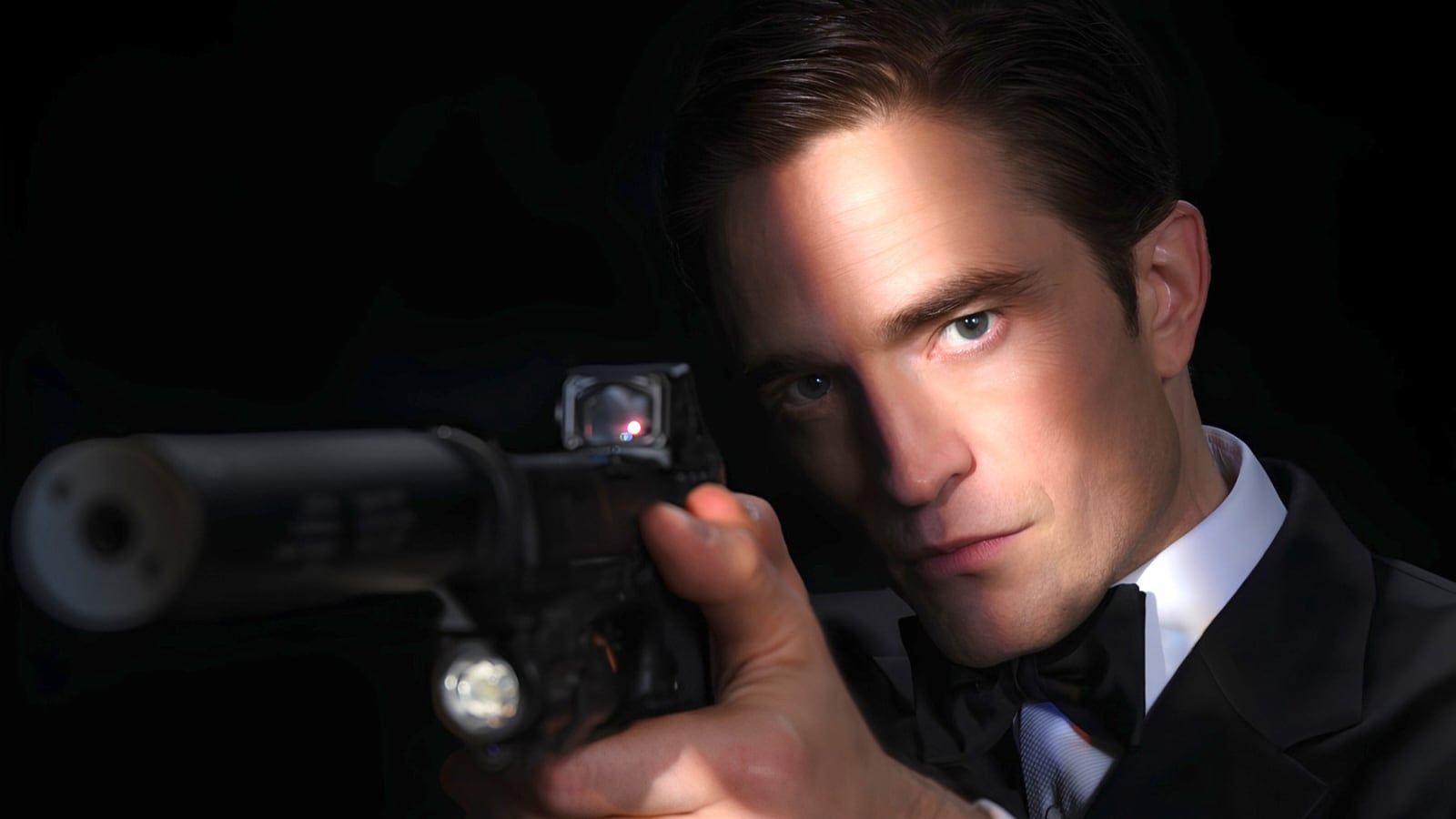
When rumors and early press reactions swirled around Robert Pattinson stepping into the tuxedo of James Bond, the British press immediately reached for a specific, cutting label. They called him a weirdo specialist. On the surface, the phrase reads like a dismissive sneer aimed at an actor who spent the decade after Twilight playing unwashed bank robbers, lighthouse keepers with questionable sanity, and eccentric French dauphins. Yet beneath the tabloid snark lies a much sharper truth about the modern entertainment industry, the survival of the 007 franchise, and the exact reason Eon Productions and Amazon MGM looked toward left-field talent to save an aging intellectual property.
The British press thrives on archetype clashes. For sixty years, James Bond has represented the ultimate establishment fantasy—a ruthless, impeccably tailored instrument of the British state who drinks the right martinis, drives the right Aston Martin, and beds the right women without ever losing his composure. Pattinson, conversely, spent the bulk of his adult career actively dismantling his own teen-idol image by choosing projects with directors like David Cronenberg, Robert Eggers, and the Safdie brothers. When Fleet Street editors branded him a weirdo specialist, they were reacting to the jarring friction between his indie filmography and the rigid expectations of a multibillion-dollar spy franchise.
The Architecture of a Tabloid Headline
To understand why the British newspapers reacted with such theatrical skepticism, you have to understand the ecosystem of London entertainment journalism. The Bond casting cycle is not merely movie news in the United Kingdom. It is a national parlor game, a betting market, and a recurring cultural referendum on British masculinity. Every few years, the tabloids need a villain, a dark horse, and a safe bet to keep readers clicking through endless speculation cycles.
Calling Pattinson a weirdo specialist accomplished three editorial goals simultaneously. First, it reminded older readers—the core demographic that still buys print editions of the Daily Mail, The Sun, and The Telegraph—that the guy from the vampire movies had spent ten years making unsettling art-house cinema. Second, it framed his potential casting as a radical, almost subversive gamble rather than a predictable corporate handoff. Third, it tapped into a uniquely British suspicion of actors who take their craft too seriously or veer too far into American indie eccentricities.
Yet the label misses the fundamental irony of Pattinson's career trajectory. He did not stumble into strange roles because he lacked leading-man viability. He deliberately sought out weirdness to prove he had range beyond his cheekbones. By the time he put on the cowl for Matt Reeves in The Batman, Pattinson had already demonstrated that he could anchor a massive studio tentpole while retaining the haunted, slightly unhinged interiority that made his smaller films work. The tabloids saw a contradiction between the indie weirdo and the suave secret agent. Studio executives saw the exact same quality as a competitive advantage.
Why Traditional Leading Men Are Dying at the Box Office
The harsh reality of Hollywood in the mid-2020s is that the classic, square-jawed action hero has lost his monopoly on audience attention. Look at the box office performance of traditional, stoic leading men over the past decade. Audiences have grown weary of invulnerable, quip-spouting avatars who never seem genuinely rattled by violence or moral compromise. When Daniel Craig took over the Bond mantle in Casino Royale back in 2006, his casting provoked a remarkably similar backlash. Tabloids dubbed him "James Blond" and mocked his height, his pouting lips, and his background in gritty British dramas like Layer Cake and Our Friends in the North.
Craig succeeded precisely because he brought vulnerability, brutality, and psychological damage to a character that had drifted into self-parody during the Pierce Brosnan era. He bled. He made terrible mistakes. He looked exhausted by the toll of his profession.
Once Craig exited the franchise in No Time to Die—literally blowing the character to pieces in an unprecedented narrative break—the producers faced an existential dilemma. You cannot simply rewind the clock back to Sean Connery or Roger Moore. A modern audience raised on prestige television, antiheroes, and morally gray protagonists will not buy a cartoon playboy who slaps women on the bottom and walks away from explosions without a scratch on his dinner jacket. At the same time, repeating Craig's exact bruised-brawler formula with a younger lookalike would feel derivative from the opening frame.
Enter the weirdo specialist. An actor with Pattinson's sensibilities offers a third path. Instead of playing Bond as a blunt instrument or a polished aristocrat, an actor versed in psychological oddity can play him as a deeply compartmentalized, slightly alien operative. Think about what a real MI6 intelligence officer actually is. A person trained to lie for a living, assume false identities, seduce targets for state secrets, and execute strangers in foreign hotel rooms is not a well-adjusted gentleman. He is, by definition, a functional sociopath operating under extreme stress.
The Indie Pipeline to Blockbuster IP
Hollywood's reliance on directors and actors from the independent circuit is no longer an anomaly. It is standard operating procedure for studios trying to keep legacy franchises from calcifying. Marvel pulled Taika Waititi, Chloé Zhao, and Ryan Coogler from the festival circuit. Warner Bros. handed Batman to Matt Reeves and Joker to Todd Phillips, who promptly cast Joaquin Phoenix—arguably the reigning king of cinematic weirdos—and walked away with a billion dollars and an Oscar.
Studios do this because established franchises already have built-in brand recognition. They do not need an actor to sell the concept of James Bond; the 007 logo does that heavy lifting on every billboard from London to Tokyo. What the franchise needs is friction, unpredictability, and critical prestige to prevent audience fatigue.
Consider the mechanics of how an actor like Pattinson approaches a script compared to a conventional action star.
- Physicality over posing: In films like Good Time and The Lighthouse, Pattinson uses his posture, voice, and facial tics to communicate desperation and obsession. Applied to espionage, that physical specificity turns a routine foot chase or poker game into a tense character study.
- Subversion of charm: Traditional Bond actors lean heavily on effortless charisma. Pattinson's brand of charm is slightly off-kilter, guarded, and self-aware. When he smiles in a scene, the audience is never entirely sure whether he is genuinely amused or calculating an exit strategy.
- Credibility with younger demographics: Gen Z and younger millennials have little sentimental attachment to Cold War nostalgia. They know Pattinson from The Batman, Tenet, and Mickey 17. His presence signals that the franchise is evolving rather than catering exclusively to boomer nostalgia.
The Financial Stakes Behind the Casting Gamble
Every casting rumor surrounding James Bond is ultimately a discussion about risk management. Following Amazon's acquisition of MGM in 2022, the corporate pressure to maximize the value of the Bond library increased exponentially. While Barbara Broccoli and Michael G. Wilson maintained tight creative control over the theatrical releases, the economics of tentpole filmmaking leave zero margin for a misfire. A modern Bond production routinely costs upwards of $250 million before marketing expenses are even factored into the ledger.
To recoup that investment, a 007 film must perform across vastly different global markets. It needs to satisfy purists in the UK, action fans in North America, and international audiences in Europe and Asia who view Bond as an aspirational luxury brand.
When British newspapers mock a candidate as too weird for the role, they are voicing a legitimate commercial anxiety. Could an actor known for playing unstable outsiders alienate the core audience that just wants to see Bond order a Vesper martini, drive a sleek car through the Alps, and save the world from a megalomaniac?
It is a fair question, and the answer lies in the balance between actor and material. In Christopher Nolan's Tenet, Pattinson played Neil, an intelligence operative dressed in bespoke suits who navigated temporal inversion with dry wit and effortless cool. Anyone who watched Tenet saw a dress rehearsal for a modern, slightly cerebral James Bond. Pattinson did not look out of place in tailored menswear; he looked entirely at home, bringing an aristocratic ease paired with an underlying sense of mystery. The "weirdness" did not derail the blockbuster mechanics—it elevated them.
What Fleet Street Always Gets Wrong About 007
There is a persistent amnesia in British media coverage whenever a new actor is linked to Ian Fleming's creation. The papers treat the role as though it has always been played by identical archetypes, forgetting that every successful Bond actor was initially met with resistance precisely because he broke the mold of his predecessor.
Sean Connery was a former bodybuilder and milkman from Edinburgh whom Ian Fleming initially dismissed as an overgrown stuntman. George Lazenby was an Australian model with zero acting credits. Roger Moore was seen as too lightweight and comedic after The Saint. Timothy Dalton was criticized for being too theatrical and dour. Pierce Brosnan was dismissed as a television pretty boy from Remington Steele. Daniel Craig was written off as a gritty character actor with the wrong hair color.
The pattern is unbroken. The British press invents a rigid standard for what Bond must be, attacks the frontrunner for failing to meet that standard, and then quietly rewrites history once the film opens to massive box office numbers.
Calling Robert Pattinson a weirdo specialist fits neatly into this tradition. The phrase captures the surface-level absurdity of an actor who once masturbated to a carved wooden mermaid in a black-and-white art film taking over the most famous tuxedo in cinema history. Yet it completely ignores the fact that versatility, transformation, and psychological depth are the exact tools required to keep a sixty-year-old spy relevant in the twenty-first century.
The Shift in Modern Masculinity on Screen
Beyond box office spreadsheets and tabloid headlines, the debate over Pattinson and Bond reflects a broader cultural shift in how audiences define leading-man appeal. The mid-century ideal of the stoic, emotionally sealed-off alpha male has aged poorly. Today, audiences gravitate toward actors who project complexity, ambiguity, and a willingness to look foolish or vulnerable on camera.
Pattinson built his post-Twilight career on rejecting vanity. He deliberately dismantled his own status as a teen heartthrob by taking roles that made him look greasy, frantic, or pathetic. Paradoxically, that refusal to protect his image made him far more compelling as a major star. Audiences trust actors who are willing to take risks, because risk signals authenticity.
If you put an actor with that level of fearlessness inside the glossy, high-stakes machinery of a James Bond movie, something electric happens. The tuxedo stops looking like a costume worn by a corporate brand ambassador and starts looking like armor worn by a dangerous, unpredictable man. The quips land differently when delivered by someone who looks like he might actually snap under pressure.
The British tabloids used the term weirdo specialist as a punchline, betting that readers would laugh at the mismatch between indie eccentricity and establishment cool. They missed the point entirely. After six decades of saving the world in black tie, James Bond does not need another safe pair of hands—he needs someone strange enough to make him dangerous again.