The air always smells of wet coal and old iron before the sound arrives.
You learn to count the seconds between the flash and the percussion. In Kramatorsk, that calculation is as natural as checking your watch or locking a door. A flash over the rail yards. One. Two. Three. Then the concussion hits your chest like a closed fist, rattling the windowpanes in frames that have been re-glued so many times the putty has turned to dust. Expanding on this theme, you can also read: Why Namibia Should Think Twice About Atlantic Seabed Mining.
Eleven people. That is the number the regional military administration released to the wire services. Eleven bodies caught in the middle of a Tuesday, sliced by glass, bruised by shockwaves, rushed down corridors that smell of antiseptic and wet wool.
Statistics are efficient. They travel fast across fiber-optic cables, reducing a screaming intersection to a neat, black-and-white integer on a screen in Paris, Washington, or Tokyo. But a statistic does not bleed. A statistic does not leave behind a single, mismatched boot on a dusty asphalt curb, surrounded by the glittering debris of a bakery storefront. Experts at NPR have also weighed in on this trend.
Consider what happens to a city when the sky falls.
Kramatorsk is not a frontline trench. It is an administrative hub, a lungs-and-heart city for the eastern territories, throbbing with the desperate, stubborn logistics of survival. People still buy bread here. They still sweep their stoops. An elderly man named Mykola, whom I met outside a pharmacy with a shattered facade, was trying to fold a canvas shopping bag while his hands shook.
"I was looking for heart pills," he told me, his voice flat, drained of panic and left only with exhaustion. "Prices are high. The lines are long. And now this. Why here? There is nothing military on this street. Only us."
He is right. The missiles that slammed into the city did not strike an armored column or an artillery battery. They struck civilian density. They struck the casual architecture of everyday life—apartment blocks where laundry hangs frozen on balconies, small shops with hand-painted signs advertising keys made and shoes repaired.
This is the invisible stakes of the war in Ukraine. It is not merely a contest of sovereign borders or abstract geopolitical leverage. It is the systematic exhaustion of the ordinary. It is the deliberate conversion of safety into a luxury good.
To understand the weight of an attack on Kramatorsk, you have to understand the geography of endurance. For months, this city has lived in the crosshairs of artillery arcs and missile trajectories. It is a staging ground for grief. When the sirens wail—and they wail constantly, an electronic banshee echoing off concrete residential towers—the rhythm of human existence stutters. Mothers grab backpacks containing birth certificates and extra socks. Shopkeepers pull metal rolling shutters down with a loud, metallic clatter. Children, who have learned to categorize the deep bass of outgoing artillery from the sharp crack of incoming interception, dive under kitchen tables without being asked.
They do not cry anymore. That is the most terrifying part. Children who do not cry when the windows blow in have aged past their years in the span of a single season.
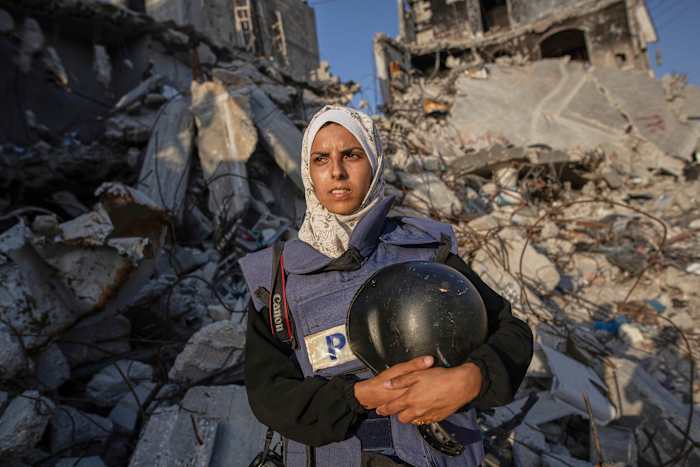
The regional governor, Vadym Filashkin, confirmed the toll on his Telegram channel shortly after the smoke began to clear from the impact sites. Eleven wounded. Ambulances screaming down narrow streets blocked by fallen masonry and tangled overhead wires. Rescue workers moving with practiced, grim efficiency, their orange helmets bright against the grey, soot-stained snow.
We talk about resilience as if it were an infinite resource, like water from a deep well. It is not. Resilience is a fabric, and every strike against places like Kramatorsk pulls another thread.
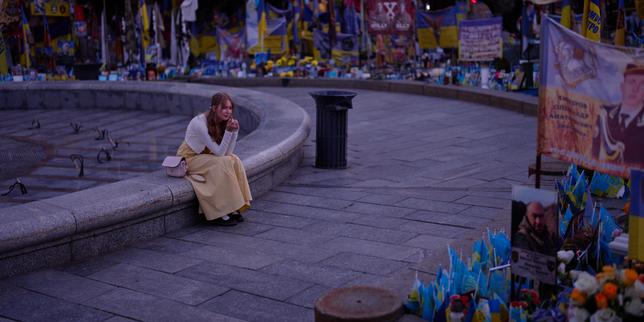
I watched a young woman kneeling by the twisted remains of a balcony, trying to salvage a framed photograph of a wedding that had clearly taken place before the world broke apart. Her fingers were red from the cold. The wind whipped her hair across her face. She did not look angry. She looked impossibly tired, as though she were trying to solve an equation with missing numbers.
That is the reality behind the casualty count. It is the accumulation of lost mornings, shattered heirlooms, and the quiet, crushing realization that safety is an illusion rented day by day.
The missiles stop falling eventually. The smoke clears, drifting away over the skeletal grey chimneys of the Donbas plain. The rescue crews pack up their gear, the glass is swept into piles by men with heavy brooms, and the city holds its breath, waiting for the next flash in the clouds.