The air always smells of ozone right before the sirens start. It is a sharp, metallic scent, born from the friction of war against a morning that had only just decided to be peaceful.
Kateryna knows that smell by heart. For months, it has been her alarm clock, her weather report, and her constant, unwelcome shadow. On any given Tuesday, the distance between sleeping under a duvet and scrambling down the cold, damp concrete steps of a metro station is measured in seconds.
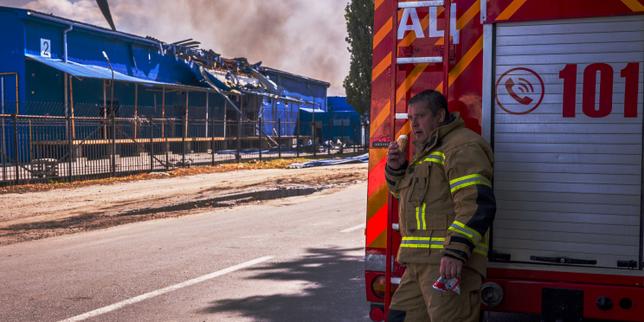
Statistics are clean. They fit neatly into morning briefs and diplomatic cables. Five dead. Twenty-five wounded. The numbers sound precise, almost surgical, stripped of the messy, vibrating chaos that produces them. But numbers do not bleed. They do not capture the sound of shattered glass raining down like silver leaves, nor do they reflect the heavy, suffocating silence that settles over a neighborhood once the smoke clears and the smoke alarms finally run out of batteries.
For seventy-two hours, there was a pause. A truce, fragile and thin as winter ice, stretched across the capital. People walked above ground. They bought bread. Children laughed in courtyards, their small voices echoing off concrete apartment blocks built decades ago. For three days, the city remembered what life felt like when the sky was just a sky, rather than an avenue for destruction.
Then the calendar turned. The truce expired.
And the reality of the conflict returned with the force of a hammer.
Consider what happens inside a apartment on the fourth floor of a residential block when the first blast hits. The walls do not merely shake; they heave. Picture a kitchen table where a half-finished cup of tea sits cooling, instantly covered in a fine layer of gray plaster dust. This is where the abstract notion of geopolitical strategy intersects with the human spine.
War is often discussed in terms of lines on a map, equipment tallies, and strategic objectives. Yet, its true currency is measured in human endurance. Every single casualty represents a universe of unfulfilled conversations, grocery lists left on counters, and plans made for next weekend that will never now arrive. When twenty-five people are rushed to hospital wards with shrapnel wounds and blast trauma, an entire ecosystem of family and friends is instantly plunged into a frantic, sleepless vigil.
We talk about air defense systems as if they are impenetrable shields forged from science fiction. They are not. They are operated by exhausted human beings staring at green radar blips until their eyes water, making split-second calculations that carry the weight of dozens of lives. When a missile breaks through, it is not merely a failure of technology; it is a rupture in the fragile barrier protecting an ordinary Tuesday morning.
Kateryna did not lose her life that day. She lost her kitchen window, her favorite ceramic mug, and a portion of her hearing on the left side. Small things. Trivial things, compared to the lives extinguished just three blocks away. Yet, as she swept up the glittering shards of glass from her linoleum floor, she realized that survival in a besieged city is an accumulation of micro-traumas. You rebuild the window. You sweep the glass. You wait for the ozone smell to return.
The ceasefire was a temporary illusion, a brief clearing in a storm that refuses to exhaust itself. But beneath the grim tallies of the dead and injured lies something far more durable than concrete or steel. It is the stubborn refusal of a city to stop breathing, even when the air itself feels unsafe.
The sirens will sound again. The numbers will update on screens thousands of miles away. But in the quiet stairwells of Kyiv, the human story continues, written in resilience, whispered in the dark, and unbroken by the thunder overhead.