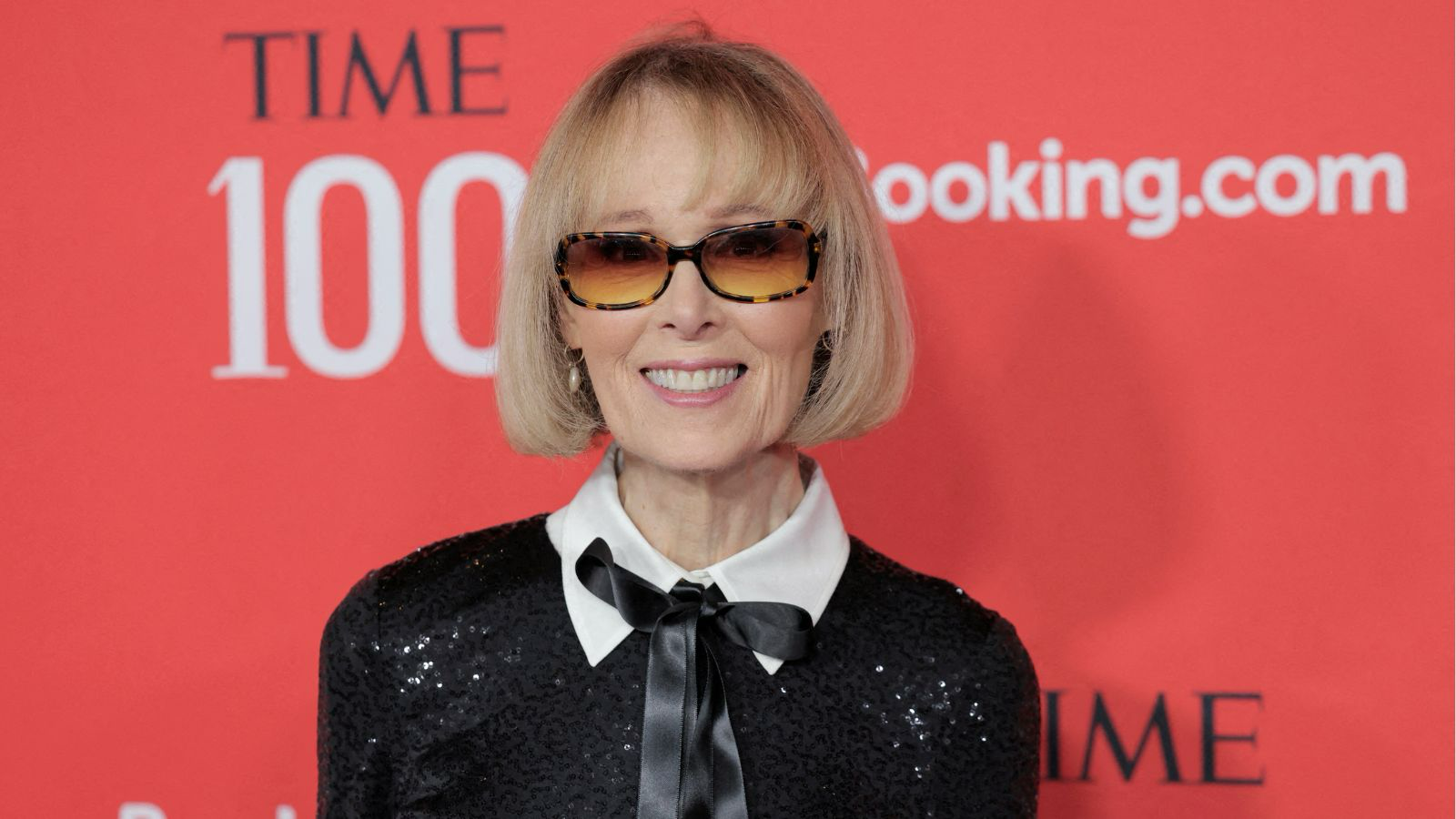
Donald Trump has officially paid E. Jean Carroll more than $5.6 million. The cash transfer, completed on July 13, 2026, marks the first time the former president has been forced to fully liquidate and surrender a multi-million-dollar judgment resulting from his extensive legal entanglements. For three years, the money sat insulated within a court-controlled escrow account while Trump deployed every available appellate maneuver to keep it out of her hands. When the U.S. Supreme Court refused to hear his final appeal, the legal machinery ground to its inevitable conclusion, forcing a historic payout.
The transfer represents the culmination of Carroll’s first federal civil lawsuit, where a Manhattan jury found Trump liable for sexual abuse and defamation in May 2023. While the original verdict totaled $5 million, years of accumulated interest pushed the final extraction to $5,625,000. Beyond the immediate cash transfer lies a far more significant shift in the strategic playbook used by high-profile defendants. For decades, deep-pocketed public figures treated civil litigation as an endurance sport, calculating that plaintiffs would run out of money, time, or resolve before an execution of judgment ever occurred. This payout shatters that assumption.
The Mechanics of the Escrow Trap
To understand why this cash shifted accounts despite Trump’s furious ongoing resistance, one must examine the cold mechanics of federal court security requirements. When the jury handed down its verdict in 2023, Trump did not simply write a check to Carroll; he was required to deposit the full judgment plus an added premium into a court-managed account to pause the collection process during his appeals.
This security mechanism exists specifically to prevent losing parties from hiding, transferring, or depleting their wealth while an appeal winds through the judiciary. It converts a theoretical legal debt into locked, physical capital.
Trump’s legal team treated this deposit as a temporary holding pattern. They gambled that a sympathetic appellate bench or a conservative Supreme Court majority would dismantle the verdict entirely, returning the funds to the Trump corporate ledger.
The gamble failed. On June 29, 2026, the Supreme Court issued a brief, unceremonious denial, declining to review the lower courts' affirmations of the 2023 jury decision.
Once that denial hit the docket, the escrow account transformed from a shield into a trap. Trump’s attorneys launched a frantic, last-minute blitz to secure an emergency stay from U.S. District Judge Lewis A. Kaplan. They argued that the money should remain frozen because they intended to file a petition for a rehearing.
Judge Kaplan, who has presided over the litigation with an increasingly short fuse for delay tactics, issued a blunt directive. He ordered the immediate release of the funds. The money moved into an account controlled by Carroll’s legal representation the following Monday.
[Escrow Release Process]
Jury Verdict (May 2023: $5M)
   └──> Mandated Deposit into Court Escrow (Funds Frozen)
           └──> Interest Accrues over 3 Years (Adds ~$625K)
                   └──> SCOTUS Denies Appeal (June 2026)
                           └──> Judge Orders Release ──> Payout to Plaintiff ($5.625M)
Anatomy of a Failed Appellate Strategy
The defensive posture adopted by Trump’s lawyers was built entirely on a philosophy of attritional exhaustion. Every motion, every objection, and every petition was engineered to buy days, weeks, or months.
In public statements and social media posts, Trump maintained that the entire trial was a political fabrication. Inside the courtroom, however, his lawyers had to rely on highly technical procedural arguments. They attacked the constitutionality of the New York Adult Survivors Act, the specific window of legislation that allowed Carroll to file her lawsuit decades after the 1996 assault took place.
They claimed the law constituted an unconstitutional violation of due process by reviving long-dead civil claims. The Second U.S. Circuit Court of Appeals rejected this argument completely, noting that legislatures have clear authority to alter statutes of limitations to rectify historical barriers to justice.
When procedural attacks failed, the defense attempted to litigate the semantics of the jury's verdict form. The nine-person jury had checked the box finding Trump liable for sexual abuse and defamation, but left the box for rape unchecked due to the highly specific technical definitions within New York’s older penal code.
Trump’s team claimed this distinction meant Carroll had lied in her public statements, justifying his subsequent attacks on her character. Judge Kaplan shut down this avenue of defense in a searing post-trial ruling, clarifying that under modern understanding and federal standards, the actions the jury found Trump committed were, in fact, rape in the everyday sense of the word.
The final line of defense rested on the theory that a sitting or former president possesses an ongoing immunity or a unique standard of protection against civil defamation claims arising from responses to public accusations. This argument has been systematically dismantled across multiple jurisdictions. The courts have repeatedly affirmed that personal denials mixed with derogatory personal insults directed at a private citizen do not fall under the umbrella of official presidential duties.
The Eighty-Three Million Dollar Shadow
While the $5.6 million payout is a severe financial and psychological blow to Trump’s legal apparatus, it is merely a drop in the bucket compared to the secondary crisis looming on his horizon. A separate Manhattan jury in January 2024 hit Trump with a massive $83.3 million defamation verdict. That case focused exclusively on comments he made while serving as president in 2019, which the court ruled were inherently malicious given that the underlying assault had already been proven true in the first trial.
To appeal that much larger sum, Trump had to secure a $91.6 million supersedeas bond through the Federal Insurance Company, a subsidiary of the Chubb Corporation. This arrangement carries entirely different, more volatile financial risks.
Unlike the first case, where Trump deposited his own liquid cash into the court escrow, the $83.3 million judgment is backed by a corporate guarantor. Chubb did not provide this bond out of ideological alignment. Evan Greenberg, Chubb’s CEO, has been a vocal critic of Trump's political actions, meaning the transaction was strictly commercial.
To secure a bond of that magnitude, Trump had to pledge massive amounts of collateral, likely a combination of cash, marketable securities, and hard real estate assets. If the Second Circuit or the Supreme Court ultimately rejects his appeal of the $83.3 million judgment, the bond company will pay Carroll immediately to satisfy the court.
Chubb will then move instantly to liquidate Trump’s pledged collateral to make themselves whole. The financial plumbing is already laid; the valves are open, and the flow of funds cannot be stopped by an executive order or a campaign rally speech.
Financial Realities of High Stakes Litigation
The narrative surrounding Trump’s legal battles often treats his finances as an abstract, bottomless well fueled by political donations and vast real estate holdings. The reality is far tighter. Civil judgments cannot legally be paid using campaign funds from a political action committee under federal election law.
Every dollar transferred to Carroll’s legal team came directly from Trump’s personal or corporate cash reserves.
This creates an intense liquidity squeeze. Real estate tycoons are notorious for being asset-rich but cash-poor. Pumping millions of dollars of liquid cash into court escrows starves a corporate entity of the operational capital needed to service debts, fund ongoing developments, or maintain leverage in commercial banking arrangements.
The loss of $5.6 million hurts. The potential loss of $83.3 million could trigger a cascading series of margin calls and forced property liquidations across his broader portfolio.
Furthermore, Carroll’s legal team has already demonstrated that they view this litigation as an active, iterative process. Roberta Kaplan, Carroll’s lead attorney, has repeatedly warned that if Trump continues to defame her client on the campaign trail or via his social media network, they will simply file a third lawsuit.
Because the underlying fact of the sexual abuse is now an unassailable legal reality under the doctrine of collateral estoppel, any future lawsuit would skip the trial over what happened in 1996 entirely. It would proceed directly to a damages phase, where a jury would determine how much more money Trump must pay for being a repeat offender.
The Reality of the Plaintiff's Ledger
For Carroll, the arrival of the funds marks a profound transformation from a protracted legal crusade to tangible security. Her legal team confirmed that the $5.6 million will be placed into an interest-bearing retirement account while the final, desperate motions for rehearing filed by Trump's attorneys play out in the appellate system.
The money provides a financial firewall for an 82-year-old writer who saw her career and personal safety systematically upended after going public with her allegations in 2019.
The costs of achieving this victory were immense. A significant portion of the $5.6 million will be consumed by legal fees, expert witness bills, and security costs incurred during years of intense public scrutiny.
Civil litigation at this tier is an industry unto itself, requiring teams of elite litigators, forensic analysts, and public relations specialists to counter the scorched-earth tactics of a billionaire defendant. The myth that such lawsuits are a quick, easy path to wealth is thoroughly debunked by the timeline alone. It took seven years from the publication of Carroll's memoir to the actual clearance of a bank wire.
A Reinterpretation of Civil Accountability
The true significance of this payout extends far beyond the personal animosity between two Manhattan figures. It establishes a hard judicial precedent regarding the limits of wealth as a defensive shield in civil court. The legal system is frequently criticized for its asymmetrical nature, where wealthy individuals can simply outspend regular citizens to avoid accountability.
By utilizing structured escrow requirements and refusing to grant indefinite stays, the federal judiciary demonstrated that its enforcement mechanisms can operate independently of political status or financial stature.
The strategy of total non-cooperation and continuous public disparagement has proven to be an incredibly expensive failure. Had Trump settled the initial claim quietly, or even adhered to a standard, disciplined legal defense without launching personal attacks from the White House press room, his total financial exposure would have been a fraction of the current total.
Instead, his insistence on transforming a civil defense into a political performance created a self-reinforcing loop of defamation that escalated his financial liabilities exponentially. The $5.6 million transfer is not the end of the narrative; it is the proof of concept that the machinery of financial extraction works exactly as intended when a defendant refuses to stop speaking.
:max_bytes(150000):strip_icc():focal(749x0:751x2)/auschwitz-2-691cb034ee9e43cfa45a0969012c6337.jpg)