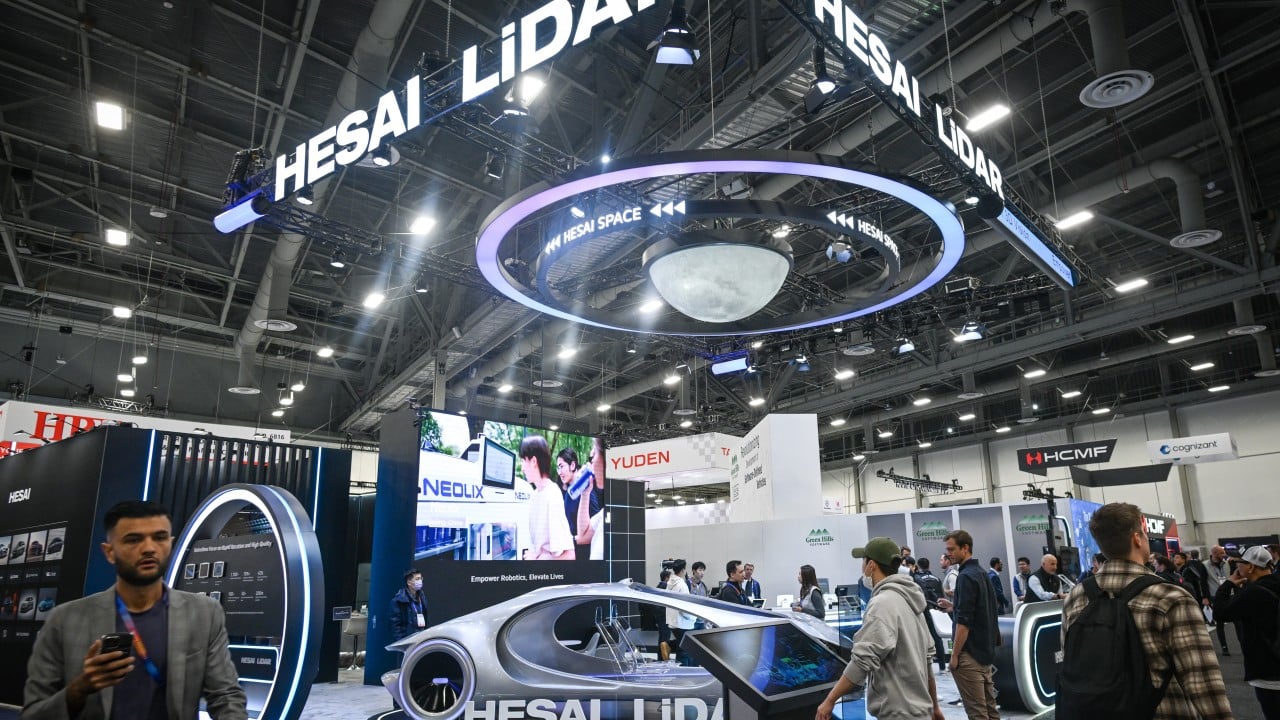
The narrative surrounding the lidar industry is seductive. Proponents argue that as cars become computers on wheels, the demand for high-fidelity spatial awareness will naturally create a windfall for manufacturers. Hesai Group, the industry leader, has indeed posted five consecutive quarters of profitability, a rarity in the speculative world of automotive hardware. Yet, behind the headline figures of increased shipments and revenue growth, a harsher reality is taking hold. The industry is currently trapped in a deflationary cycle that threatens to erode the very margins that made these companies attractive in the first place.
Total shipments in the second quarter of 2026 reached 628,275 units, a jump of nearly 80 percent from the prior year. On the surface, this confirms the thesis that smart vehicle adoption is pushing lidar into the mainstream. However, look at the unit economics. The average selling price has plummeted, dropping by 35 percent year-over-year to below 1,300 yuan. This is not merely the result of technological refinement; it is the byproduct of a desperate fight for market share among Chinese manufacturers. When the technical gap between a premium sensor and a budget alternative narrows, the differentiator shifts from performance to pure pricing.
Major automakers are no longer paying a premium for the brand recognition of a market leader. They are playing suppliers against one another. Xiaomi, for instance, has successfully introduced secondary suppliers into its supply chain, effectively capping the leverage that any single vendor can exert. For Hesai, this has necessitated a strategic shift. They are no longer simply selling a component; they are forced to trade price for volume to maintain their footprint. This approach works to sustain top-line growth, but it leaves the operating profit vulnerable. The company reported an operating income of merely 2.2 million yuan for the quarter, a sharp decline compared to previous cycles, proving that shipping more hardware does not automatically equate to capturing more value.
The industry is navigating a transition where the hardware itself is being commoditized. To escape this trap, the primary players are aggressively pivoting toward what they call Strategic Growth Initiatives. These investments, including robotic actuation modules and more advanced sensing platforms, are the new frontier. The objective is to move from being a tier-one supplier to becoming a foundational infrastructure provider for embodied AI. The gamble is that while automotive lidar margins will continue to compress, the margins in robotics and industrial automation will remain protected by complexity and specialized application.
However, this pivot is not without risk. Research and development spending has surged to 231 million yuan this quarter, driven by the need to fund these new ventures. This spending creates a drag on the bottom line that only works if the adoption of humanoid robots, robotic lawnmowers, and autonomous logistics vehicles accelerates faster than the decline in automotive profitability. It is a race against time. If the automotive market remains sluggish, the capital required to keep these new segments afloat will have to come from a core business that is already bleeding pricing power.
The recent legal victory in the United States, where a federal court moved to overturn a designation that labeled the company as a military-linked entity, provides some breathing room for international expansion. For a firm reliant on global scale to amortize its heavy R&D costs, geopolitical friction is a tangible operational tax. But even with the regulatory path cleared, the fundamental challenge remains one of margin management. The market is waiting to see if these high-tech sensors can maintain their utility value as they move into high-volume, low-margin applications.
Consider a hypothetical scenario where an automaker decides to integrate lidar into its base-model fleet. They demand a price point that is half of what was standard two years ago. The supplier, eager to fill factory capacity, agrees. To break even, the supplier must strip out redundant components or rely on scale that has not yet materialized. This creates a fragility in the business model where a single shift in consumer demand or a pivot in a major client's architecture could leave the manufacturer holding significant, low-margin inventory.
The sector is currently at a turning point. The initial excitement over lidar as the "eyes" of the autonomous vehicle has faded into a period of industrial pragmatism. It is no longer enough to have the most sophisticated sensor on the market. Manufacturers must now prove they can run a lean operation while simultaneously funding the next generation of physical AI. Growth in shipment volume is a vanity metric if the cost of that growth exceeds the long-term utility of the product. The companies that survive the next three years will be those that accept the commodity status of the sensor and successfully reinvent themselves as software-enabled infrastructure providers, or those that simply cut costs until the math finally aligns.
The industry will not be defined by who sells the most units in 2026. It will be defined by who can stop the bleeding of their unit prices long enough to capture a stake in the next wave of automation. Efficiency is the only currency that matters now. Every other promise is just noise.
:max_bytes(150000):strip_icc():focal(749x0:751x2)/chrissy-teigen-wren-split-071723-6256dab1033241bca6a15fdcd0f5c26a.jpg)

