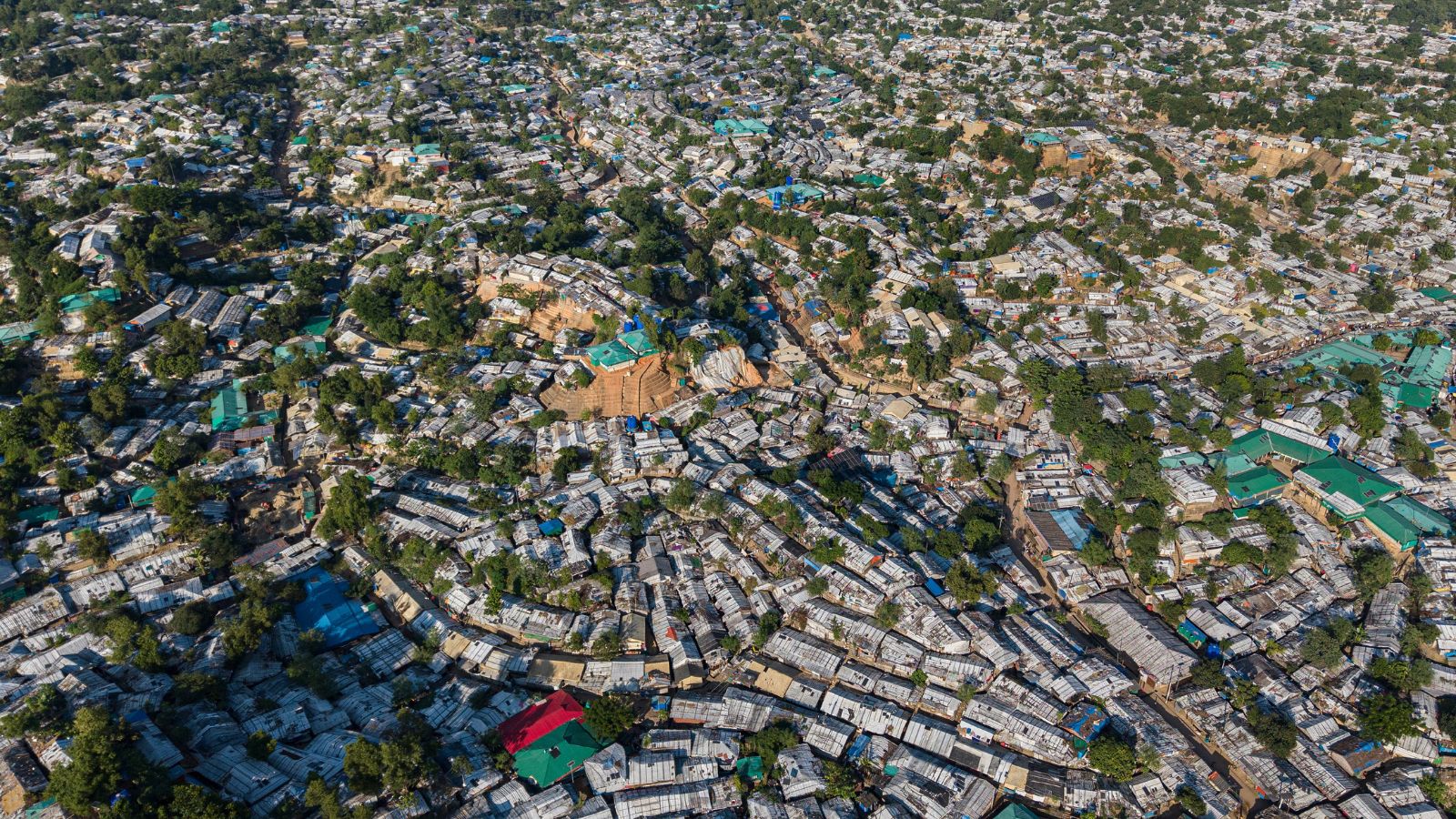
More than 500 Rohingya refugees are feared dead after two overcrowded vessels capsized off the coast of Myanmar. The United Nations refugee agency (UNHCR) and the International Organization for Migration (IOM) confirmed the suspected mass casualty event on July 16, 2026, marking what could be one of the worst maritime disasters in the region in decades. The vessels, which departed western Rakhine State in late June, were carrying hundreds of desperate families fleeing a brutal civil war and starvation-level rations in neighboring refugee camps. One boat carrying 250 people lost contact almost immediately after departure, while a second boat carrying 280 people is believed to have foundered off the Ayeyarwady coast on July 8.
They sailed in the middle of the monsoon season. This single fact reveals the sheer desperation of those on board. Historically, refugee boats avoid the Bay of Bengal during the summer months when torrential rains, high winds, and violent swells turn the shallow sea into a graveyard. To understand why 500 people would board rickety wooden trawlers in the teeth of a monsoon requires looking past the simple statistics of a shipwreck. It demands an examination of a deliberate, multi-layered trap engineered by military regimes, warring ethnic factions, regional indifference, and a severe retreat in international humanitarian aid. Building on this topic, you can also read: Why the Military is Forcing Troops to Check Their Testosterone.
The Rakhine Cauldron
For the remaining Rohingya inside Myanmar, life has devolved into an inescapable war zone. Since the military junta seized power in 2021, a brutal civil conflict has consumed the country. In Rakhine State, the home of the stateless Rohingya minority, the fighting has reached a fever pitch. The military junta is locked in a fierce territorial war with the Arakan Army, an ethnic Rakhine rebel militia seeking self-determination.
Caught between these two heavily armed forces, the Rohingya have become collateral damage. Neither side views them as citizens or allies. The military junta, which carried out what the United States officially declared a genocide against the Rohingya in 2017, has forced young Rohingya men into military service to fight against the rebels. This forced conscription has triggered a wave of terror through Rohingya villages, prompting young people to flee into the forests or toward the coast to avoid being used as human shields. Observers at Reuters have shared their thoughts on this situation.
At the same time, the
The Silent Massacre on the Andaman Sea
News
Over five hundred people, predominantly Rohingya refugees, are feared dead after an overloaded wooden vessel capsized off the coast of Myanmar. This catastrophic maritime disaster highlights a desperate, escalating exodus from the squalid camps of Bangladesh and the war-torn villages of Rakhine State. The tragedy is not an isolated accident. It is the predictable consequence of a highly organized, multi-million-dollar human trafficking network operating with near-total impunity across Southeast Asia.
Every year, when the monsoon winds subside, the Andaman Sea becomes a graveyard.
The victims are stateless, stripped of citizenship by Myanmar, and squeezed out of Bangladesh by deteriorating security, ration cuts, and systemic hopelessness. They board vessels that are fundamentally unfit for the open ocean, guided by captains who are often nothing more than hired hands willing to abandon ship at the first sign of trouble. This latest disaster is one of the worst on record, yet the regional response remains a mix of performative hand-wringing and active neglect.
To understand why these tragedies keep happening, one must look beyond the immediate horror of the shipwreck. The entire maritime pipeline is built on a foundation of official corruption, regional indifference, and a highly lucrative business model that treats human lives as disposable cargo.
The Anatomy of a Floating Grave
The vessels used in these crossings are not passenger ships. They are aging blue-water wooden fishing trawlers, designed to carry fish, not hundreds of human beings.
Before departure, traffickers modify these boats. They install temporary wooden decks, dividing the hull into cramped, suffocating tiers. In these dark, unventilated spaces, men, women, and children are packed shoulder-to-shoulder. They are stripped of their belongings to save space. Fresh water is strictly rationed. Food is minimal.
A standard wooden trawler of this class is designed to carry perhaps fifteen crew members and a few tons of catch. Traffickers routinely force four hundred to six hundred people onto them.
The weight distribution alone makes these boats highly unstable. The center of gravity is dangerously high, meaning any sudden shift in passenger movement can cause an immediate capsize. When an engine fails—as they frequently do, given the poor maintenance and the strain of the load—the boat loses steerage and begins to drift sideways against the swell. It takes only one large wave to roll the vessel over, trapping hundreds of people beneath the makeshift decks.
Survivors of previous crossings describe a living nightmare. If a passenger stands up to relieve themselves or to breathe fresh air without permission, they are beaten by the armed guards on board. The crew, hired by syndicate leaders in Myanmar and Bangladesh, often have no formal maritime training. They navigate using basic mobile phones, heading blindly toward the southern reaches of the Andaman Sea.
The Economics of Despair
This is a highly organized, commercial enterprise. The cost of a single passage ranges from $2,000 to $4,000 per person. For a population living on humanitarian aid in Cox’s Bazar, this represents an astronomical sum.
To raise the funds, families sell their remaining jewelry, take out high-interest loans from camp lenders, or rely on remittances sent by relatives who have already managed to reach Malaysia. The money is paid in stages. A deposit is given to a local broker inside the camps, followed by a second payment once the passenger successfully boards a small feeder boat on the banks of the Naf River. The final, largest payment is collected via informal money transfer systems, such as hawala, once the vessel reaches international waters or makes landfall.
The profit margins are enormous. A single successful voyage can net a trafficking syndicate upwards of a million dollars.
With that level of cash flow, buying cooperation is easy. The maritime pipeline relies on a network of bribes that stretches from the muddy creeks of Teknaf in Bangladesh to the naval patrols off the coast of Myanmar, all the way to the landing sites in southern Thailand and northern Sumatra. Coast guards and border police are paid to look the other way during the critical hours of departure and transit.
When international pressure mounts, authorities occasionally arrest low-level brokers or impound abandoned boats. The syndicate leaders, who operate from comfortable villas in regional capitals, remain untouched. They view the loss of a vessel—and the lives of its passengers—simply as a cost of doing business.
A Policy of Managed Neglect
The international legal framework for maritime safety is clear. The International Convention for the Safety of Life at Sea obligates all nearby vessels and coastal states to assist any boat in distress.
In the Andaman Sea, this law is routinely ignored.
Governments in the region have adopted an unwritten policy of "push-back." When naval vessels or coast guard patrols spot a drifting refugee boat, their primary objective is not rescue. It is exclusion. They intercept the boat, provide a token amount of food, water, and fuel, repair the engine just enough to keep it moving, and then tow it out of their territorial waters.
This game of human ping-pong is played out over weeks. Indonesia, Malaysia, and Thailand repeatedly push the same vessels back and forth across maritime boundaries while those on board slowly starve or die of dehydration.
The justification offered by these governments is always the same. They claim that rescuing the refugees would create a "pull factor" that encourages more people to make the dangerous journey. This argument is intellectually dishonest. It assumes that the decision to flee is a calculated choice based on regional asylum policies.
In reality, the driving forces are intolerable conditions at home. When the alternative is slow starvation in a barbed-wire camp or death in a military sweep, the sea, no matter how dangerous, looks like the only viable option. By treating rescue as a security threat, regional governments have effectively outsourced their border enforcement to the sea itself, using the threat of drowning as a deterrent.
The Fire in Rakhine State
The spike in maritime departures is directly tied to the escalating conflict inside Myanmar. Since the military coup in 2021, the country has descended into a brutal civil war.
In Rakhine State, the ethnic Rakhine Arakan Army has made significant territorial gains against the ruling military junta. The Rohingya population is caught in the middle of this vicious conflict. Both sides have targeted them. The military junta, desperate for manpower, has forcibly conscripted Rohingya men—the very people they denied citizenship and tried to eradicate in 2017—to fight on the front lines.
Meanwhile, the Arakan Army has shelled Rohingya villages and restricted food supplies, viewing the minority population with deep suspicion.
The remaining Rohingya in Rakhine are trapped in open-air concentration camps with no freedom of movement, no access to healthcare, and no way to feed their families. The humanitarian aid that once kept them alive has been systematically blocked by the military regime as a weapon of war.
Under these conditions, staying is a death sentence. The sea is not a choice; it is an escape hatch.
Until the root causes of this persecution are addressed, the boats will keep launching. The international community has failed to hold the Myanmar military accountable for decades of atrocities. This collective failure of diplomacy and justice is paid for in human lives on the high seas.
The Illusion of Regional Cooperation
The Association of Southeast Asian Nations (ASEAN) has proven entirely useless in addressing the crisis. Bound by its foundational principle of "non-interference" in the internal affairs of member states, the bloc has stood by while Myanmar destroys itself and destabilizes the region.
Initiatives like the Bali Process, which was established to combat people smuggling and trafficking, have devolved into talking shops. They produce endless declarations and framework agreements but fail to establish a coordinated, regional search-and-rescue operation.
When a crisis occurs, there is no centralized command to coordinate asset deployment. There is no pre-agreed port of safety where rescued passengers can be disembarked.
Instead, the burden is left to local fishing communities. In Aceh, Indonesia, it is often impoverished local fishermen who defy government orders to rescue starving Rohingya from drifting boats. They do so out of a basic sense of human solidarity, sharing what little food and water they have with the survivors. These fishermen show more leadership and moral clarity than all the diplomats and heads of state in the region combined.
The current system is designed to fail. It relies on the hope that if the world ignores the problem long enough, the refugees will simply stop coming, or the sea will swallow them quietly. But the sea does not keep secrets. The bodies eventually wash ashore, and the empty, drifting hulls remain as monuments to a collective moral collapse.
The latest capsize off the Myanmar coast is a grim reminder that the current strategy of managed neglect is costing hundreds of lives. Without a coordinated regional mechanism for search and rescue, paired with a genuine effort to dismantle the financial networks of the traffickers and address the persecution inside Myanmar, the Andaman Sea will continue to claim its victims, one overcrowded boat at a time.