The Illusion of Eternal Resilience
An ancient pine tree that has stood for ten centuries is not just a plant. It is a biological archive. It has survived the collapse of empires, medieval ice ages, and prolonged regional droughts. Yet, across the globe, the dedicated arborists, rangers, and conservationists tasked with shielding these ancient sentinels are panicking. They fear that rapidly shifting weather patterns have broken the unspoken contract between these organisms and the environments they have occupied for a millennium.
The traditional conservation playbook is failing because it treats ancient trees as static museum pieces rather than dynamic, stressed organisms.
To understand why a 1,000-year-old tree faces imminent erasure, one must look past the superficial headlines about rising temperatures. The true threat lies in the breakdown of hyper-local ecosystems. These micro-climates took thousands of years to stabilize but are now unraveling in a matter of decades.
The Hidden Mechanics of Millennial Survival
Old-growth trees like the bristlecone pine, the European yew, or the Japanese cedar do not survive for centuries by accident. They possess specific evolutionary adaptations that allow them to endure extreme stress.
- Minimalist Growth Patterns: In lean years, an ancient tree can choose to shut down growth in 90% of its trunk, feeding only a single, thin strip of living bark to keep its crown alive.
- Chemical Defense Networks: Deeply concentrated resins and terpenes act as natural anti-fungal and anti-insect armor.
- Symbiotic Mycorrhizal Webs: Underground fungal networks stretch far beyond the tree's root zone, trading nutrients and drawing moisture from deep rock fractures.
This brings us to the core of the current crisis. The problem is not that the trees have suddenly grown weak. The problem is that the sheer velocity of modern environmental shifts is outstripping the pace of evolutionary adaptation.
Consider the mechanism of winter cooling. Many ancient tree species require a prolonged period of freezing temperatures, known as chilling hours, to maintain their dormancy cycle. When winters warm up, the tree’s metabolic engine keeps running. It burns through its stored starches during the months it should be resting. By spring, the organism is already running on fumes.
The Invisible Killer from the Undergrad
Journalists love to photograph cracked earth and raging wildfires. Those are dramatic. But the most lethal consequence of changing weather patterns happens quietly beneath the forest floor.
The Breakdown of Moisture Budgets
Trees operate on a strict hydraulic budget. They pull water from the soil up to their highest needles through a process called transpiration. As the atmosphere warms, its demand for moisture increases exponentially—a metric scientists call the Vapor Pressure Deficit (VPD).
When the air becomes too dry, it sucks moisture out of the needles faster than the roots can replenish it. This creates immense tension within the tree’s water-transporting vessels, known as the xylem. If the tension becomes too high, the water column snaps. This causes a phenomenon called a cavitation embolism. Think of it as a heart attack for a tree. Once a critical number of these vessels collapse, the tree can no longer transport nutrients, effectively starving to death from the inside out while looking perfectly green on the outside.
The Opportunistic Invasion
A stressed tree is a beacon for predators. For a thousand years, ancient pines have used their resin to literally flush out boring beetles. When a beetle attempts to drill into the bark, the tree secretes a sticky, pressurized stream of sap that suffocates the insect.
But sap production requires water pressure. Without it, the defense system collapses.
[High Air Temperatures] -> [Elevated Vapor Pressure Deficit] -> [Xylem Cavitation] -> [Loss of Resin Pressure] -> [Successful Beetle Infestation] -> [Tree Mortality]
Bark beetles, which used to produce only one generation per year due to long, freezing winters, are now producing two or even three generations in a single extended summer. The math is brutal. A defense system built to withstand a few thousand insects cannot hold the line against millions.
The Friction in Modern Conservation Strategies
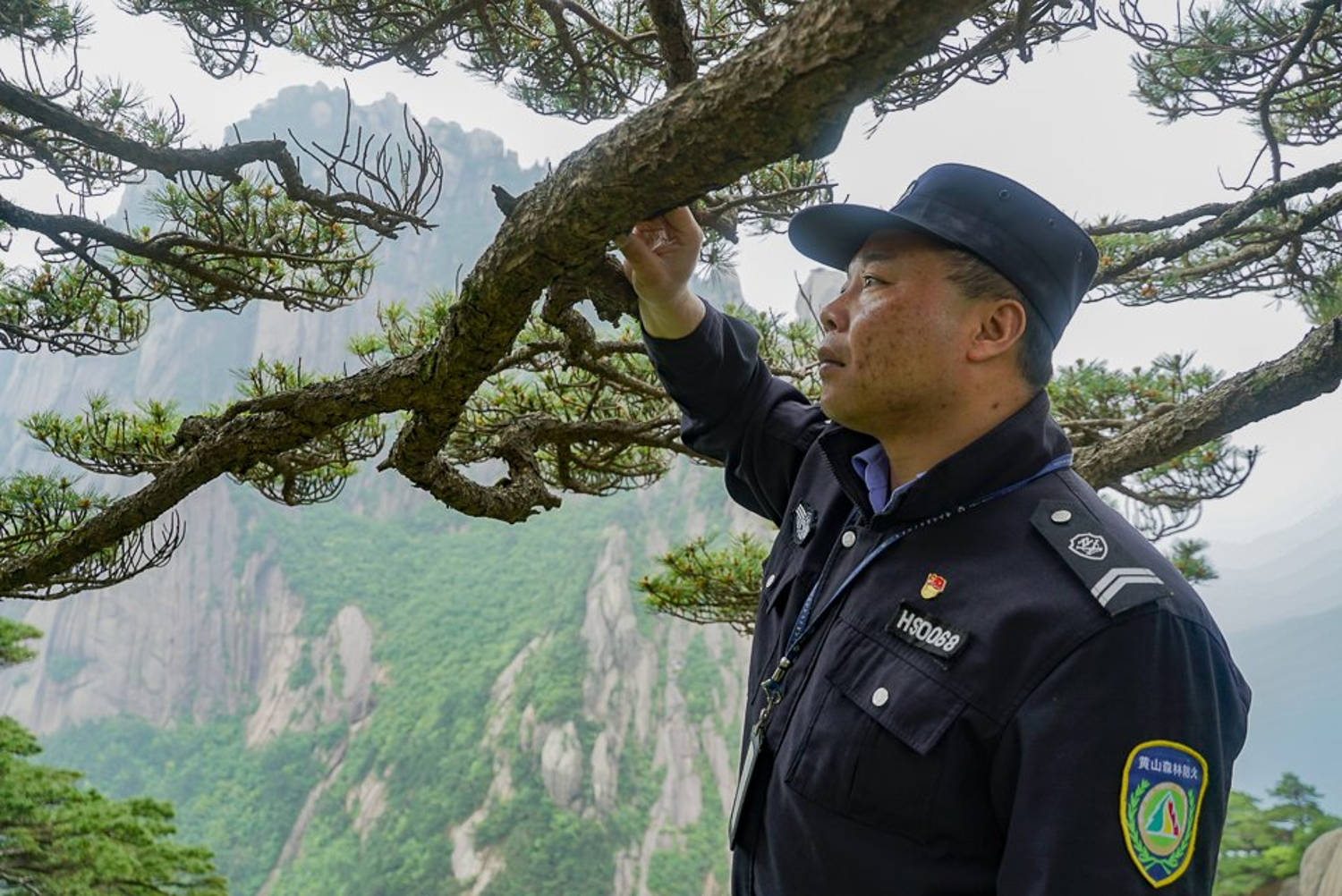
If you talk to the boots-on-the-ground protectors—the rangers who monitor these trees daily—you quickly uncover a deep rift regarding how to handle this crisis. The old school of thought dictates absolute non-interference. The new school argues that without radical, interventionist management, these ancient trees will not survive the century.
+-----------------------------------+-----------------------------------+
| Passive Stewardship (Old School)  | Active Intervention (New School)  |
+-----------------------------------+-----------------------------------+
| Focuses on habitat isolation and  | Advocates for assisted migration, |
| preventing human-caused damage.   | artificial irrigation, and chemical|
|                                   | inoculations.                     |
+-----------------------------------+-----------------------------------+
| Assumes nature will self-correct  | Recognizes that the pace of change|
| if left alone.                    | requires human triage.            |
+-----------------------------------+-----------------------------------+
The Failure of Isolation
For decades, the primary way to protect a famous 1,000-year-old tree was to build a fence around it, hide its exact coordinates from the public, and prevent logging in its immediate vicinity. This worked when the threats were local, like axes and foot traffic.
Fences cannot stop a shifting jet stream. They cannot block a drought that spans three states. The strategy of isolation assumes that the surrounding park or reserve remains a viable habitat. That assumption is no longer valid.
The Paradox of Active Triage
To save an iconic tree, some conservationists are now resorting to tactics that look more like intensive care medicine than forestry. They are installing localized drip-irrigation systems in wilderness areas, wrapping trunks in fire-resistant foil, and applying systemic insecticides directly to the bark.
This approach creates a dangerous paradox. If an ancient tree requires a permanent human life-support system to survive in its native habitat, has it ceased to be a wild organism? Furthermore, these resource-intensive interventions can only be applied to a tiny fraction of celebrity trees. The nameless old-growth forests surrounding them are left to collapse, destroying the broader ecosystem that provides windbreaks and micro-climate cooling to the ancient giants themselves.
The Blind Spot in Global Climate Metrics
Large-scale climate models are excellent at predicting average temperature increases across continents. They are remarkably bad at predicting what happens on a single, north-facing rocky ridge where a thousand-year-old pine has carved out a life.
Policy makers routinely look at regional averages and conclude that a specific forest zone remains stable. They miss the micro-disasters. A two-week heatwave that breaks local records can undo a thousand years of survival in a single afternoon. If the soil temperature reaches a critical threshold, the delicate root hairs responsible for absorbing water die. Even if ideal weather returns the following month, the machinery required to harvest that water is already gone.
We must also confront the hard truth about assisted migration. This is the practice of harvesting seeds from ancient trees and planting them hundreds of miles north, in areas that will match their ideal climate profile fifty years from now.
It sounds like a logical backup plan. In practice, it faces massive logistical and biological hurdles. An ancient pine is not an isolated unit; it is part of a complex web of local soil microbes, fungi, and insect populations that cannot simply be packed up and moved to a new state. A seedling planted in foreign soil often lacks the underground support network required to survive its first winter.
Re-engineering the Guardian Framework
To move past superficial anxiety and toward effective preservation, the framework around ancient tree conservation must be completely re-engineered.
First, funding must shift away from localized public relations campaigns centered around single, famous trees. It must be directed toward preserving the vast, contiguous buffers of younger forests that surround them. These younger stands act as physical shields, lowering the ambient temperature of the forest floor and holding moisture in the regional water cycle.
Second, management agencies must be granted the legal flexibility to act before a crisis hits. Current bureaucratic structures often require years of environmental impact studies before a single irrigation pipe can be laid or a controlled burn can be executed near an endangered ancient grove. By the time the paperwork clears, a single dry autumn can spark a firestorm that wipes out a millennium of history in three hours.
The survival of these ancient organisms depends entirely on our willingness to abandon the romantic notion that nature can heal itself in the face of systemic disruption. The caretakers are right to be afraid. The weather patterns have changed, the old defenses are down, and the clock is ticking down to zero for the world's oldest living witnesses.