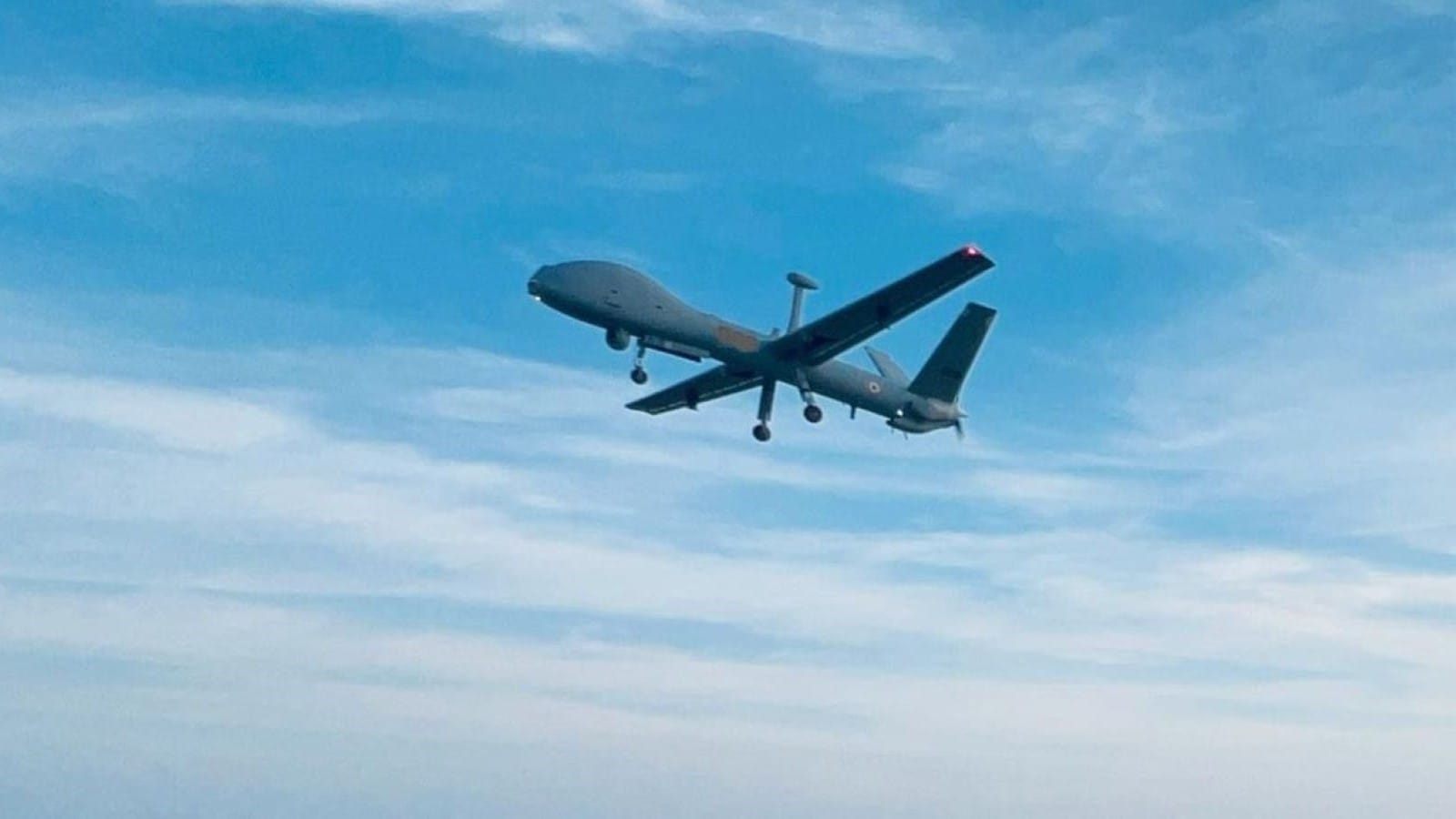
Berlin has quietly financed a massive 90 million euro contract to supply Ukraine with 50,000 strike drones, marking one of the largest single Western state purchases of unmanned aerial vehicles since the outbreak of the war. On paper, the initiative looks like a massive win for European solidarity. In reality, this transaction exposes a deep, systemic shift in how modern wars are fought, financed, and won. It reveals a fractured procurement system where European cash, American software, and Ukrainian assembly lines are duct-taped together to solve an immediate front-line emergency.
The transaction centers on the Shrike first-person-view attack drone, a low-cost platform manufactured by Ukrainian drone producer SkyFall. While the physical frames are built locally, the intelligence guiding them belongs to Auterion, an American defense software provider. These drones are designed to bypass Russian electronic warfare by using terminal autonomy, allowing the aircraft to lock onto and strike moving targets even after its radio link to the operator has been completely severed.
But fifty thousand drones is a drop in the ocean. Ukraine consumes that many units every two to three weeks along a thousand-kilometer front line. To understand the true mechanics of this deal, one must look beyond the press releases and examine the grinding economic and technological attrition redefining global defense manufacturing.
The Illusion of Scale in a High-Volume War
Western military analysts often mistake large numbers for industrial dominance. They see fifty thousand units and assume a fundamental shift in battlefield dynamics. It is a fundamental misunderstanding of the current conflict.
The Ukrainian armed forces burn through millions of drones annually. At current expenditure rates, this entire German-funded consignment will merely offset a few weeks of operational attrition. This contract is not a decisive strategic blow. It is a tactical bridge designed to sustain current defensive postures while Western industrial bases fail to produce heavy ordnance at scale.
The Shrike 10-F variant recently topped leaderboard tests in a United States Pentagon competition, proving its viability. Yet, the necessity of buying cheap, expendable hardware underscores a deeper failure. European defense ministries remain incapable of mass-producing conventional artillery shells and armored vehicles at a pace that matches Russian industrial mobilization. Drones have become the welfare check of Western military aid. They are cheap, quick to build, and politically palatable, but they cannot hold ground or clear minefields.
The Ghost Factories of the New Defense Sector
This contract arrives at a moment of intense, parallel industrial development within Germany itself. Just as Berlin is writing checks for Ukrainian-built hardware, European defense startups are building a parallel manufacturing infrastructure on German soil.
Take Helsing, Europe’s most valuable defense tech startup, which has established a heavily secured, unbranded production facility in southern Germany to mass-produce its own AI-guided HX-2 strike drones. The factory is designed for extreme mobility. If a security threat emerges, the entire assembly line can be dismantled and relocated within twenty-four hours.
This dual-track approach reveals a glaring contradiction in European defense policy. While Germany funds the cheap, 1,800-euro Shrike drones built in Ukraine, its own internal venture capital is backing the 17,500-euro HX-2 drones produced at home. This is a quiet race for technical and corporate dominance. The traditional defense primes are being outmaneuvered by software-first entities. The old guard builds slow, multi-million-dollar exquisite platforms. The new guard builds disposable code wrapped in hard foam.
The tension lies in who controls the intellectual property. By pairing Ukrainian hardware with American software via Auterion, this new deal leaves European industrial strategy out in the cold. Berlin is paying for American brains and Ukrainian muscle, highlighting the ongoing lack of a coherent, sovereign European defense tech ecosystem.
Terminal Autonomy and the Myth of the Unstoppable Weapon
The core justification for the German procurement is the integration of autonomous tracking software. In the early stages of the war, a standard FPV drone was highly effective. Today, Russian electronic warfare units have blanketed the front line with localized jamming systems that disrupt GPS and control frequencies.
When a standard drone enters a jammed zone, it drops from the sky or drifts off target. Auterion’s software attempts to solve this by transferring the thinking process to the drone itself. Once an operator identifies a target from a distance, the autonomous system takes over for the final phase of flight. The drone tracks the target using computer vision, rendering radio jamming useless.
The technology works, but it is not a permanent solution. Electronic warfare is a constant cycle of measure and countermeasure. Russian forces are already adapting by deploying visual camouflage that tricks basic computer vision algorithms, or using localized smoke screens to blind optical sensors during the final seconds of an attack.
Furthermore, relying on algorithms introduces a new layer of battlefield volatility. Software updates must be pushed out weekly to adapt to changing Russian tactics on the ground. This creates a logistical nightmare. A minor glitch in a software update can instantly turn thousands of deployed drones into useless plastic junk. The physical supply chain is no longer the primary bottleneck. The code repository is.
The Dangerous Trend of Outsourcing Defense
By funding local Ukrainian production through SkyFall, Germany is validating Kyiv's domestic military-industrial complex. Over ninety-five percent of the drones used on the front lines are now manufactured within Ukraine. This domestic production explosion has saved the country from complete collapse, but it introduces massive long-term vulnerabilities.
Ukrainian factories operate under constant threat of Russian missile strikes and sabotage. They are reliant on a fragile web of component imports, mostly consisting of commercial Chinese electric motors, batteries, and carbon fiber frames. Beijing can choke off the supply of these dual-use goods at any moment.
By relying on this highly fragmented, commercial supply chain, Western governments are avoiding the hard work of building secure, domestic industrial capacity. It is cheaper to let Ukrainian workers assemble drones in hidden basements than it is to build high-volume automated production lines in Bavaria or Ohio.
This approach creates a false sense of security. If the geopolitical winds shift and Chinese component exports dry up, the entire 50,000-drone initiative grinds to a halt. The Western alliance has outsourced its frontline ammunition supply to commercial supply chains that it does not control and cannot protect.
The Real Numbers
The math behind the 90 million euro deal deserves cold scrutiny. At roughly 1,800 euros per unit, the contract represents a highly optimized financial transaction for a strike platform. Compare this to a single Western artillery shell, which now costs upwards of 4,000 to 8,000 euros depending on the manufacturer and procurement speed.
| Platform Type | Estimated Unit Cost (Euros) | Production Origin | Primary Strategic Value |
|---|---|---|---|
| SkyFall Shrike (Auterion SW) | 1,800 | Ukraine / USA | Precision terminal strike under heavy jamming |
| Helsing HX-2 | 17,500 | Germany | Sovereign European AI loitering munition |
| Standard 155mm Shell | 4,000 - 8,000 | Western Europe | Sustained area denial and fortification destruction |
While the cost-to-benefit ratio of the Shrike appears favorable, the comparison is flawed. A drone can destroy a truck or a tank if it hits a precise weak point, but it cannot flatten a concrete bunker, clear a path through a dense forest, or provide the sustained, round-the-clock defensive fire that keeps an advancing army at bay.
The German government is purchasing a high volume of tactical precision, but it is failing to buy strategic endurance. The deal keeps Ukraine in the fight, but it does not provide the material superiority required to alter the geometry of the front line.
The Missing Pieces of the Procurement Puzzle
The institutional silence surrounding this deal is telling. Neither the German nor the Ukrainian defense ministries have commented publicly on the operational details. This opacity is not just about keeping secrets from Moscow. It is about obscuring the bureaucratic chaos that governs international arms transfers.
Funding a contract is simple. Delivering, maintaining, and integrating fifty thousand autonomous platforms into an army that uses dozens of different radio frequencies and control systems is an entirely different matter. Frontline units often complain that foreign-funded equipment arrives without the necessary training manuals, spare parts, or compatible ground control stations.
There is also the question of regulatory friction. Exporting defense-grade software from the United States to a third party funded by a European state requires navigating a labyrinth of international traffic in arms regulations. These bureaucratic delays mean that while a contract is signed today, the actual delivery of capabilities often stretches across months, diluted by red tape and political maneuvering.
The Western alliance is attempting to fight a rapid, software-driven conflict using a sclerotic, industrial-age bureaucracy. The 50,000-drone contract is a testament to the ingenuity of the private tech sector, which has found ways to bypass these bottlenecks through creative corporate structuring. But a major state cannot run its national security strategy through ad-hoc partnerships indefinitely. The current model is unsustainable, relying heavily on the willingness of private software founders and cash-strapped tech startups to absorb risks that state institutions refuse to touch.