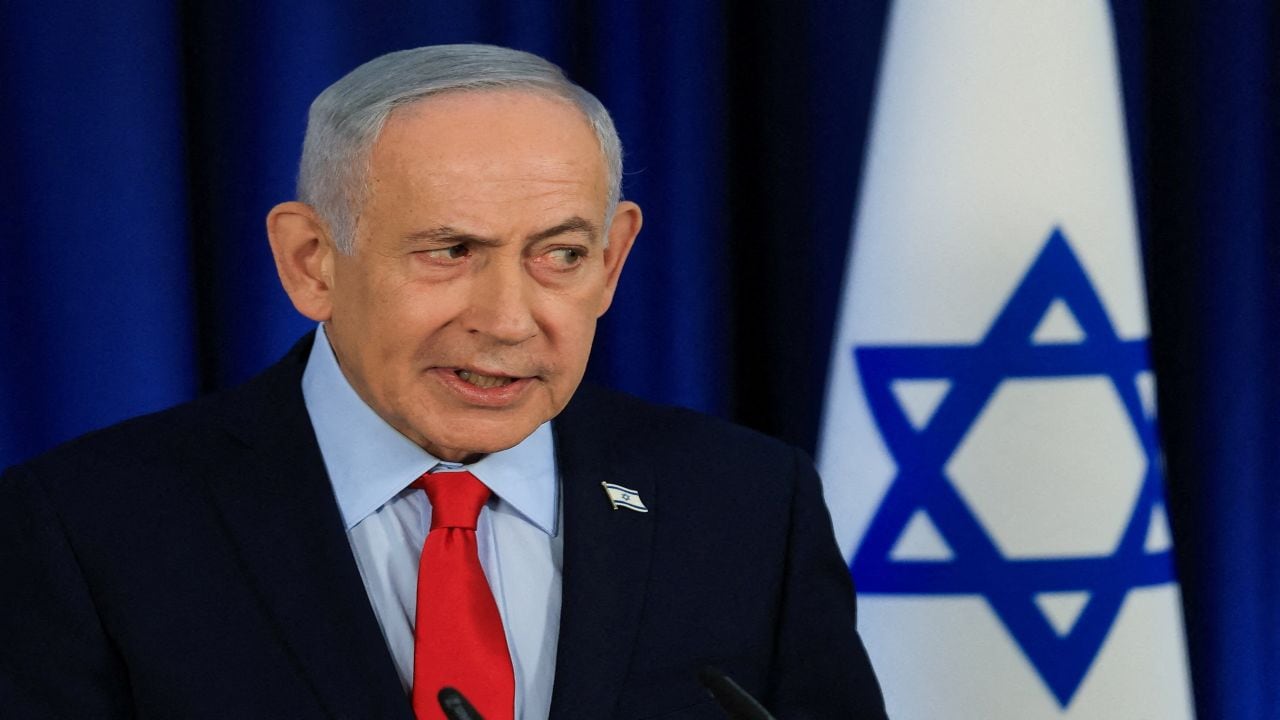
On May 13, 2026, the Israeli Prime Minister’s Office dropped a geopolitical bombshell: Benjamin Netanyahu had allegedly completed a clandestine mission to the United Arab Emirates to meet with President Sheikh Mohammed bin Zayed Al Nahyan (MBZ). Within hours, the UAE Foreign Ministry issued a stinging rebuttal, labeling the claims "baseless" and insisting that all diplomatic relations remain strictly within the public framework of the Abraham Accords. This is not a simple case of "he said, she said." It is the public surfacing of a high-stakes shadow war involving Iranian enrichment, Israeli air defense batteries, and a desperate need for plausible deniability in the Gulf.
The friction point lies in the timing. Netanyahu’s office claims the meeting occurred in late March, during the height of the recent US-Israeli military friction with Iran—a period now referred to in Jerusalem as "Operation Roaring Lion." While the UAE denies the Prime Minister’s physical presence, the digital and military footprints suggest a level of cooperation that neither side is fully comfortable admitting to their respective domestic audiences. For another perspective, consider: this related article.
The Iron Dome in the Desert
The most concrete evidence of a "breakthrough" isn’t found in a transcript, but on the ground. Only twenty-four hours before this diplomatic spat, US Ambassador Mike Huckabee confirmed what had been whispered in defense circles for weeks: Israel has deployed Iron Dome air-defense batteries and active-duty personnel to the UAE.
For the Emirates, this is a double-edged sword. On one hand, they face a persistent threat from Iranian-aligned drone and missile fire that threatens their status as a safe haven for global capital. On the other, hosting Israeli boots on the ground is a massive political liability. By denying the Netanyahu visit, Abu Dhabi is attempting to maintain the image of a sovereign, neutral player even as it integrates into a regional missile defense shield directed entirely at Tehran. Further reporting on this trend has been provided by BBC News.
The Al Ain Discrepancy
Intelligence sources suggest the alleged meeting took place on March 26 in Al Ain, a city tucked away from the prying eyes of the Dubai and Abu Dhabi high-rises. The geography is telling. Al Ain sits near the border with Oman, far from the coastal areas most vulnerable to Iranian surveillance.
The date is even more significant. March 26 was the same day a high-ranking commander of the Iranian Revolutionary Guard’s navy was eliminated in an Israeli airstrike. If Netanyahu was indeed on Emirati soil while Israel was pulling the trigger on a major assassination, the UAE’s denial isn't just about diplomacy—it is about survival. Acknowledging the visit would be tantamount to admitting complicity in an Israeli kinetic operation against Iran.
The Resignation Factor
Adding fuel to the fire is the testimony of Ziv Agmon, a former spokesperson for the Israeli Prime Minister’s Office who resigned in March. Agmon took to social media to directly contradict the UAE’s denial, claiming he was physically present during the trip. He described a scene of "royal honors" where MBZ personally drove Netanyahu from the tarmac to the palace.
Agmon’s outburst highlights the deep internal fractures within the Israeli government. Netanyahu is under immense pressure to prove that his "Mr. Security" persona still yields results. By leaking a secret visit, he gains a domestic political win, showing Israelis that he can fly into the heart of the Arab world even during a regional war. However, this domestic win comes at a staggering cost to his partners in Abu Dhabi, who view such leaks as a betrayal of the "discretion" that defines Gulf diplomacy.
Plausible Deniability vs. Hard Reality
The UAE’s insistence that its relations with Israel are "not based on non-transparent or unofficial arrangements" is a carefully worded legal shield. It allows them to continue military-to-military coordination while publicly distancing themselves from the polarizing figure of Netanyahu.
This isn't the first time this ghost dance has happened. In 2018, long before the Abraham Accords were signed, Netanyahu reportedly made a similar secret trip. The difference now is the temperature of the region. With the UAE reportedly launching its own unacknowledged strikes on Iranian assets—including a refinery on Lavan Island in April—the stakes of "getting caught" with the Israeli Prime Minister are significantly higher.
A Partnership of Necessity
Despite the public spat, the underlying reality is that the Israel-UAE axis is tightening. The UAE is currently trying to reassure nervous international investors that its skies are protected. Israel is the only actor in the region capable of providing that protection immediately through the Iron Dome and the Arrow system.
The "breakthrough" Netanyahu’s office mentioned likely refers to a formal, albeit secret, intelligence-sharing pact that goes beyond the trade and tourism focus of the original 2020 accords. Israel gets a forward-operating listening post and a partner in the Gulf; the UAE gets a qualitative military edge that the US has been slow to provide.
The denial from Abu Dhabi should be read as a "No Comment" in the loudest possible terms. They are not saying the meeting didn't happen; they are saying it didn't happen officially. In the world of high-end espionage and Middle Eastern power politics, the truth usually lives in that narrow gap between what is said and what is denied.
The era of public handshakes on the White House lawn has been replaced by a grim, functional necessity. Netanyahu needs the UAE to survive politically, and the UAE needs Israeli tech to survive physically. Both sides will continue to lie about the details as long as the benefits of the secret outweigh the embarrassment of the truth.