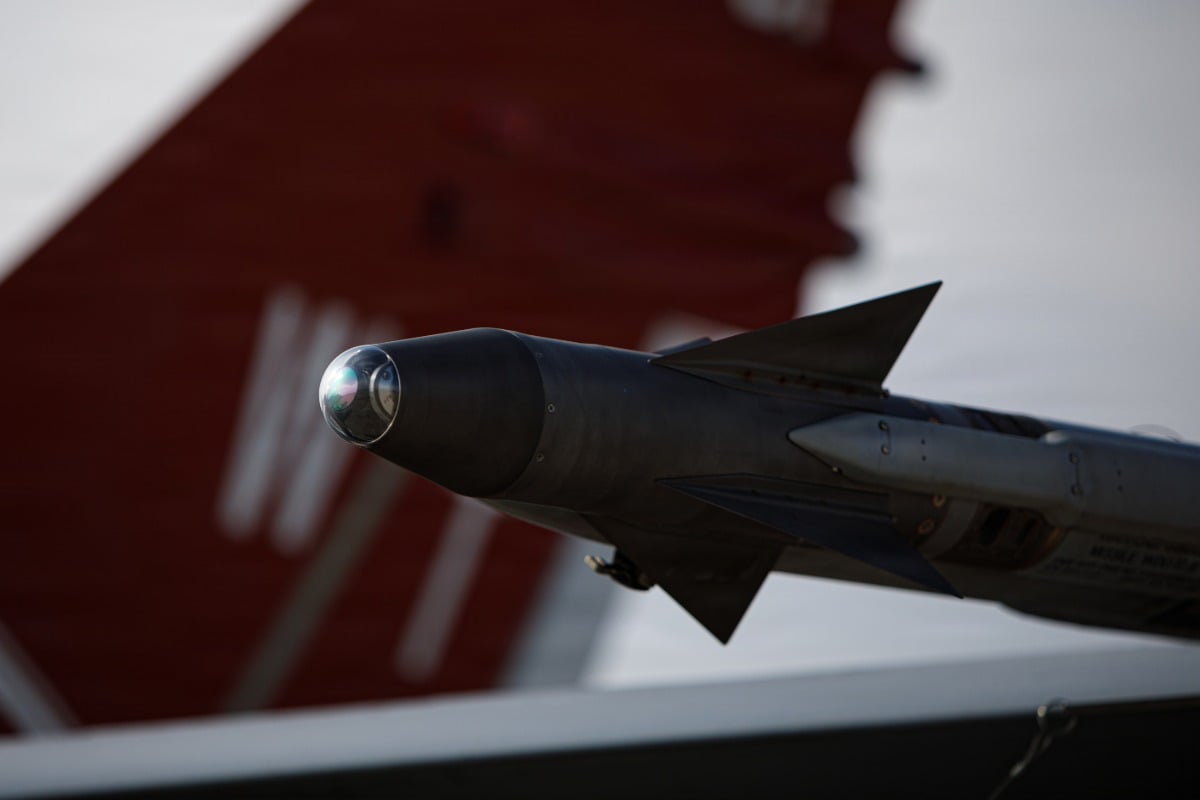
The U.S. Navy quietly finalized a $1.1 billion contract modification with Raytheon to accelerate the production of AIM-9X Block II Sidewinder missiles. The massive capital injection aims to push manufacturing capacity up to 2,500 missiles per year. While press releases frame this as a standard procurement milestone, the reality is far more urgent. Western military inventories are depleted after years of supplying foreign conflicts, and the American defense industrial base is scrambling to prove it can still manufacture hardware at scale.
The deal highlights a deep structural vulnerability in modern warfare. For decades, the Pentagon prioritized complex, expensive weapons systems over high-volume production lines. That calculation collapsed when regional conflicts turned into prolonged wars of attrition. Air defense assets are being consumed faster than factories can replace them. For a different view, consider: this related article.
The Math of Empty Stockpiles
The Sidewinder has evolved far beyond its Cold War roots as a simple dogfighting weapon. The current Block II variant serves dual purposes. It intercepts enemy fighters in mid-air and feeds ground-based air defense platforms like the National Advanced Surface-to-Air Missile System.
This multi-role flexibility made the weapon a primary export to allied nations facing imminent aerial threats. It also created an inventory crisis. When a nation deploys dozens of interceptors every week to down cheap, mass-produced drones and cruise missiles, the financial and industrial math flips. A million-dollar missile destroying a twenty-thousand-dollar drone is a losing equation over an extended timeline. Similar reporting regarding this has been published by Forbes.
The Pentagon is discovering that precision is meaningless without volume. Raytheon plans to execute the bulk of this contract at its sprawling manufacturing hub in Tucson, Arizona. To achieve the 2,500-unit annual target, the firm is launching an aggressive hiring campaign for specialized engineers with active security clearances. Finding that talent in a highly competitive labor market is the first of many bottlenecks.
Raw Materials and Fragile Supply Networks
The bottleneck does not end with personnel. Scaling assembly lines requires a steady, predictable flow of highly specialized subcomponents. The guidance systems of modern infrared-tracking missiles rely on rare earth elements, advanced optical sensors, and specialized semiconductors.
Many of these supply chains remain alarmingly fragile. A single disruption at a tier-three supplier providing rocket motors or thermal batteries can stall the entire assembly line. Defense analysts have repeatedly warned that the sub-tier defense industrial base lacks the financial cushion to rapidly scale production without long-term government guarantees.
Fixed-price incentive contracts, like this $1.1 billion Navy agreement, are designed to shield taxpayers from cost overruns while giving contractors a clear profit motive to optimize their logistics. But optimization takes time. Raising factory output cannot happen by simply adding an extra shift on the factory floor. Machine tools must be ordered months, sometimes years, in advance.
The Geopolitical Push for Export Volatility
More than 35 allied nations rely on the Sidewinder for their frontline defense. This international demand drives the economic scale of the program, but it also complicates American strategic calculations. Every missile shipped to an ally in Europe or Asia is a missile that does not enter a U.S. military magazine.
Foreign Military Sales represent a significant portion of this new contract. Washington is attempting a delicate balancing act. It must reassure partners of its long-term commitment while simultaneously rebuilding its own depleted reserves in the Indo-Pacific and European theaters. The pressure is mounting as intelligence reports suggest global flashpoints are multiplying faster than industrial capacity can expand.
The corporate transition of Raytheon under the broader RTX umbrella has placed a intense spotlight on execution. Investors have watched the stock gain over 30 percent during the past year, driven by the insatiable global demand for defense hardware. Yet market valuation does not automatically translate to factory-floor throughput. Financial analysts point out that the company remains valued at a premium, meaning any failure to meet these accelerated production deadlines could trigger a harsh market correction.
The Technical Challenge of Countering Modern Exploits
Ramping up production is only half the battle. The threat environment changes constantly. Adversaries are actively studying the performance of Western hardware in active combat zones, looking for weaknesses in tracking algorithms and electronic countermeasures resistance.
The Block II hardware must receive continuous software updates to remain effective against evolving electronic warfare tactics. This means Raytheon is not just manufacturing a physical product. They are managing a rolling software engineering pipeline that must be validated alongside the physical assembly. If a new jamming technique neutralizes the missile's seeker head, a warehouse full of newly built weapons becomes instantly obsolete.
The Pentagon is betting $1.1 billion that domestic industry can out-build and out-innovate these emerging threats simultaneously. It is an expensive gamble, and the timeline is unyielding. The era of comfortable, low-rate peace-time production is officially over.