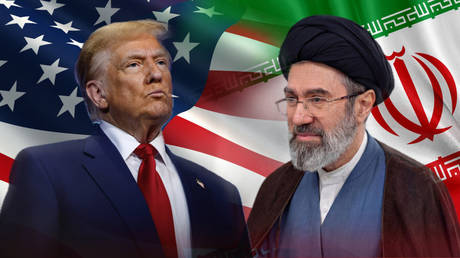
The current pause in military operations over the Persian Gulf is not a prelude to peace, but a dangerous operational interlude. Washington is weighing whether to resume large-scale airstrikes against Iranian infrastructure following the breakdown of the recent Islamabad negotiations. While public rhetoric from the White House frames the situation as a moment for potential diplomatic breakthrough, the reality on the water tells a completely different story.
A high-stakes maritime enforcement campaign is underway right now. US Marines recently boarded the Iranian-flagged tanker M/T Celestial Sea, while naval forces seized the sanctioned vessel M/T Skywave near the Strait of Malacca. These aggressive interdictions prove that the formal combat operations under Operation Epic Fury may have paused, but the economic and kinetic strangulation of Tehran has never stopped. Washington’s true objective is no longer just the containment of a regional adversary. It is the absolute neutralization of Iran's remaining ballistic and asymmetric capabilities through a suffocating "dual blockade."
The Illusion of the Postponed Strike
Earlier this week, the executive branch announced it had shelved a major, pre-planned aerial bombardment. The official narrative credited intensive diplomatic lobbying from Gulf capitals, specifically Riyadh, Doha, and Abu Dhabi. Local rulers are understandably terrified of what a renewed round of Iranian retaliatory missiles would do to their desalination plants, ports, and financial hubs. They remember too well the devastating cross-border strikes that marked the opening weeks of the conflict.
The public explanation is only half the truth.
Behind closed doors at the Pentagon, commanders are grappling with a far more troubling intelligence update. A senior official recently confirmed that Iranian military units, utilizing technical assistance from Russian electronic warfare specialists, have successfully mapped out the specific flight patterns and radar signatures of US fighter jets and bombers operating over the region.
Deterrence is degrading. While the early strikes on February 28 effectively decapitated top leadership and shattered fixed air-defense sites, the remaining Iranian elements have adapted. They are shifting from centralized command structures to highly mobile, asymmetric defense networks. The US Air Force no longer enjoys a completely permissive environment over Iranian airspace. Any follow-up campaign will require a much higher price in American aircrews and airframes than the initial wave.
The Broken Arithmetic of the Dual Blockade
We are currently witnessing a bizarre, unprecedented logistical stalemate in the world's most critical energy corridor.
The United States Navy is enforcing a strict blockade of Iranian ports to starve the regime of oil revenue. Simultaneously, Iran is leveraging its remaining anti-ship missiles, fast attack craft, and drone stockpiles to enforce its own shadow blockade over the Strait of Hormuz. Tehran has begun demanding that foreign commercial vessels sign bilateral transit agreements directly with the regime, effectively charging an extortionate toll for safe passage through international waters.
+------------------------------------+------------------------------------+
| US Tactical Strategy               | Iranian Counter-Strategy           |
+------------------------------------+------------------------------------+
| Maritime interdiction of tankers   | Imposition of transit tolls in     |
| and illicit oil shipments          | the Strait of Hormuz               |
+------------------------------------+------------------------------------+
| Precision aerial bombardment of    | Rapid dispersal of remaining       |
| fixed ballistic missile sites      | mobile TEL launchers into terrain  |
+------------------------------------+------------------------------------+
| Economic isolation via targeted    | Asymmetric proxy activation        |
| financial and shipping sanctions   | across regional choke points       |
+------------------------------------+------------------------------------+
This dual-blockade dynamic has broken the global energy market. The temporary ceasefire initiated in April did little to soothe international shipping firms, many of which refuse to return to the Persian Gulf without astronomical insurance premiums.
The strategic calculus in Washington rests on a deeply flawed assumption. The administration believes that economic exhaustion will force Tehran to surrender its estimated 460 kilograms of highly enriched uranium and dismantle its missile program. History suggests otherwise. For a regime that has spent decades operating under severe international restrictions, economic deprivation is a familiar baseline, not an existential shock. The loss of centralized leadership has paradoxically hardened the resolve of the Islamic Revolutionary Guard Corps (IRGC) field commanders, who view any compromise as an admission of defeat.
The Flawed Intelligence Trap
The structural drivers pushing the US toward renewed kinetic action are rooted in an intelligence echo chamber. Bureaucrats are under immense pressure to show definitive results for the billions of dollars already expended in this campaign. To justify the deployment of multiple carrier strike groups and thousands of ground troops to the theater, assessments are being skewed toward the most optimistic scenarios.
The primary talking point echoing through congressional briefings is that Iran's military is entirely crippled.
That assessment is dangerously premature. It ignores the fundamental nature of asymmetric warfare. You cannot bomb an insurgent mindset out of existence with precision-guided munitions. While more than 190 Iranian ballistic missile launchers have been verified as destroyed, the regime's deep underground facilities and hidden missile silos remain largely intact.
Furthermore, the regional network remains operational. Regional proxies are currently sitting in a highly disciplined standby mode. Intelligence reports indicate that regional groups are fully prepared to resume massive drone and missile salvos against Western commercial shipping targets well beyond the Persian Gulf, stretching directly into the Red Sea and the Bab-el-Mandeb Strait.
The Regional Spillover Nobody Wants to Admit
The conflict is already bleeding past its original boundaries, dragging in external powers who are desperate to secure their own geopolitical interests.
Pakistan has quietly deployed an estimated 8,000 combat-ready troops, along with a fighter squadron and an advanced air-defense system, directly into Saudi Arabia. While Islamabad publicly frames this historic deployment as a peacekeeping and defensive move under its bilateral pact with Riyadh, the reality is a clear signal of deterrence directed at both Tehran and Washington. Regional powers are actively moving to contain the fallout of a conflict they had no part in starting, but will ultimately have to live with.
The friction is also testing Western alliances. European capitals are privately furious over the economic shockwaves hitting their energy sectors, yet they find themselves trapped into supporting the maritime enforcement mechanisms to maintain the illusion of a unified international front.
The Unforgiving Path Ahead
The White House is rapidly running out of viable options.
The administrative apparatus cannot sustain the current, open-ended naval and aerial deployment indefinitely without facing severe domestic political blowback and a massive logistical crunch. The Pentagon has already requested hundreds of billions in supplementary funding just to replace expended precision munitions and maintain current operations.
A diplomatic solution is structurally impossible under the current terms. Washington requires nothing less than total capitulation regarding Iran's nuclear material and regional network. Tehran views those identical programs as the only guarantees of its institutional survival.
When both sides view compromise as an existential threat, diplomacy is just a tactical delay. The current silence across the Persian Gulf is not the dawn of a settled peace. It is the tense, quiet reconfiguration of forces before the next, far more destructive phase of the war begins.