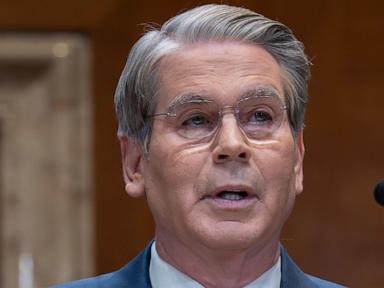
Washington is finally pulling the plug on the life support system it accidentally built for its enemies. Treasury Secretary Scott Bessent confirmed on Friday that the United States will not renew the sanctions waivers that allowed "stranded" Russian and Iranian oil to reach global markets. The decision marks a definitive hardening of U.S. economic warfare at a moment when the global energy map is being redrawn by fire and blockades.
The current license for Russian petroleum products, which was extended in a controversial about-face on April 17, is set to expire on May 16. This time, there is no ambiguity. Bessent has signaled that the "oil on the water"—the vast volumes of crude loaded before sanctions took full effect—has been exhausted. More importantly, the administration is now willing to accept the industrial carnage that comes with a total freeze.
The Death of the Safety Valve
The waivers were originally conceived as a pressure release valve. When the U.S.-Israel conflict with Iran escalated on February 28, the immediate closure of the Strait of Hormuz sent Brent crude screaming past $100 per barrel. Washington blinked. To prevent a global inflationary collapse, the Treasury Department issued general licenses allowing the sale of oil already in transit.
It was a pragmatic choice that looked like a retreat. For weeks, critics argued that these "narrowly tailored" measures were essentially a multi-billion dollar gift to the regimes in Moscow and Tehran. Bessent dismissed claims that Iran netted $14 billion from the move as a "myth," yet the optics remained devastating. By allowing this oil to flow, the U.S. was effectively subsidizing the very entities it was trying to bankrupt.
The math has changed because the physical reality of the market has changed. The "stranded" Russian oil has been "sucked up" by buyers in a desperate scramble for supply. On the Iranian side, the U.S. naval blockade is now so airtight that there is simply no more oil leaving the coast. Washington isn't just stopping the waivers; it is waiting for the Iranian energy industry to experience a mechanical heart attack.
Shuttering the Wells
The most chilling aspect of the Treasury’s new stance is the calculated acceptance of permanent damage to Iran’s energy infrastructure. When an oil well is "shuttered" or forced to stop production due to a lack of storage or export routes, it isn't like flipping a light switch.
Bessent noted that within the next forty-eight to seventy-two hours, Iranian operators will likely have to begin closing off wells. This is a high-stakes gamble with geology. In many of Iran's aging fields, a forced shutdown can cause pressure changes and fluid infiltration that permanently degrade the well’s productivity. Some may never return to their pre-war output levels.
This is no longer just about cutting off revenue for a few months. It is about the long-term dismantling of a nation's primary industrial asset. The U.S. is betting that the pain of losing these assets will force a diplomatic surrender before the lack of supply triggers a political crisis at home.
The Humanitarian Leverage of the Global South
The recent extension of the Russian waiver was not a product of corporate lobbying in Houston or London. Instead, it was the result of a quiet, desperate plea from the world’s most vulnerable economies. During the recent IMF and World Bank meetings, finance ministers from over ten nations approached Bessent with a simple message: they could not afford the price of American principles.
These countries, largely energy importers in the Global South, were facing literal darkness. The closure of the Strait of Hormuz, which normally carries 20% of the world’s oil, had left them with no affordable alternatives. The U.S. granted the 30-day extension as a humanitarian gesture—or perhaps more accurately, as a way to prevent a total revolt against the Western-led sanctions regime.
That grace period is over. By refusing to extend the licenses beyond May 16, the Treasury is signaling to these nations that they must find a new reality. Washington is now offering swap lines and dollar-funding stability as a palliative, but it is not offering more oil.
The Shamkhani Crackdown
While the waivers are expiring, the Treasury is simultaneously tightening the noose on the "shadow fleet" and the middlemen who keep the remaining trickles of oil moving. Recent sanctions have targeted the sprawling network of Mohammad Hossein Shamkhani, the son of the late Iranian security kingpin Ali Shamkhani.
This network has spent years refining the art of ship-to-ship transfers, falsified manifests, and Venezuelan gold swaps. By going after these specific nodes of the "Economic Fury" strategy, the U.S. is moving past broad sectoral bans and into a granular, surgical strike on the elites who profit from the blockade.
The Margin of Error
The risk of this strategy is immediate and measurable at the pump. With the Strait of Hormuz remaining a no-go zone, the removal of the last legal avenues for Russian and Iranian "waterborne" oil leaves the global market with zero margin for error. Any further disruption—a strike on a refinery in Saudi Arabia or a pipeline failure in the North Sea—could trigger a price spike that no swap line can fix.
Washington is gambling that the domestic political cost of higher energy prices is a price worth paying to finally achieve the total economic isolation of its adversaries. The era of the "soft" sanction is dead. We are now entering the era of the industrial terminal.
The next seventy-two hours will determine if the Iranian regime chooses to preserve its oil fields or watch them die in the ground.