The sight of lightweight champion Justin Gaethje executing a backflip off the top of a wire-mesh cage erected on the South Lawn of the White House was engineered to dominate the cultural conversation. Billed as UFC Freedom 250, the event merged President Donald Trump’s 80th birthday with the opening salvos of America’s semiquincentennial celebrations. For the mainstream press, the immediate reflex was to label the spectacle as raw MAGA propaganda mixed with blood sport. That analysis misses the far more calculating reality of what transpired beneath the 544-ton steel canopy known as the Claw.
This was not a mere political rally masquerading as a athletic event. It was a highly sophisticated exercise in institutional capture, corporate convergence, and geopolitical counter-programming. While critics fixated on the raw masculinity and the jarring juxtaposition of a professional fighting arena dwarfing the executive mansion, the real action was occurring at the intersection of private capital and state power.
The event answered a critical dual necessity for an administration facing a grinding war in Iran, high gas prices, and dipping approval ratings. It provided an overwhelming cultural diversion while functioning as an unprecedented marketplace for corporate access. It was a multi-million-dollar transaction disguised as populist entertainment.
The Architecture of Access
To understand how an executive mansion traditionally reserved for state dinners and Easter egg rolls became a venue for cage fighting, one must follow the money flowing through the temporary colosseum. The National Park Service and various federal agencies allocated over $60 million in resources and labor to secure, build, and manage the infrastructure. The administration insisted that the UFC paid for the promotion itself. However, public records and legal challenges revealed that the true beneficiaries were a tight network of corporate donors and industrial titans who sat ringside with the president.
Among the 4,000 elite guests gathered beneath the open-air structure were Meta chief executive Mark Zuckerberg and Paramount Global boss David Ellison. Their presence was not incidental. Ellison’s company, Paramount Skydance, secured the exclusive streaming rights for the event on Paramount+, charging viewers an $8.99 premium to watch a spectacle marketed by the administration as a gift to the American people. The corporate synergy was absolute. The Trump administration had recently cleared the way for the massive Paramount-Skydance merger after settling a contentious legal dispute over a CBS news broadcast.
Crypto.com, a major corporate sponsor of the fight card, has poured $35 million into Trump-aligned fundraising vehicles over the past 18 months. By transforming public land into a premium branding venue, the administration created an unofficial vehicle for corporate interests to purchase proximity to executive power. A $1-million-per-plate fundraiser held at the president’s private golf club in Northern Virginia the previous evening underscored the financial underpinnings of the entire weekend.
The Weaponization of the Manosphere
The alliance between the president and UFC chief executive Dana White dates back to 2001, when the Trump Taj Mahal in Atlantic City hosted the promotion during its era of athletic exile. That loyalty yielded ultimate dividends on the South Lawn. The UFC has spent more than two decades cultivating an intensely loyal demographic of young men, an audience that has become a cornerstone of the modern conservative coalition.
By bringing this specific subculture directly to the White House, the administration did more than reward its base. It sanctified the values of the online manosphere as the official aesthetic of the American state. The traditional elements of a UFC production were carefully curated to fit the venue. The ring girls wore modified, patriotic outfits that covered their legs. The Marine Band played fighter entrance music, and the national anthem—ordinarily absent from international fight cards—was performed by country singer Zac Brown.
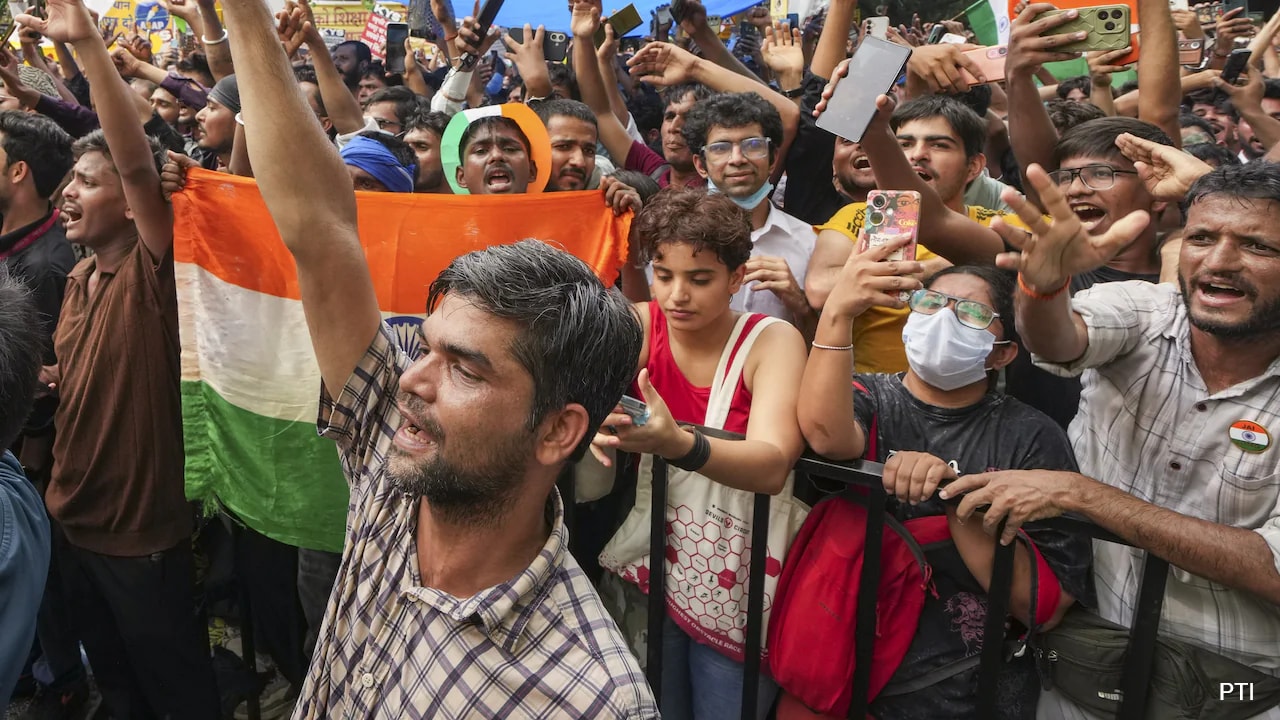
The geopolitical messaging was woven directly into the broadcast. Military flyovers featuring the Blue Angels, Thunderbirds, and a B-1 bomber thundered over the Ellipse, where tens of thousands of non-ticketed fans watched on Jumbotrons. Between fights, recruitment advertisements for the newly renamed Department of War filled the screens, framing the violence in the cage as an extension of national resolve during a period of foreign conflict.
The Rhetoric of the Cage
The raw nature of mixed martial arts makes it impossible to fully script, and the language that spilled out of the Octagon revealed the unvarnished underbelly of the populist coalition. When heavyweight contender Josh Hokit stopped Derrick Lewis in the second round, his post-fight interview with Joe Rogan immediately bypassed athletic commentary to repeat a crude, long-standing internet conspiracy theory targeting former First Lady Michelle Obama.
The moment drew a mixture of cheers and bewilderment from the crowd, yet it highlighted the core mechanism of the event. By combining elite military pageantry with raw, unedited counter-cultural grievance, the administration created an environment where institutional critique is framed as an attack on patriotism itself. When Sean O’Malley secured a second-round TKO victory over Canada’s Aiemann Zahabi, the crowd erupted into nationalistic chants, turning a standard athletic contest into a symbolic victory for the nation-state over foreign competitors.
The fighters themselves fully embraced their roles as political actors. Bo Nickal immediately exited the cage after his victory over Kyle Daukaus to converse directly with the president. Gaethje, draped in the American flag after his bloody upset victory over Ilia Topuria, explicitly linked his underdog status to the 250-year history of the United States.
The Limits of Bread and Circuses
While the administration attempted to compare the massive steel fighting structure to the Eiffel Tower—suggesting it might remain a permanent fixture on the South Lawn—the reality of the governing crisis remains just outside the gates of the executive mansion. A federal judge managed to stall an emergency injunction from the Public Integrity Project that labeled the entire event a volcano of corruption, but the legal and ethical questions surrounding the commercial use of the White House will linger long after the scaffolding is disassembled.
Moreover, the political unity projected by the event is fractured. Even within the conservative movement, the spectacle of a multi-million-dollar corporate birthday bash occurring during an economic downturn caused friction. High-profile figures like UFC middleweight champion Sean Strickland were escorted out of the public Ellipse event by law enforcement, highlighting the volatile nature of the populist energy the administration seeks to harness.
The ultimate legacy of the White House Octagon is not that it successfully delivered propaganda. It is that it demonstrated how completely the boundaries between public service, private commerce, and mass entertainment have dissolved. The executive mansion was treated as a soundstage, the military as an honor guard for a private enterprise, and the presidency itself as a luxury brand.
The fight night ended shortly after 1:00 AM with fireworks exploding over the South Lawn to the music of John Philip Sousa. The spectacle achieved its immediate goal of projecting absolute dominance, but the structural rot of an administration leveraging public institutions for private gain remains completely exposed.