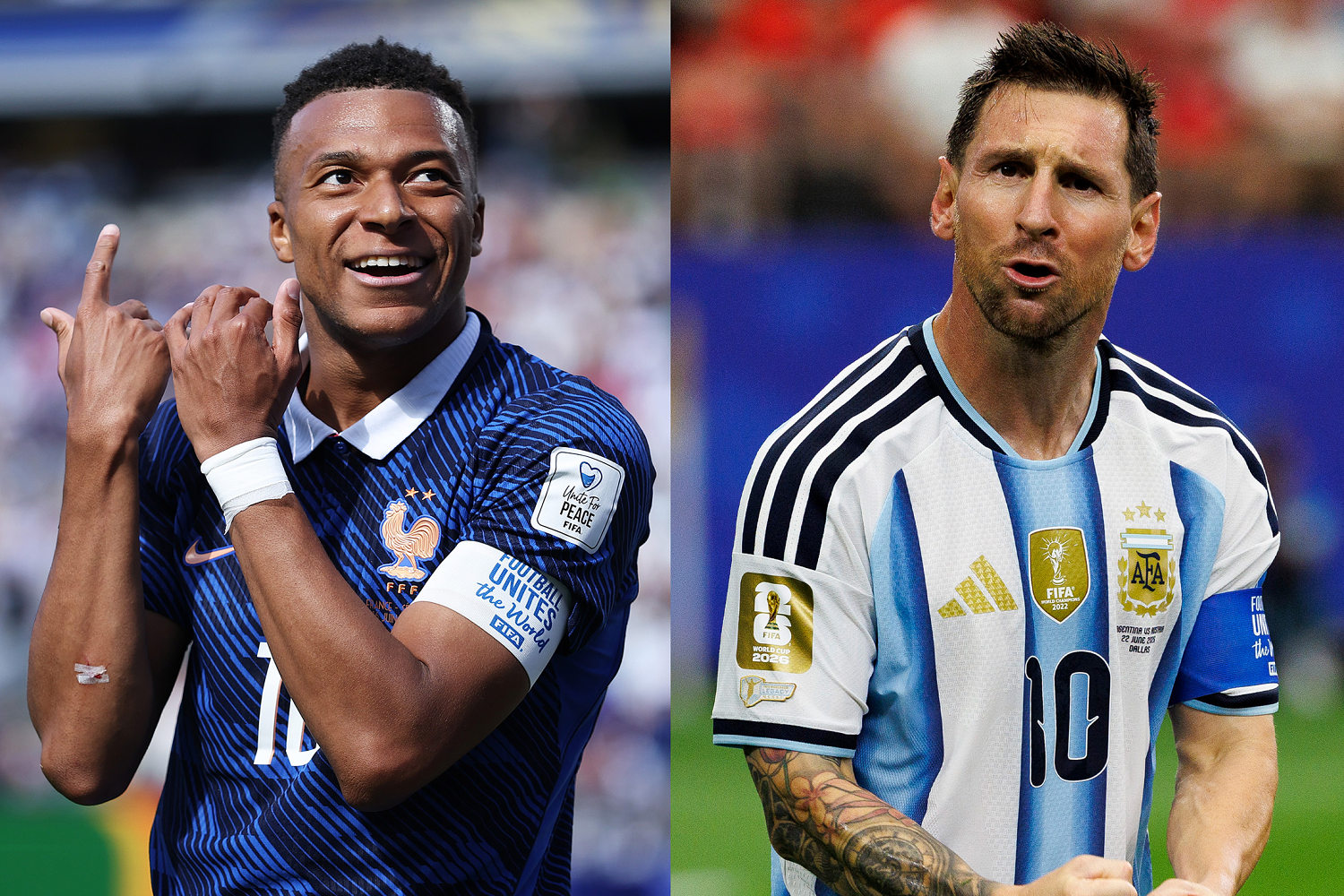
The race for the all-time World Cup scoring record is not a level playing field, despite the narrative framing it as a direct shootout between Lionel Messi and Kylian Mbappé. While modern media eagerly tallies goals to crown a singular king of international football, this numbers-focused obsession ignores structural changes in the tournament, hyper-inflated modern schedules, and tactical shifts that alter how goals are scored. Germany’s Miroslav Klose still holds the ultimate crown with 16 goals, but the metrics used to track his successors are fundamentally warped by a modern football apparatus designed to manufacture high-scoring superstars.
The Mathematical Inflation of the Modern Group Stage
To understand why tracking the World Cup scoring record has become an exercise in historical distortion, look at how the tournament itself expands. Miroslav Klose achieved his 16-goal record across four tournaments under a rigid 32-team format.
The expansion of the tournament format fundamentally changes the value of a World Cup goal. More teams mean a higher concentration of weaker footballing nations entering the group stages. For elite forwards, these opening matches are no longer tight, cagey affairs against disciplined tactical units. They are statistical goldmines.
When a top-tier European or South American side faces a debutant nation that snuck in through expanded regional qualifiers, the scorelines balloon. A single heavy group-stage win can rocket a player up the historical charts, masking their inefficiency or disappearance in the high-pressure knockout rounds where legacies used to be forged.
The Dilution of Defensive Quality
International football historically relied on cohesive, deeply drilled defensive systems. National teams spent months iron-clad in their tactical identities. Today, international managers get mere weeks with their squads before a major tournament begins.
Because defensive coordination requires significantly more collective repetition than attacking fluidity, the advantage tilts heavily toward elite individual forwards. Modern defenders are often left isolated, forced to cope with world-class attackers without the benefit of a seamlessly integrated defensive block.
The Physical Premium and Age Longevity
The physical trajectory of a modern forward's career has split into two distinct paths, both of which distort long-term scoring records. On one side is the phenomenon of prolonged peak performance. On the other is the threat of early career burnout.
Lionel Messi’s journey to 13 World Cup goals was defined by an unprecedented era of sports science that allowed him to maintain elite agility well into his mid-thirties. In previous generations, a player’s peak ended by 31. Improved recovery protocols, tailored nutrition, and protective refereeing have extended the lifespans of generational talents, allowing them to accumulate statistics across five separate tournaments.
World Cup Goals vs. Tournaments Played
Player             Goals    Tournaments
Miroslav Klose      16           4
Ronaldo (Brazil)    15           4
Gerd Müller         14           2
Lionel Messi        13           5
Kylian Mbappé       12           2
Contrast this with Kylian Mbappé, who exploded onto the scene with 12 goals across just two tournaments. His game relies heavily on explosive pace and rapid transitions. While he tracks far ahead of historical averages for his age, the sheer volume of matches required by modern club and international schedules places an immense tax on fast, muscular players.
The question for Mbappé is not whether he possesses the talent to eclipse Klose, but whether his hamstrings and knees can survive the brutal workload long enough to see a fourth or fifth World Cup.
Tactics and the Vanishing Out-and-Out Striker
The nature of the goals being scored has shifted dramatically due to tactical evolution. Miroslav Klose was a traditional penalty-box predator, a master of spatial awareness who scored a staggering number of headers and close-range tap-ins.
Scoring Profiles: Traditional vs. Modern
- Klose: Minimal touches outside the box, heavy reliance on aerial duels and secondary rebounds.
- Modern Attacker (Messi/Mbappé): High volume of touches in the half-spaces, penalty duties, and isolated 1v1 situations starting from deep positions.
The modern elite scorer is rarely a stationary target man. Instead, teams are built around dynamic wingers or inverted playmakers who command the entire attacking third.
This tactical shift means goals are concentrated in fewer hands. In older systems, a midfield playmaker looked to feed the striker. Today, the entire team is organized to create space for a talismanic figure cutting inward. This tactical centralisation inflates the individual numbers of modern superstars, making their goal tallies look superior to historical greats who operated in more balanced, distributed attacking systems.
The Penalty Factor and Statistical Padding
Any serious analysis of the all-time scoring record must confront the disproportionate impact of penalty kicks. Penalties are often treated as equivalent to a solo run from the halfway line in the official record books, yet they require vastly different physical and tactical contexts.
A referee’s whistle can instantly alter historical rankings. Tournaments featuring Var (Video Assistant Referee) technology have seen an increase in penalty awards due to hyper-strict handball rules and microscopic analysis of box deflections. For a designated penalty taker, this shift acts as a massive statistical accelerator.
Removing non-penalty goals from the equation reveals a completely different landscape of historical efficiency. Forwards who played in eras before video review faced a much higher threshold for securing a spot-kick, meaning their goal tallies were almost exclusively earned through open-play execution.
The Invisible Burden of Pressure
The psychological environment surrounding the modern World Cup golden boot race is entirely detached from the reality faced by players twenty years ago. The hyper-fixation on individual rivalries creates an environment where players are constantly managed for individual milestones alongside team success.
This individualization changes on-pitch behavior. When a legacy-defining record is within reach, internal team dynamics shift. Pass-first players become shoot-first players. Matches that are already won turn into hunting grounds for individual statistical padding rather than opportunities to rest key assets for the later rounds.
The hunt for Miroslav Klose's 16-goal milestone is ultimately a flawed chase against a moving target. The sport has changed too much for the raw numbers to retain their original meaning. As the tournament grows larger and the schedules denser, the record will eventually fall, not because the players have become fundamentally superior to those who came before, but because the modern football machine has been redesigned to ensure that it does. Every change to the rules, the format, and the technology serves to push the numbers higher, turning what was once a test of tournament endurance into a race of pure statistical accumulation.