The Capacity Trap
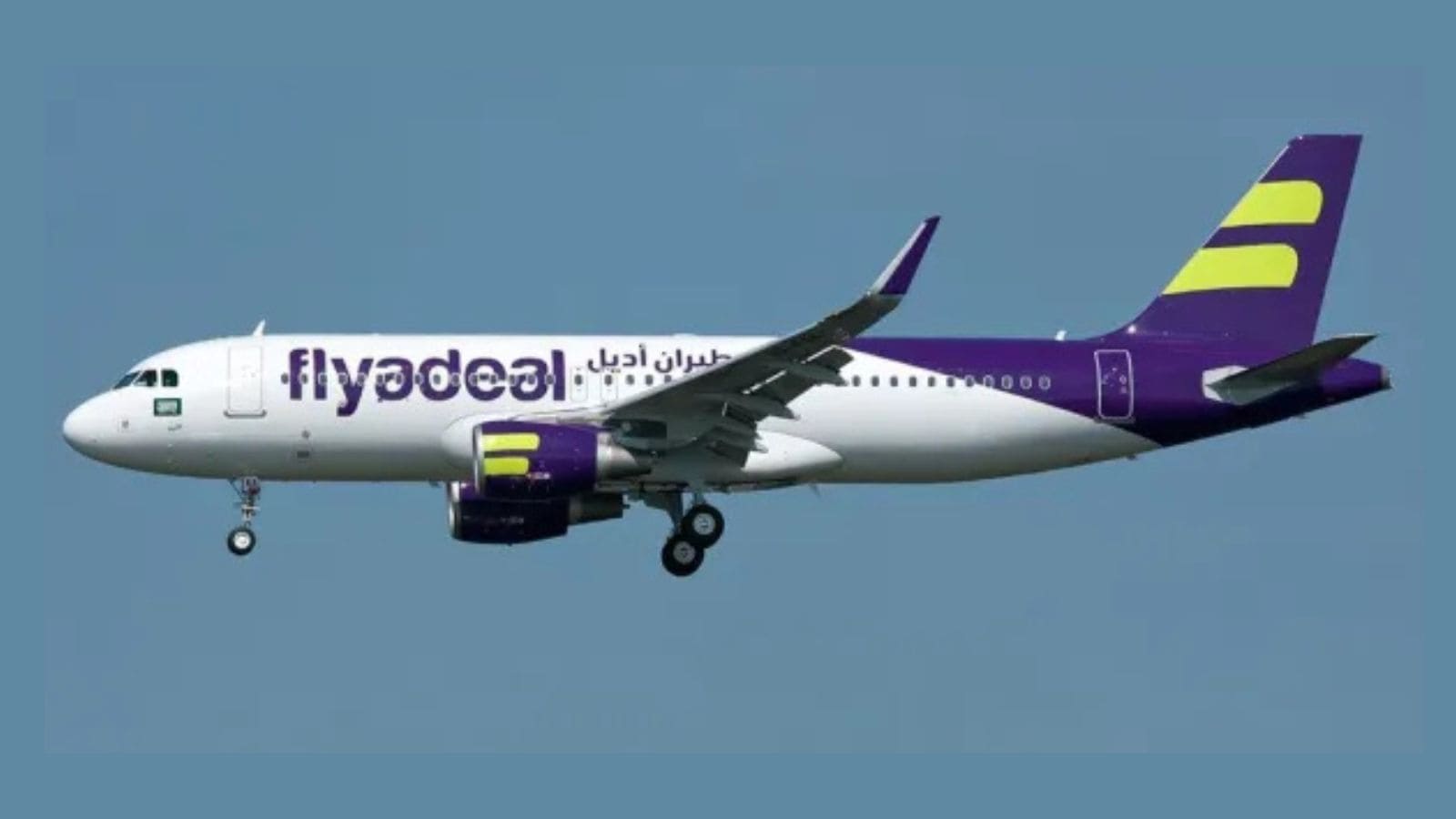
Aviation media is currently applauding Flyadeal’s announcement of daily flights between Riyadh and Hyderabad starting July 1. The consensus is predictable. Pundits point to the massive Indian diaspora in Saudi Arabia, point to a map, and declare it a guaranteed win for low-cost carriers (LCCs).
They are wrong. They are misreading the structural mechanics of the Gulf-to-India aviation market.
Adding seats to a high-volume route looks great on a quarterly earnings call. It satisfies the vanity metric of capacity growth. But the assumption that low-cost point-to-point models can easily scale on long-standing bilateral corridors ignored the brutal realities of yield dilution and aggressive incumbent retaliation.
I have watched airlines burn tens of millions of dollars chasing high-volume, low-yield point-to-point traffic under the assumption that "more people equals more profit." It rarely ends well.
The Riyadh-Hyderabad route is not a blank canvas waiting for disruption. It is a highly commoditized, ruthlessly contested battlefield.
The Myth of the Virgin Market
The lazy narrative surrounding new direct routes between Gulf capitals and Indian tech or labor hubs is that they unlock "untapped demand." This is a fundamental misunderstanding of the market structure.
Traffic between Saudi Arabia and India’s major gateways is already mature. It is not waiting to be discovered; it is waiting to be poached. When a low-cost carrier enters a market like Hyderabad—which is already heavily served by legacy giants like Saudia and Air India, alongside established regional players like IndiGo—they are entering a knife fight over price sensitivity.
In aviation, we talk about point-to-point traffic versus network traffic. Budget carriers rely almost entirely on point-to-point passengers. They need the local origin-and-destination market to sustain the aircraft.
Legacy carriers do not share this vulnerability.
An airline like Emirates, Qatar Airways, or even Flyadeal’s parent company, Saudia, can fill the back of their planes with low-yield passengers because they monetize them on connecting legs to Europe, North America, or Africa. They can afford to drop prices on the local leg to sub-economic levels just to starve out an aggressive new entrant. A pure LCC cannot play that game for long.
When you strip away the network effect, a daily narrowbody flight on a four-and-a-half-hour sector faces brutal economics.
The Four Hour Narrowbody Problem
There is a physical and economic limit to the low-cost model, and it sits right around the four-hour mark.
Operating an Airbus A320neo or a Boeing 737 MAX on short sectors—like Riyadh to Dubai or Mumbai to Goa—allows for rapid turnaround times. The plane lands, unloads, reloads, and takes off in 30 minutes. The crew stays within their duty hour limits without requiring expensive overnight stays. The aircraft achieves high utilization by flying five or six segments a day.
The moment an LCC stretches its stage length past four hours, the math breaks down:
- Utilization Drops: A round trip between Riyadh and Hyderabad eats up roughly nine hours of flight time alone, not including ground handling. That drastically limits what else that specific airframe can do in a 24-hour cycle.
- Ancillary Revenue Shrinks: Budget airlines survive on extras—baggage fees, seat selection, and overpriced meals. On a one-hour flight, passengers skip the meal. On a five-hour international flight, they expect service, but their willingness to pay premium prices for dry sandwiches diminishes when competing legacy carriers include hot meals in the base fare.
- The Weight Penalty: Longer flights require more fuel. More fuel means more weight. More weight means higher fuel burn per kilometer, which erodes the cost advantage that LCCs possess over full-service airlines.
The assumption that low-cost structures automatically translate to profitability on longer international sectors is a fallacy. You are taking a short-haul tool to do a medium-haul job.
Dismantling the Diaspora Deficit
The primary justification for this route expansion is the massive population of Indian expatriates working in the Kingdom of Saudi Arabia. The consensus says: "The workers need to get home, they want cheap fares, therefore an LCC will win."
Let's look at how this passenger segment actually behaves.
The labor traffic between the Gulf and India is highly seasonal. It peaks heavily around specific holidays, school vacations, and contract completion cycles. During peak periods, every airline makes money because demand outstrips supply.
The real test is the other eight months of the year.
During the off-peak season, demand from the labor segment plummets. To fill those daily seats, an airline must attract business travelers or affluent leisure passengers.
But business travelers do not choose point-to-point budget airlines on five-hour flights if they can avoid it. They want schedule flexibility, lounge access, premium cabins, and robust loyalty programs—amenities that LCCs are structurally designed to omit.
If you cannot attract the high-yield business traveler during the low season, your average fare drops below the cost of production. You find yourself flying a 186-seat aircraft half-empty, or worse, full of passengers who bought tickets at a price that doesn't even cover the fuel bill.
The Incumbent Counter-Attack
No airline operates in a vacuum. The launch of a daily Riyadh-Hyderabad service by a new player triggers an immediate, calculated response from incumbents.
Consider the domestic Indian carriers. IndiGo already commands a dominant position in Indian skies and has been aggressively expanding its own medium-haul international footprint. They have the scale, the domestic feed, and the brand recognition in India to defend their turf.
When an international budget competitor enters their home market, the response is simple: match the fare, leverage the domestic connectivity, and squeeze the newcomer out.
Furthermore, full-service carriers can manipulate their inventory buckets. They don't need to lower the price of every seat on the plane to compete with a budget rival. They only need to match the budget price on 20% of their seats—the ones they would have struggled to fill anyway—to neutralize the LCC's price advantage. The passenger gets a hot meal, a checked bag, and entertainment for the same price as the budget ticket.
The budget carrier is left fighting for the absolute bottom of the market, where loyalty is zero and a price difference of five dollars will cause a consumer to switch brands instantly.
The Hidden Cost of Bilateral Restrictions
Aviation between India and the Middle East is strictly governed by bilateral air service agreements. These agreements dictate exactly how many seats or weekly flights carriers from each country can operate.
These seats are precious commodities.
When a nation's civil aviation authority allocates these rights, there is an implicit expectation of maximizing economic value. Utilizing finite bilateral seats on ultra-low-yield, highly competitive routes like Riyadh-Hyderabad raises serious opportunity cost questions.
Could those traffic rights be better deployed to secondary cities with less competition and higher yield potential? Could they be used to establish routes where premium traffic actually exists?
Focusing purely on massive trunk routes is a failure of imagination. It is the safe, corporate choice that copies what everyone else is doing while ignoring the structural erosion of yields.
Redefining the Strategy
The correct question is not "How many daily flights can we cram into Hyderabad?"
The correct question is "How do we deploy capacity where legacy carriers cannot easily retaliate?"
If a budget carrier wants to survive the hyper-competitive corridor between the Gulf and the Indian subcontinent, it must abandon the obsession with raw volume on major trunk routes. The future belongs to operators who use the efficiency of modern narrowbodies to target underserved secondary markets—cities where legacy carriers cannot profitably land their widebody aircraft.
Chasing the established hubs of the legacy players is an expensive exercise in ego. The margins are too thin, the competition is too well-capitalized, and the passenger profile is too fickle.
Stop pretending that every new dot on a route map is a victory. If you enter a mature, commoditized market with nothing but a lower price point and a tighter seat pitch, you aren't disrupting an industry. You are just funding someone else’s price war.