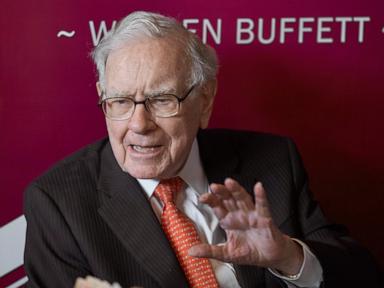
The media loves a moral redemption arc, especially when it involves billionaires. When Warren Buffett altered the trajectory of his historic philanthropic pledge—stepping back from the Bill & Melinda Gates Foundation—the commentariat immediately seized on the easiest, most sensational narrative available. They blamed the fallout on Bill Gates’ exposed social ties to Jeffrey Epstein. It was clean. It was scandalous.
It was also completely wrong.
To view Buffett’s strategic reshuffling through the lens of a personal morality play is to fundamentally misunderstand how the Oracle of Omaha operates. Buffett is not a reactionary Twitter commentator pulling funding over a public relations crisis. He is a cold, calculating capital allocator who has spent seven decades treating every dollar as an investment required to yield a specific return.
The media missed the real story because they asked the wrong question. They asked "Why did Buffett punish Bill?" when they should have been asking "Why would the world's most disciplined investor keep pouring billions into an underperforming, bureaucratic asset?"
The Efficiency Crisis in Mega-Philanthropy
The narrative that Buffett suddenly developed a moral objection to the Gates Foundation ignores a boring but brutal reality: the foundation’s structure had become exactly the kind of bloated, top-heavy corporate machine that Buffett avoids in his equity portfolio.
I have watched organizations blow tens of millions of dollars attempting to scale philanthropic initiatives using corporate consulting frameworks. What they inevitably create is not impact, but overhead. The Gates Foundation transformed from an agile, thesis-driven disruptor into a massive institutional bureaucracy.
Buffett’s investment philosophy at Berkshire Hathaway is famously decentralized. He buys great businesses, leaves the management alone, and keeps corporate headquarters down to a handful of people. The Gates Foundation represents the exact antithesis of this model. It is a highly centralized, technocratic institution with thousands of employees, layers of management, and a sprawling agenda that attempts to solve every global crisis simultaneously.
When the operational cost of deploying a dollar starts eating into the real-world utility of that dollar, an allocator like Buffett notices. The Epstein headlines did not trigger the split; they merely provided a convenient cultural smoke screen for an exit that the numbers had demanded for years.
Dismantling the Myth of the Passive Donation
For years, the public bought into the premise that Buffett’s 2006 pledge was a blank check rooted in pure friendship. This was a flawed assumption from day one.
Let's address the question that always arises during these high-profile breakups: Does Berkshire Hathaway's performance dictate Buffett's giving cadence? No. The giving cadence is dictated by compounding efficiency.
Buffett didn’t give money to Bill Gates because he liked him. He gave it because, in 2006, the Gates Foundation was the most efficient clearinghouse for global health capital in existence. It was a utility play. But utilities decay when they lose competition and focus.
Traditional Philanthropy View:
Donation -> Moral Duty -> Unquestioned Trust -> Bureaucratic Absorption

The Allocator View:
Capital Deployment -> Measurable Impact -> Operational Audit -> Course Correction
When Melinda French Gates divorced Bill and subsequently pivoted her own focus toward independent philanthropy, the institutional stability of the foundation changed. The governance shifted. For a man who refuses to invest in businesses with unstable management structures, the internal friction at the Gates Foundation was a flashing red light. The math changed, so the allocation changed.
The New Playbook: Total Control Over the Legacy
The contrarian move here isn't just pulling the money out; it’s where that money is going. Buffett didn't scale back his giving. He redirected it to a new trust managed by his children.
Critics will call this nepotism or a regression to traditional dynastic wealth preservation. That is a lazy critique. By placing the ultimate distribution of his remaining wealth—which will still amount to nearly 100% of his fortune—into a smaller, highly focused trust overseen by people who share his exact operational DNA, Buffett is executing a classic corporate spin-off.
He is downsizing the vehicle to increase the velocity of the capital.
Imagine a scenario where a massive conglomerate controls dozens of disparate brands with zero accountability. The standard move is to break it up to unlock value. That is precisely what is happening here. Smaller, hyper-focused entities can deploy capital into specific, localized issues faster and with fewer administrative hurdles than a multi-billion-dollar global bureaucracy can.
The Downside of the Lean Allocation Model
To be fair, this hyper-focused, family-controlled approach has distinct risks. It lacks the massive, state-like infrastructure that allows the Gates Foundation to negotiate directly with sovereign governments for vaccine distribution or agricultural policy. When you strip away the bureaucracy, you also strip away the institutional muscle required for macroeconomic intervention.
But Buffett has never been a macroeconomic interventionist. He is a bottom-up stock picker. His pivot back to a highly controlled, intimate trust model is simply his investment philosophy expressing itself in its purest form before he departs the stage.
Stop looking for a Hollywood scandal in a balance sheet correction. Bill Gates’ personal associations may have dominated the tabloids, but in the quiet rooms of Omaha, the decision was already made. The asset class known as the Gates Foundation simply stopped generating the required societal yield per dollar. The Oracle didn't cancel his friend; he cut his losses. Edifying the public sector or moralizing from a pedestal was never the goal. Maximizing the ultimate deployment of capital was. Everything else is just noise.