The fluorescent lights of the courthouse hallway have a specific, humming frequency. It is a sound that vibrates in the teeth of the nervous. On a Tuesday morning in a mid-sized American city, sixty people sit on hard wooden benches, clutching summonses like tickets to a play they never asked to see. They are a cross-section of a fractured nation: a retired welder, a barista with a philosophy degree, a high-powered corporate lawyer, and a mother wondering if she remembered to defrost the chicken for dinner.
They are the "venire"—the pool. In a few hours, twelve of them will be stripped of their private identities and transformed into the most powerful collective in the Western world. Meanwhile, you can read other stories here: The Invisible Weight of an Unwritten Rule.
The American jury system is often described in civic textbooks as a "bulwark of liberty." It sounds noble. It sounds clean. But on the ground, it is a messy, visceral, and terrifyingly human experiment in collective judgment. We tell ourselves it is a machine for finding the truth. In reality, it is a mirror reflecting our own biases, fears, and the heavy weight of our shared conscience.
The Ritual of Selection
Consider a hypothetical juror named Sarah. Sarah is a kindergarten teacher who believes in the inherent goodness of people. She sits in the jury box during voir dire, the process where attorneys poke and prod at her psyche. The prosecutor wants to know if she can be "tough." The defense attorney wants to know if she understands the "presumption of innocence." To see the bigger picture, check out the excellent article by Vogue.
What they are actually doing is a silent dance of subtraction.
The Sixth and Seventh Amendments guarantee a trial by an "impartial" jury. But "impartial" is a ghost. Every human in that room carries a lifetime of baggage. The welder might distrust the police because of a strike in 1994. The lawyer might be predisposed to believe whoever speaks with the best grammar. The system attempts to filter these biases through challenges for cause and peremptory strikes, but the result is rarely a neutral panel. Instead, it is a curated one.
When the judge finally says, "Please stand and swear the oath," the room changes. The air thickens. Sarah and eleven others are no longer individuals. They are the Jury. They are told they cannot talk about the case—not to their spouses, not to their friends, and most importantly, not to each other. Not yet.
The Theater of the Absurd
For the next three days, Sarah sits in silence. She watches the lawyers perform.
The American legal system is adversarial by design. It is not a collaborative search for truth; it is a battle of narratives. The prosecutor presents a timeline of events that feels like a steel trap. The defense attorney presents an alternative reality where the gaps in that timeline are wide enough to drive a truck through.
Sarah takes notes. She notices things the lawyers might miss: the defendant’s shaking hands, the way a witness avoids eye contact when asked about the weather, the dust motes dancing in the light above the judge’s bench.
The statistics tell a complicated story. In the United States, less than 3% of criminal cases and 1% of civil cases actually go to a jury trial. Most are settled in backrooms or through plea bargains. This means that when a case finally reaches twelve strangers, it is usually because the facts are so murky or the stakes are so high that no one else dared to make the call.
The jury isn’t deciding on the easy cases. They are deciding on the impossible ones.
The Secret Room
Then comes the moment of transition. The judge gives the instructions—a dense, linguistic thicket of "reasonable doubt," "preponderance of evidence," and "limiting instructions." Sarah tries to follow along, but the legal jargon feels like a foreign language.
Then, the door to the jury room clicks shut.
This is the "Black Box" of American democracy. No cameras. No transcripts. No supervision. In this small, cramped room with a bowl of stale pretzels and a pitcher of lukewarm water, the abstract concept of "The Law" meets the reality of human personality.
The welder wants to go home. The philosopher wants to debate the definition of "intent." Sarah realizes that the "truth" isn't something they are going to find; it's something they are going to have to build together.
Research into jury behavior suggests that the "first ballot" is often a self-fulfilling prophecy. In about 90% of cases, the final verdict matches the majority view held during the very first informal vote. The deliberation isn't always a long, thoughtful weighing of evidence; often, it is a process of the majority wearing down the minority.
But not always.
There is a phenomenon called "jury nullification." It is the law’s best-kept secret. It happens when a jury believes the defendant is technically guilty but refuses to convict because they find the law itself unjust or the punishment too harsh. It is the ultimate act of rebellion. It is the moment the "illusion" of the system becomes a very real, very human power. It was used by juries in the 1850s to protect people who helped enslaved Americans escape to freedom, and it is used today by jurors who refuse to ruin a life over a minor drug possession.
The Cost of the Verdict
Sarah’s jury deliberates for ten hours. Voices are raised. Someone cries. The welder reveals a story from his past that he didn't share during selection—a story that changes how everyone sees the evidence.
They are exhausted. They are frustrated. They are a "democracy" in its rawest, most agonizing form.
When they finally file back into the courtroom, the silence is deafening. Sarah looks at the defendant. She realizes that her next few words will either send this man home or remove him from society for a decade. The weight is physical. It sits in her stomach like lead.
"We find the defendant..."
The verdict is read. The judge thanks them for their service. And then, just like that, it’s over. Sarah is given her parking validation and sent back into the world.
She goes to the grocery store. She sees people laughing in the aisles, debating which brand of cereal to buy. She feels like a ghost. She has just touched the lightning bolt of state power, and no one around her knows it.
The Mirror of the Nation
Critics argue that the jury system is an illusion—a way to make us feel like we have a say in a system that is actually run by elites and bureaucrats. They point to the high rates of wrongful convictions and the racial disparities that plague every level of the justice system. They are not wrong. A jury is only as fair as the society from which it is drawn.
But consider the alternative.
Would you rather have your fate decided by a single judge—a professional who has seen a thousand cases and might be desensitized to the human cost? Or would you rather have twelve people who have never done this before, who are terrified of getting it wrong, and who have to look you in the eye before they decide?
The jury system is not a machine. It is a conversation. It is the only time in American life where twelve people of different races, religions, and political leanings are forced to sit in a room together and reach a consensus on something that actually matters.
It is fragile. It is flawed. It is frustratingly slow.
Sarah drives home. She pulls the chicken out of the freezer. She looks at her hands—the same hands that just signed a piece of paper that changed a life forever. She realizes that the "illusion" isn't the jury system itself. The illusion is the idea that justice can ever be anything other than a heavy, shared, and deeply personal burden.
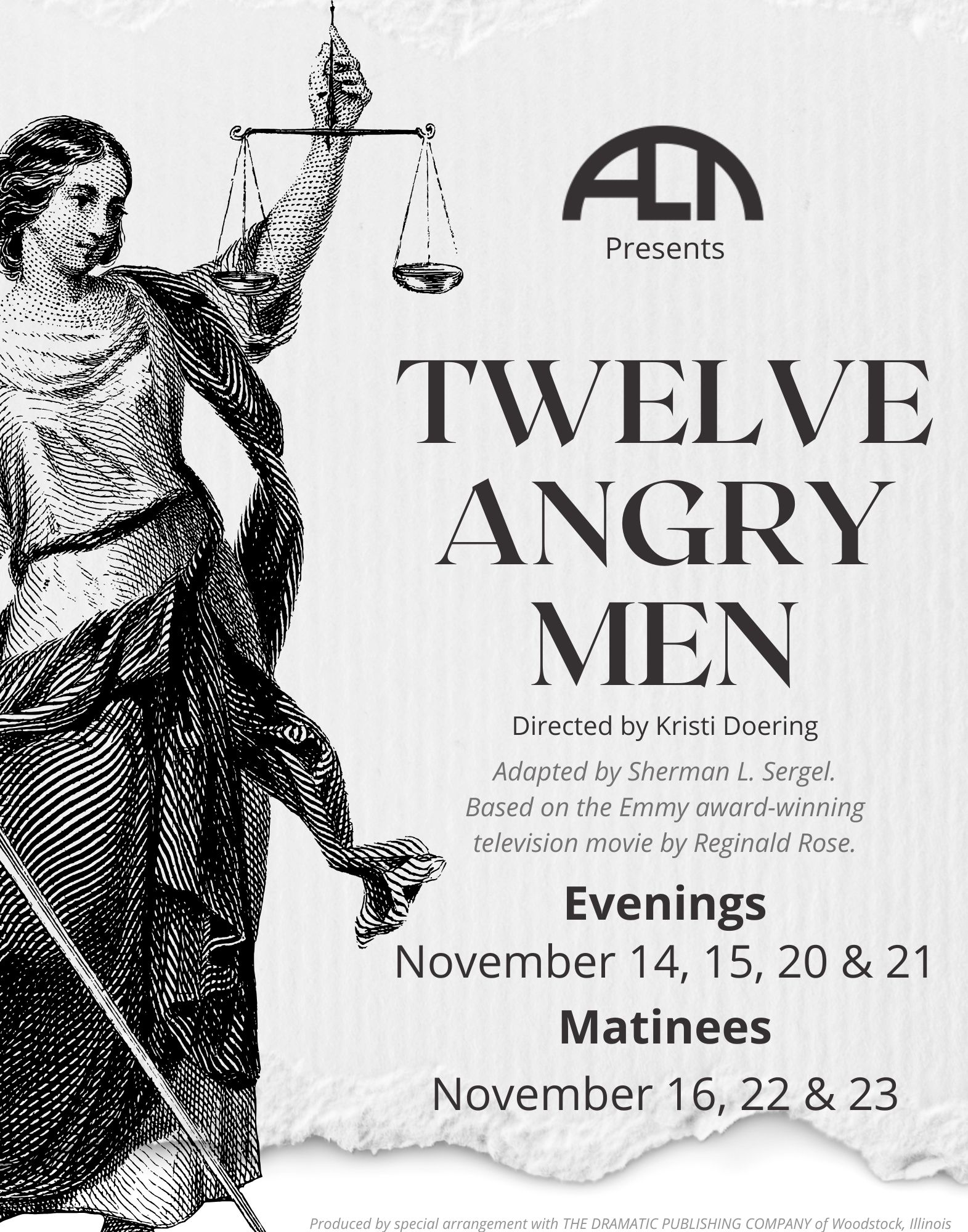
The light in the kitchen flickers. Outside, the world moves on, oblivious to the fact that twelve strangers just held the scales of the universe for a moment, and then let them go.