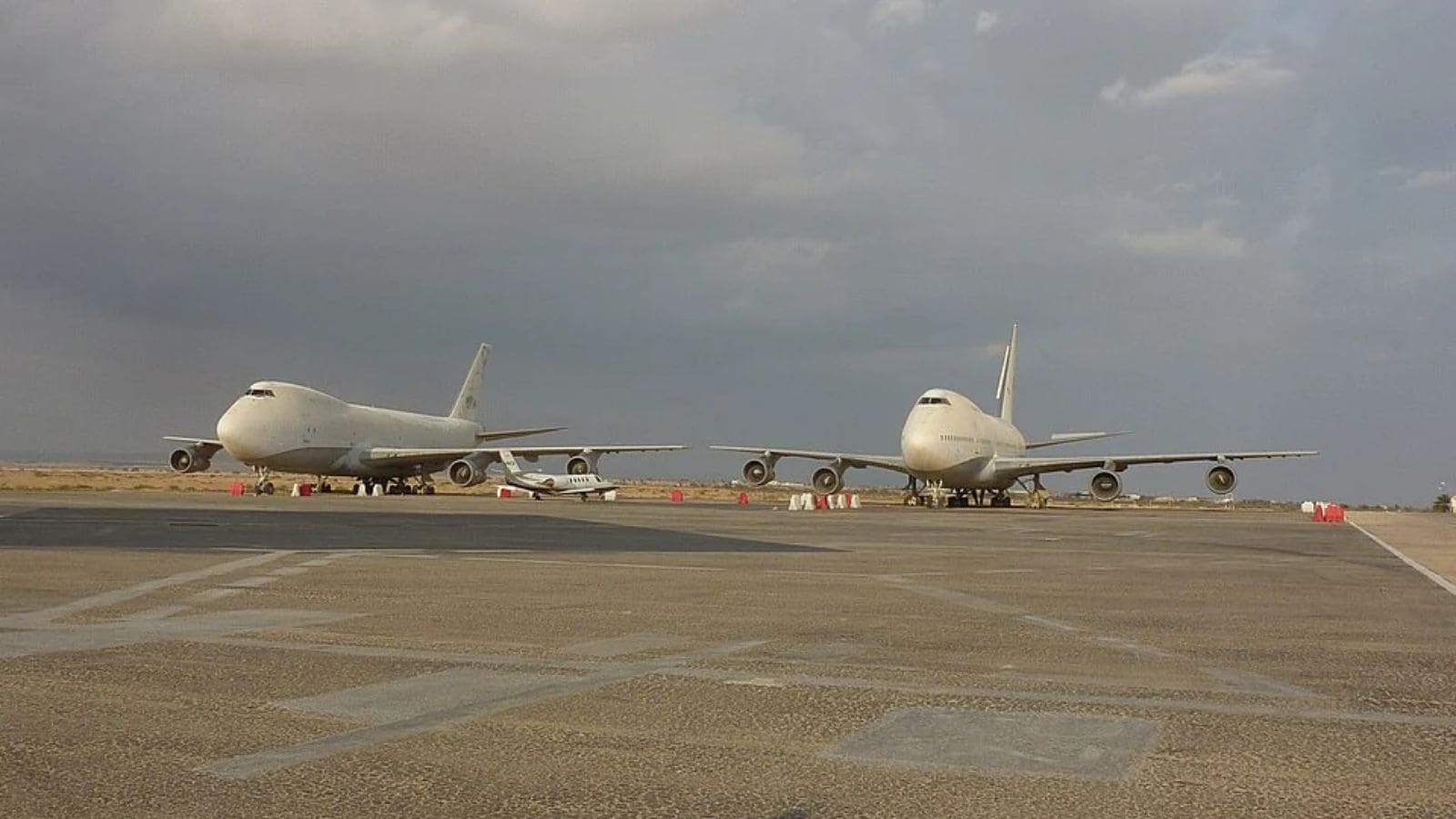
Everyone is drooling over the sticker price of a dictator’s used Boeing 747. They are looking at the auction block like it is a clearance rack at a luxury watch boutique, completely blind to the financial woodchipper waiting just beyond the hangar doors.
Mainstream aviation coverage loves a shiny headline. "Saddam Hussein’s flying palace up for sale." "Rare VIP widebody hits the market." The lazy consensus treats the acquisition price of these aging Iraqi government jets as the primary story. It is a narrative built for clicks, entirely divorced from the brutal reality of heavy aircraft economics. When a sovereign state puts a decades-old, bespoke-interior Boeing 747 on the block, the asking price is not the cost of the asset. It is merely the cover charge to enter a casino where the house always wins.
In the heavy aviation sector, the acquisition price of an older widebody is almost irrelevant. The real killer is the bleed. I have watched ambitious charter operators and newly minted billionaires get seduced by the low entry cost of depreciated VIP iron, only to burn through tens of millions of dollars before the wheels ever leave the tarmac. They confuse buying a plane with owning an operational aircraft. Those are two radically different things.
The Myth of the Bargain Widebody
The public reads about a massive, custom-fitted jumbo jet going up for auction and assumes someone is about to walk away with the deal of the century. They see gold-plated fixtures, private bedrooms, and the sheer physical footprint of the Queen of the Skies, and their brains short-circuit. They think about real estate rules—buy low, renovate, hold value.
Aviation does not play by real estate rules. An airplane is a depreciating liability wrapped in aluminum and composite fibers that actively tries to return to dust the second it stops flying.
When you look at legacy 747s—especially ones tied to Middle Eastern state fleets that have spent years parked in desert climates or shuffled through complex geopolitical storage—you are not looking at a turnkey luxury cruiser. You are looking at an engineering puzzle missing half its pieces.
Let us break down what actually happens when you take possession of a parked, vintage VIP 747:
- The D-Check Reality: A heavy maintenance visit—the dreaded D-Check—strips the aircraft down to its bare metal frame. Every rivet, wire, and hydraulic line is inspected. For a 747, this process takes months and easily clears several million dollars before a single broken part is even replaced.
- The Paperwork Nightmare: In commercial and private aviation, an aircraft is only as legal as its maintenance logs. If there is a gap in the chain of custody, or if parts were installed without strict FAA or EASA traceability during periods of sanctions or state secrecy, those components are legally worthless. You have to rip them out and buy certified replacements.
- Engine Overhauls: Four engines mean four separate multi-million-dollar liabilities. Even if the jet barely flew, turbine engines suffer from calendar-based degradation, seal rot, and corrosion. You cannot just turn the key and taxi out.
Why "Flying Palaces" Are Actually Maintenance Nightmares
The competitor narrative leans heavily into the romance of the "flying palace" aesthetic. They treat the bespoke VIP interior as a value-add. In the actual aircraft brokerage and refurbishment market, a thirty-year-old custom dictatorship interior is a massive liability.
First, there is the weight. Heavy wood paneling, marble vanities, and custom cabinetry add tons of dead weight. Every extra pound burns more fuel, reduces maximum range, and puts additional stress on the landing gear and airframe.
Second, there is fire certification. Aviation safety regulators—specifically the FAA and EASA—have drastically tightened flammability standards for cabin materials over the last three decades. The plush carpets, custom silks, and exotic veneers installed in a head-of-state jet in the 1980s or 1990s will almost certainly fail modern burn-certification tests. To legally fly that jet under standard civil registries, you cannot just clean the upholstery. You have to gut the entire cabin down to the pressure bulkhead and build a new interior from scratch.
A custom VVIP widebody cabin completion easily runs north of $50 million and takes up to two years at a specialized completion center like Lufthansa Technik or AMAC Aerospace. Suddenly, that "cheap" auction jet costs more than a brand-new, ultra-long-range business jet that burns a third of the fuel and actually fits on standard FBO ramps.
What People Actually Get Wrong About Sovereign Fleet Auctions
When news breaks that Iraq is selling off legacy 747s, the same predictable questions flood search engines. Let us dismantle the flawed premises behind them.
"Can a private buyer actually use this as a personal jet?"
Technically, yes. Practically, it is insanity. A 747 requires a massive flight deck crew, specialized ground handling equipment that smaller private airports do not possess, and runway lengths that lock you out of premier private destinations like Aspen, St. Moritz, or London City. You end up landing at major commercial hubs and dealing with commercial slot restrictions, completely defeating the purpose of private aviation.
"Wouldn't a cargo airline buy it and convert it?"
This is the classic armchair analyst take. "Just rip out the seats and haul freight!" It sounds logical until you look at the structural engineering. Converting a passenger or VIP 747 into a freighter (a P2F conversion) requires cutting a massive cargo door into the fuselage and reinforcing the main deck floor beams to handle concentrated pallet loads. For older variants like the 747-200 or early 747-400s, the conversion cost exceeds the remaining economic life of the airframe. Cargo giants like Atlas Air or UPS are not bidding on obscure, high-maintenance state relics when standardized ex-airline frames are available with predictable maintenance histories.
"Does the historical provenance add collector value?"
Aircraft are not classic Ferraris. You cannot park a Boeing 747 in a climate-controlled garage in Pebble Beach and wait for Sotheby’s to call. Parking a widebody aircraft at a storage facility like Mojave or Teruel costs thousands of dollars a month just in tarmac rent, plus ongoing preservation maintenance to keep desert dust and moisture from destroying the avionics. Historical notoriety does not pay for Jet-A fuel. In fact, for corporate flight departments and legitimate charter operators, toxic political provenance is a public relations headache they will pay to avoid.
The Brutal Math of Four Engines in a Twin-Engine World
To understand why these jets are sitting on the block in the first place, you have to look at the broader shift in aerospace economics. The four-engine widebody is dead for private and VIP operations.
Modern twin-engine airliners—the Boeing 777X, the Boeing 787 Dreamliner, and the Airbus A350—have completely murdered the business case for the 747. Under modern ETOPS (Extended-range Twin-engine Operational Performance Standards) rules, twin-engine jets can fly the exact same transoceanic routes as four-engine jets, carrying similar payloads, while burning roughly 25% to 30% less fuel.
Think about that fuel burn differential over a single 12-hour international leg. An older 747 burns roughly 10 to 12 tons of fuel per hour. At current global Jet-A prices, you are lighting tens of thousands of dollars on fire every sixty minutes just to stay airborne. Add in European carbon taxes, noise surcharges at major airports (older 747 engines are loud and heavily penalized under Stage 4 and Chapter 14 noise regulations), and astronomical insurance premiums for high-value hull coverage, and the operating economics collapse entirely.
Even sovereign governments—the only entities on earth that do not care about quarterly profit margins—have abandoned the 747. If oil-rich states with unlimited sovereign wealth funds are retiring their 747s in favor of 787s and Airbus A350s, a private buyer or commercial operator thinking they can make the math work is hallucinating.
The Only Rational Way to Play Legacy Widebodies
If you are an operator, an investor, or an aviation enthusiast looking at sovereign aircraft auctions, you have to stop viewing the jet as a vehicle and start viewing it as a mine.
The smart money in aviation does not buy old 747s to fly them. They buy them to kill them.
Part-out specialists—companies that dismantle retired airframes down to individual components—are the only players who consistently make money on distressed widebodies. When an aircraft is parted out, the value is not in the whole; it is in the sum of the certified, overhauled pieces:
- Landing Gear Assemblies: A freshly overhauled 747 landing gear shipset can fetch millions on the secondary market because operators desperately need spares to avoid aircraft-on-ground (AOG) delays.
- Auxiliary Power Units (APUs): The small turbine engine in the tail that provides electrical power and air conditioning on the ground is always in high demand.
- Avionics and Flight Control Actuators: Legacy freight carriers still operating 747-400Fs need a constant supply of replacement computers, displays, and hydraulic actuators that manufacturers no longer produce in high volumes.
The caveat to this strategy—and the reason even part-out pros tread carefully around state-owned Middle Eastern jets—is documentation. A part without an authorized release certificate (such as an FAA 8130-3 or EASA Form 1) is a paperweight. If Iraq’s aviation authorities cannot produce unbroken, verifiable maintenance records tracing every component back to its manufacture or last certified overhaul, even the scrap metal value drops off a cliff.
Stop Romanticizing the Tin
The media loves the spectacle of a fallen dictator’s luxury jet hitting the open market. It makes for great reading over morning coffee. It feeds the illusion that immense power and wealth can be bought at a discount if you just know where to look.
Inside the hangars, nobody is romanticizing it. We see corroded airframes, obsolete avionics suites that require million-dollar ADS-B Out and FANS-1/A upgrades just to enter modern airspace, and four thirsty engines waiting to bankrupt whoever is foolish enough to sign the bill of sale.
If you have the kind of capital required to bid on a sovereign 747, keep your hands in your pockets. Let the museums fight over the fuselage, let the part-out crews strip the landing gear, and take your money to a modern twin-engine platform that will actually get you off the ground without dragging your balance sheet into a nosedive.