Two crumbling stone buildings for a single euro each sounds like the real-estate steal of the century. Until you swing a sledgehammer into a centuries-old wall and realize half the structure wants to fall down.
That is the reality behind The Block judges list two €1 homes for €195,000 news out of Italy this month. Shaynna Blaze and Darren Palmer, better known to millions of Australian viewers as judges on The Block, bought derelict properties for €1 each in Castronovo di Sicilia for their eight-episode Channel Nine series 1 Euro House. Now the finished, combined four-level residence is on the market through TIPCo for €195,000, sold fully furnished.
If you have ever been seduced by headlines about one-euro Italian homes, this listing is the clearest reality check you will get all year. A €1 sticker price is basically a deposit on a massive structural commitment.
How Two €1 Houses Became One Four-Level Home
Buying a one-euro house in a depopulated Italian hill town rarely means buying a neat, ready-to-polish fixer-upper. Blaze and Palmer bought their properties sight unseen in Castronovo di Sicilia, a quiet mountain village in the Sicani range roughly an hour from Palermo. Both buildings had sat empty for decades and arrived in rough shape.
Midway through the build, structural trouble forced their hand. Part of the original structure was unsafe and had to come down. Rather than leaving an awkward void or blowing the budget trying to fake old masonry that could not hold weight, they rethought the footprint. Palmer bought a second €1 house next door, allowing them to merge the two properties into a single four-level home.
According to the listing details on TIPCo and the official property pack, the combined house spans roughly 160 square metres of living space across four levels, plus about 30 square metres of garage space and an 18-square-metre walled garden. It includes two bedrooms, two bathrooms, a powder room, and a top-level terrace bar.
Here is how those four levels break down in practice:
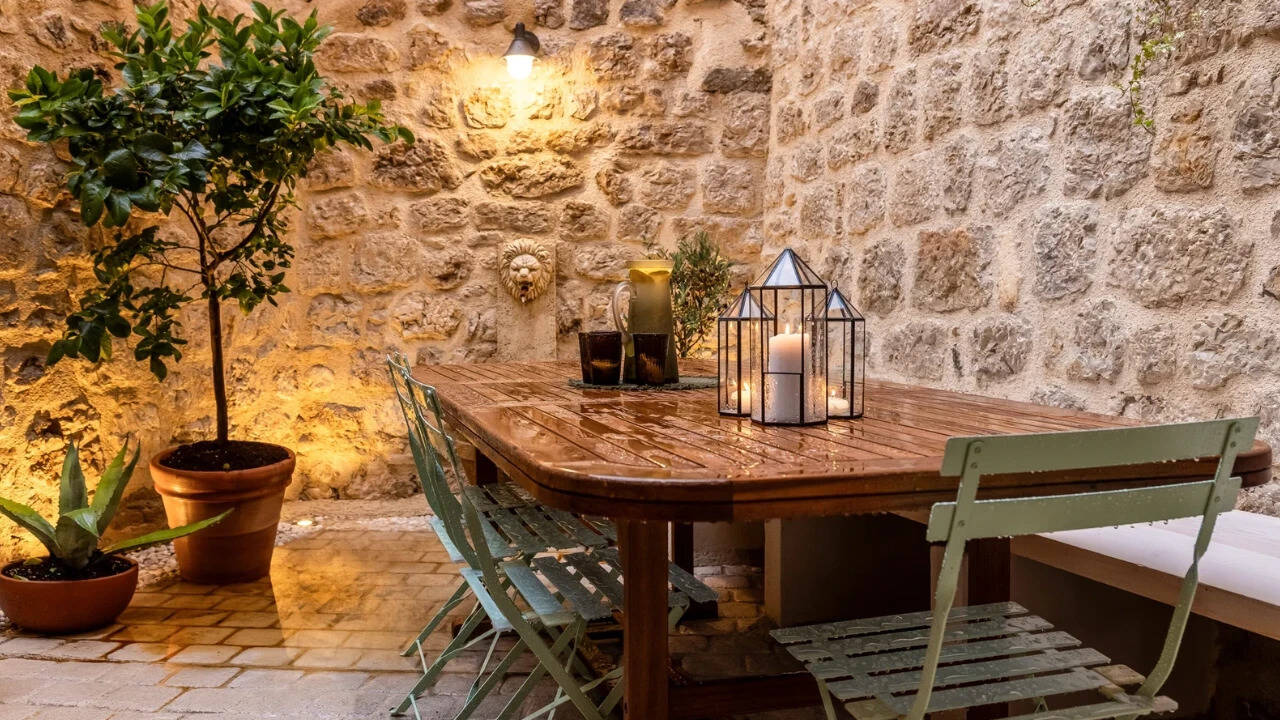
- Lower level: A stone-walled summer dining room with poured concrete floors and restored vintage pieces, paired with a roughly 30-square-metre garage and the 18-square-metre walled garden.
- Ground floor: Kitchen, dining and living spaces, a bathroom, and a balcony.
- First floor: Two bedrooms, a bathroom, a separate shower and basin setup, and a separate toilet.
- Top level: An outdoor entertaining terrace fitted with a bar for evening drinks.
Turning a demolition headache into an 18-square-metre walled garden is smart design. In dense historic hill towns, private outdoor space is gold because houses are packed shoulder-to-shoulder along narrow stone lanes.
Inside the Renovation and What Is Included
Most TV renovations rely on slick imported finishes that feel jarring in an old European village. Blaze and Palmer leaned heavily into local Sicilian materials and makers instead.
Handmade tiles, local marble, and artisan ceramics show up in the kitchen and bathrooms. One exterior lane-facing wall carries a mural painted by local artist Nunzio drawing on Castronovo's history, while the kitchen features a tile mural and the main bathroom pairs a carved stone basin and antique gilt mirror with exposed stone. Even the decor has bargain-hunting stories attached, including a bedroom chandelier Blaze picked up in Palermo after negotiating the asking price down from €170 to €150.
Because the property is listed at €195,000 as a turnkey, fully furnished sale, the buyer gets the furniture, lighting, artworks, soft furnishings, and kitchen gear seen on the show.
That matters more than people realize. Furnishing a multi-level house from scratch across international shipping lanes—or sourcing piece by piece across Sicily—eats up time and cash fast. Buying a finished, furnished home lets you skip the hardest part of the project while still getting the character of an old stone build.
The Catch Behind "One Euro" Real Estate
Let's be honest about the numbers. Paying €2 total for two derelict shells does not make a €195,000 listing a pure windfall. You cannot judge whether a renovation paid off unless you know the total build cost—and in real-world European restorations, structural engineering, permits, labor, and materials are the real price of admission.
Three traps catch buyers out on cheap Italian village homes:
- Structural surprises behind plaster and old stone. Centuries-old walls in mountain towns often lack modern foundations or moisture barriers. Once you strip back old finishes, you may find crumbling masonry or unstable sections that require demolition.
- Access and logistics in historic centers. Narrow alleys make material deliveries, skip bins, and equipment access slower and pricier than suburban builds. Tighter access often means more manual labor.
- Time zones, language, and red tape. Renovating from afar—or even staying on site without fluent Italian and trusted local contacts—turns minor council approvals or supplier delays into multi-week bottlenecks.
Even buying a finished €195,000 home is not just wiring the asking price and collecting keys. Buyers still have to budget for notary fees, property taxes, registration costs, legal checks, and ongoing upkeep on an older building. Also note a small detail from the listing paperwork: the roughly 160-square-metre internal floor area comes from architect's plans rather than a formal survey, so any serious buyer should verify measurements and documentation independently.
Should You Buy Finished or Tackle a €1 Shell Yourself?
Whether this Castronovo listing makes sense depends on what you actually want out of Italy.
If you want a holiday base or a slow-paced mountain retreat without spending two years chasing builders, engineers, and permits, paying €195,000 for a completed, furnished four-level home is a very different proposition from buying a €1 ruin. You get the charm of a hill town and a finished layout right away.
If you still dream of a €1 project, treat it like a passion build, not a quick flip. Pick a town with clear municipal rules, hire an independent local architect or geometra before signing anything, get realistic structural quotes early, and build a hefty contingency buffer for what is hiding behind the walls.
If you are seriously eyeing the Castronovo listing or a similar Sicilian property, start by downloading the official property details via TIPCo, lining up an independent Italian property lawyer and surveyor to review the floor plans and title documents, and booking either an in-person visit or a live video walkthrough to check the street access and neighborhood feel for yourself.