The air smells of burnt sugar and wet wool. It is the smell of a Tuesday that refused to stay a Tuesday, the kind of day that begins with a mother boiling milk for porridge and ends with rescue workers shining flashlights into heaps of pulverized concrete.
We measure time in days, but in certain geographies, time is measured in intervals between blasts. Don't forget to check out our previous post on this related article.
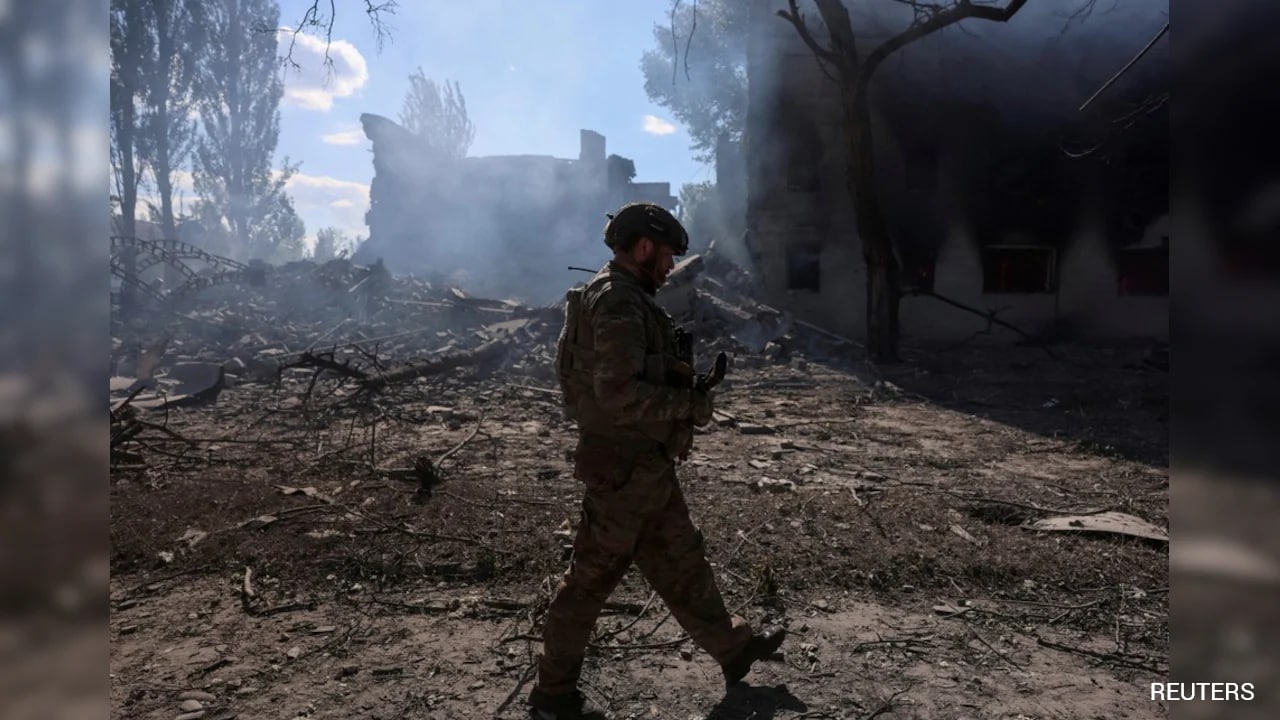
Twenty-four hours earlier, the sirens wailed over a shopping center. Glass shattered into geometric dust. The smoke rose in a thick, greasy column that could be seen from the tenth floor of apartment buildings across the city, a dark thumbprint smeared against an indifferent sky. People ran. People dropped bags of oranges. People screamed names into phones that suddenly had no network coverage.
That was yesterday. To read more about the context here, BBC News offers an in-depth summary.
Consider what happens next: the retaliation. Or is it the continuation? In the calculus of war, cause and effect blur into a dizzying circle where no one can remember who struck first, only who must strike back.
Two children.
Their names do not matter to the artillery shell. A shell is blind, indifferent to whether its payload lands on a munitions depot or a bedroom adorned with cheap glow-in-the-dark stars stuck to the ceiling. The math of conflict reduces human life to coordinates. Latitude. Longitude. Impact.
I remember standing in a courtyard years ago, watching dust settle after a near miss. The silence that follows an explosion is not peaceful. It is heavy, weighted down by the realization of what has just been lost. It is a vacuum that sucks the sound right out of your lungs. You try to speak, but your throat is lined with ash.
In this latest strike, the debris settled over toys. A plastic wheel. A torn textbook page.
The news reports call it an escalation. They use words like retaliation and strategic asset. These are linguistic shields designed to protect us from the raw horror of the thing. If you call it a "military response," you do not have to picture the child’s small hand reaching out from beneath the rubble, fingers frozen in a final, futile gesture of defense.
Language sanitizes slaughter.
We scroll through headlines on our phones while waiting for a latte or sitting in a stagnant traffic jam. We read the casualty numbers like stock tickers. Up two. Down ten. The distance between our comfortable chairs and the shattered window sills of Eastern Europe is measured in pixels and indifference.
But the tragedy is not abstract.
Imagine, for a moment, the sound of the silence that lives in that house now. No footsteps down the hall. No argument over who gets the last piece of bread. Just the wind whistling through a frame where a window used to be.
War does not arrive all at once. It arrives in installments. It comes disguised as politics, as territorial disputes, as historical grievances dug up from shallow graves. Then it strips away the pretense and leaves behind a mother holding a pair of tiny, mud-caked sneakers, wondering how the world could possibly keep spinning on its axis when hers has just cracked completely in half.
The mall attack was supposed to be the bottom. The absolute floor of human cruelty.
Yet the calendar turned. Another sunrise. Another siren. Another pair of small bodies pulled from the wreckage.
We tell ourselves that stories like this are cautionary tales. We hope that somewhere, someone in power is looking at the wreckage and blinking away the fog of ambition. We hope for mercy.
Instead, the smoke drifts higher. The wind carries it eastward, across borders, across indifference, across time zones where people are still drinking their morning coffee, blissfully unaware that the sky can fall twice in forty-eight hours.
The dust settles on the page. The ink dries. And somewhere in the dark, a clock keeps ticking toward the next blast.