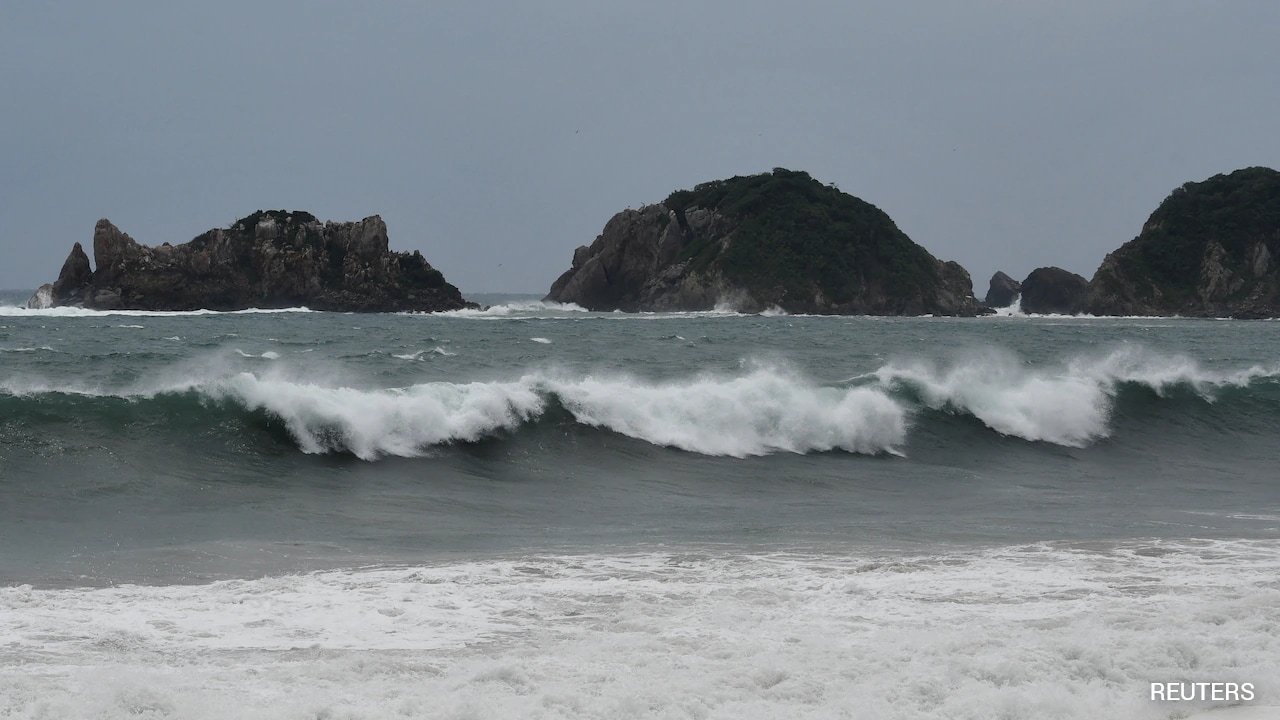
The Pacific Ocean is angry. If you walk along the shore in Malibu, Santa Cruz, or Pacifica right now, you can feel it. The waves hit harder. The high tide creeps right up to the seawalls. Entire chunks of coastal bluffs are sliding onto the sand below.
Most people think of El Niño as a distant weather quirk talked about on the evening news. They picture a bit more rain or maybe some decent surf for local boarders. That perspective is dangerously wrong. A powerful El Niño in the Pacific Ocean is a slow-motion environmental earthquake for California. It alters ocean chemistry, drives massive thermal expansion, and unleashes relentless wave energy that strips millions of tons of sand off public beaches. For an alternative look, see: this related article.
The coastline is in trouble. And ignoring the mechanics of this crisis won't save a single beachfront home or preserve a single stretch of public sand.
The Science Behind the Pacific Pulse
To understand why California beaches are eroding at an alarming rate, you have to look out across the equator. Normally, trade winds push warm surface water toward the western Pacific near Asia. During a strong El Niño, those trade winds weaken or collapse entirely. The massive pool of warm water flows back eastward toward the Americas. Further analysis regarding this has been provided by Reuters.
As that warm water piles up off the coast, something fascinating and destructive happens beneath the surface. Huge, slow-moving pulses of warm water known as Kelvin waves travel eastward along the equator and slam into the West Coast.
Water expands as it warms. This thermal expansion raises local sea levels significantly above predicted astronomical tides. When you add a persistent marine heatwave to the mix, sea levels along the California coast can surge by several inches to over a foot.
Elevated sea levels change the entire physics of the shoreline. Waves don't break where they used to. Instead of spending their energy gently rolling onto a wide, sloping beach, high-tide waves break directly against the base of fragile coastal bluffs and aging seawalls.
Sand disappears. It gets pulled offshore into deep bars or swept down-coast by longshore currents, leaving beaches naked and vulnerable. When the next big winter storm rolls in with hurricane-force winds and three-story swells, there is no natural sand buffer left to protect the land. The ocean takes what it wants.
History Proves the Damage is Real
We have seen this movie before. We just refuse to learn the script.
Meteorologists and oceanographers frequently point to three major benchmark winters in modern California history when strong El Niño events wreaked absolute havoc: 1982 to 1983, 1997 to 1998, and 2015 to 2016. Each of these seasons left deep scars on the landscape.
During the fierce 1982-1983 winter, wave action was so violent that the U.S. Army Corps of Engineers later reported dozens of oceanfront homes completely destroyed, alongside thousands of residential properties and hundreds of coastal businesses suffering severe structural damage. Timber bulkheads snapped like toothpicks. Piers collapsed into the surf.
Fifteen years later, the 1997-1998 event brought relentless, back-to-back storms that saturated soils, triggered massive landslides, and prompted presidential disaster declarations across a wide swath of California counties. Dozens of coastal homes were red-tagged by local authorities, rendering them completely unsafe for human habitation.
Then came the 2015-2016 winter. Even though that specific event underdelivered on statewide rainfall during an ongoing drought, it completely battered the coast. A comprehensive study led by U.S. Geological Survey coastal geologist Patrick Barnard revealed that wave energy and beach erosion reached unprecedented extremes. Central California beaches lost an average of roughly 150 feet of shoreline in a single season.
History teaches us a clear lesson. A winter doesn't need to break rainfall records to devastate the coast. It just needs the right combination of warm water anomalies, high tides, and persistent high-energy wave trains.
Why Concrete Seawalls Are a Losing Bet
When a multi-million-dollar home sits perilously close to a crumbling cliff edge, the homeowner's instinct is immediate and aggressive. They want to build a wall.
Pour concrete. Drive steel pilings deep into the bedrock. Build a barrier between human property and the Pacific Ocean.
It sounds logical. It is also an ecological and physical trap.
Coastal geologists have warned for decades about a phenomenon known as beach narrowing and end-effects caused by hard armoring. When you build a concrete seawall to protect a single cliffside property, you change the hydrodynamics of the immediate area. Waves crashing against a rigid concrete wall reflect their energy downward and sideways.
That reflected energy scours the sand away from the base of the wall even faster. Soon, the dry public beach in front of the wall vanishes entirely. High tide laps directly against the concrete. Public access disappears, restricted by private shoreline armoring that privatizes the remaining sand.
Furthermore, seawalls do nothing to stop erosion on adjacent, unarmored properties. In fact, they often accelerate erosion on either side of the barrier as wave energy wraps around the ends of the wall.
Spending millions of dollars of public and private money to lock a dynamic shoreline into a static, concrete straightjacket is fighting a war against physics you cannot win. The ocean is persistent. Concrete eventually cracks, rusts, and fails.
Infrastructure on the Brink
It isn't just luxury homes on private bluffs taking the hit. Critical public infrastructure is right in the crosshairs of El Niño-fueled erosion.
Look at the Pacific Coast Highway. Winding along some of the most scenic stretches of California, the PCH is a vital economic and logistical artery. Yet large portions of it were built dangerously close to unstable marine terraces and sandy spits. Every time a strong El Niño hits, sections of the highway wash out, collapse into the surf, or get buried beneath massive mudslides triggered by rain falling on fire-scarred coastal hillsides.
Rail corridors face the exact same threat. The LOSSAN rail corridor, which carries passenger and freight trains between San Diego, Los Angeles, and points north, runs directly along fragile coastal segments in places like San Clemente. Repeated slope failures and bluff retreats have forced emergency track closures, multimillion-dollar stabilization projects, and emergency rock placements just to keep the trains moving.
When critical transit lines snap, local economies freeze. Commuters lose their routes. Tourism dollars dry up. The cascading cost of coastal erosion extends miles inland, impacting everyone from daily commuters to inland taxpayers who foot the bill for emergency disaster relief funds.
The Myth of Easy Sand Replenishment
If seawalls fail and nature takes its course, local governments often turn to beach nourishment. This sounds like an easy fix. Dredge sand from offshore deposits or riverbeds, pump it onto the eroded beach, and recreate the wide, sandy shores tourists love.
Reality is much more complicated.
Sand is mobile. It moves constantly in response to waves, tides, and longshore drift. When you dump hundreds of thousands of cubic yards of sand onto a beach experiencing active El Niño wave conditions, the ocean often sweeps it right back offshore within a matter of weeks.
Renowned coastal scientist Gary Griggs has frequently pointed out the financial treadmill of beach nourishment, noting that dumping sand onto a severely eroding coast without addressing the root causes can feel like throwing money down a bottomless hole.
It requires an ongoing, multi-million-dollar financial commitment year after year. Finding clean, compatible sand that matches the grain size and composition of the native beach is increasingly difficult. Dredging offshore also disrupts fragile benthic marine ecosystems, burying local habitats under heavy sediment loads.
Beach nourishment can work as a temporary bandage, but it cannot be treated as a permanent shield against a rising sea and intensifying storm cycles.
What Needs to Happen Right Now
We have reached a fork in the road for California's coast. Continuing down the path of reactive emergency response—waiting for a storm to destroy infrastructure, declaring a state of emergency, and rebuilding the exact same vulnerable structures in the exact same spot—is financial and environmental insanity.
Communities must embrace proactive adaptation. That means implementing smart managed retreat policies. It means changing local zoning laws so that new construction is set back safely from unstable bluffs and dynamic dune systems. It means accepting that some private properties built on hazardous coastlines cannot be protected forever at public expense.
It also means restoring natural coastal defenses. Preserving remaining wetlands, restoring natural dune vegetation, and allowing rivers to deliver their natural sediment loads to the coast can help build natural resilience.
The Pacific Ocean is not going to calm down. Sea levels will continue to rise. El Niño events will continue to test the limits of our coastal engineering.
We can spend the next several decades fighting a losing battle against the tides with concrete and desperation, or we can start planning for a smarter, more sustainable relationship with the edge of the continent. The sand is slipping away, and time is running out to make the right choice.