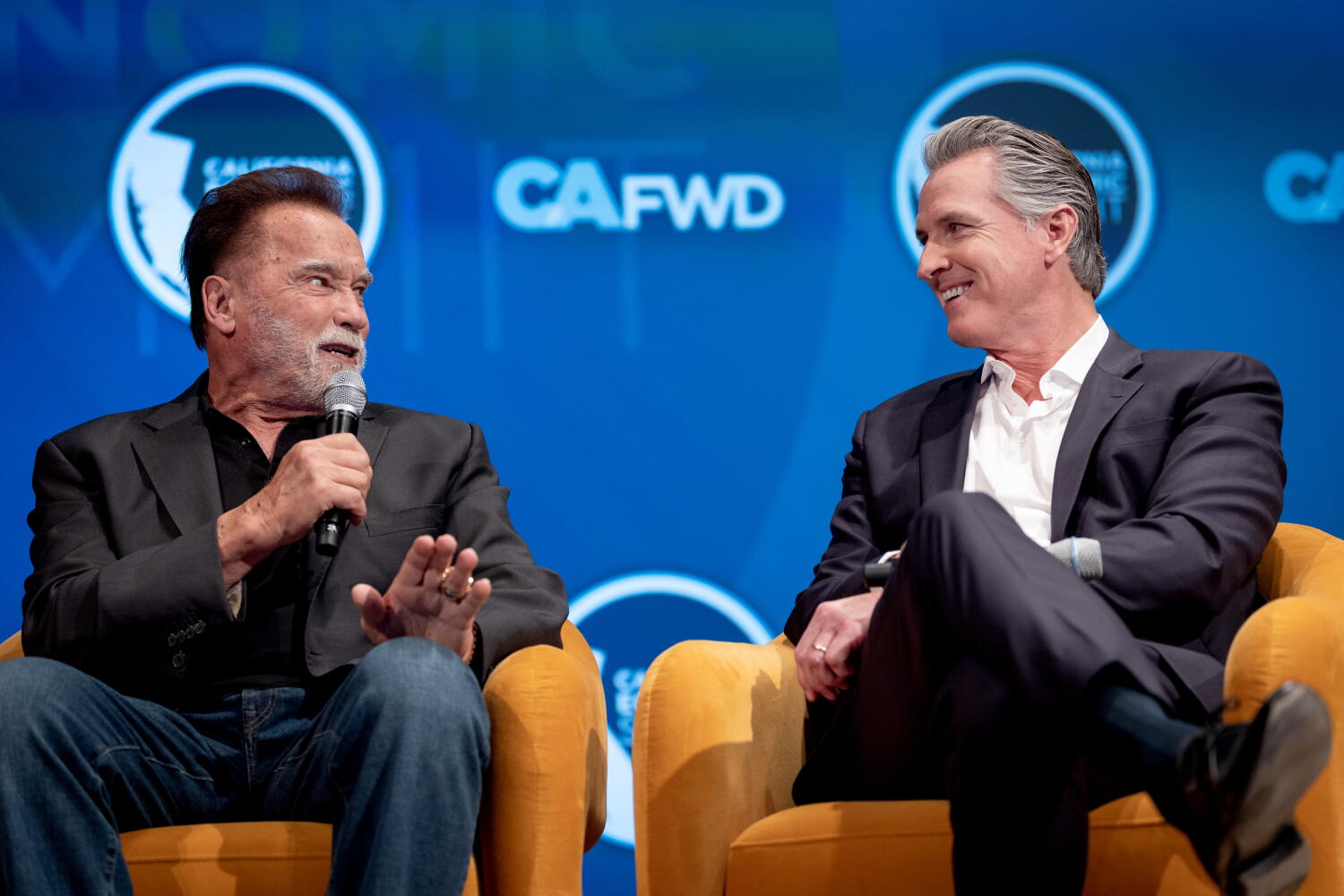
Two politicians stand on a stage. One is a former bodybuilder turned Republican governor. The other is a slick Democratic incumbent. Both clap each other on the back and celebrate California climate wins.
It makes great theater. It makes terrible policy analysis.
Whenever Arnold Schwarzenegger and Gavin Newsom share a friendly moment over green targets, the press rushes to declare a bipartisan miracle. They treat the stage show as proof that California has cracked the code on decarbonization.
It has not.
A little bipartisan bromance sells clicks. It lets readers believe that big, bold mandates from Sacramento automatically turn into clean air, cheap power, and global emissions drops. That is the lazy consensus. It confuses press releases with physical reality and legislative ambition with actual engineering.
I have spent years watching policy shops, utilities, and industrial operators chase compliance targets across North America. I have seen companies blow millions on shiny sustainability pledges that moved real-world emissions by barely a rounding error. When you strip away the applause lines, California's climate story looks far messier than the victory lap suggests.
The Myth of "Clean" Numbers
Start with what people usually get wrong about emissions accounting.
When policymakers talk about cutting greenhouse gases, they often focus on territorial emissions—the carbon released inside a state's borders—rather than consumption-based emissions, which include the carbon embedded in goods and electricity imported from somewhere else. Mix those two up and you can easily mistake outsourcing for decarbonization.
California did pass landmark legislation. Assembly Bill 32 in 2006 set a historic statutory floor for greenhouse gas reductions, and subsequent laws pushed those targets further out. Over time, coal power dropped sharply inside the state's supply mix, and solar and wind surged onto the grid.
Those are real shifts in generation hardware. Credit where credit is due: building utility-scale solar and battery storage at California's scale took serious capital and regulatory push.
Now look at the other side of the ledger.
California relies heavily on electricity imports and vast supply chains of manufactured goods. When dirtier generation shifts out of state or manufacturing moves elsewhere, the smoke does not vanish into thin air. It simply crosses a state line or an ocean. Worse, grid balancing still leans hard on natural gas when the sun goes down and wind lulls hit, even as daytime solar occasionally floods the system and forces curtailment.
Imagine a scenario where a city closes every local factory and imports all its steel, cement, and electronics from regions running coal plants. Local smokestacks go quiet. Local air looks cleaner on paper. Yet global carbon output barely budges—or rises if transport and grid losses add up.
Calling that a pure triumph misses the whole point of a planetary problem. A warming atmosphere does not care which zip code sits on a spreadsheet.
Why Bipartisan Stagecraft Masks Real Trade-Offs
Political theater loves clean villains and clean heroes. A Republican icon praising a Democratic governor—or vice versa—gives pundits a neat narrative: adults in the room putting aside partisan gridlock to save the planet.
Schwarzenegger helped kick off California's modern climate framework during his tenure. Newsom has spent his governorship championing aggressive mandates, from zero-emission vehicle rules to clean energy milestones. When they team up publicly, it signals continuity across administrations and parties.
Politically, that matters. Signal shapes investment. Investors watch policy durability before writing billion-dollar checks.
operationally, though, unity on a stage does not solve physics or economics.
California households and businesses already pay some of the highest retail electricity rates in the continental United States. Wildfires tied to dry conditions, aging infrastructure, and land-use choices have forced massive grid-hardening costs onto ratepayers. Meanwhile, permitting delays slow down transmission lines, substations, and clean projects that the state's own plans require.
When costs climb while reliability faces stress, public support gets fragile. A mandate signed into law is easy. Pouring concrete, stringing high-voltage wire across rugged terrain, and keeping bills tolerable for working families is hard.
Pundits rarely dwell on those friction points during a warm joint appearance. A friendly handshake is a much easier story to file than a deep dive into tariff structures and interconnection queues.
Answering the Questions People Actually Search
People type certain questions into search bars because they want straight answers. Most of the time, the questions themselves rest on shaky assumptions.
Did California really solve climate change on its own?
No. No single subnational economy can solve a global commons issue alone, no matter how loud its targets sound.
California accounts for a fraction of global greenhouse gas emissions. Even dramatic cuts inside one state cannot stabilize global temperatures unless major emitters—large industrial nations, heavy manufacturing hubs, and fast-growing economies—cut at scale too. Treating one state's policy path as a complete solution lets everyone else off the hook too easily.
Are California's climate mandates a model for other states?
Some pieces travel well. Others backfire.
Standards that push clean tech manufacturing, improve appliance efficiency, or drive down battery costs through scale can help everyone. Think of learning curves—the well-documented drop in unit cost as cumulative production volume rises. Larger markets help drive early volume.
Copy-pasting every rule into a state with a colder climate, cheaper coal or gas, different grid rules, or lower household incomes is a recipe for pushback. Energy policy is local geography and economics first, ideology second.
Why do critics say green wins come with hidden costs?
Because trade-offs never disappear; they move.
If you retire dispatchable power plants before enough firm, reliable capacity and storage are online, you tighten reserve margins. If you layer compliance costs onto fuels and electricity without targeted relief or faster permitting, prices rise. If you ignore supply-chain leakage, you celebrate local paper wins while global emissions stay stubborn.
Pretending there are zero trade-offs is how movements lose credibility once voters feel the pinch at the meter or the pump.
What Smart Operators Actually Do Instead
If you run a business, manage capital, or shape strategy in this space, stop taking cues from political stagecraft. Follow the incentives, the bottlenecks, and the physics.
- Audit full-scope footprints, not just office power. Map emissions across suppliers, freight, and product use so you spot real exposure rather than cherry-picking easy wins.
- Prioritize firm power and grid bottlenecks. In energy and industrial projects, generation is only half the puzzle; interconnection queues, transformer lead times, and storage duration decide what actually gets built.
- Stress-test projects against price swings and policy reversals. A business case that only works under generous subsidies or static rules is fragile. Build models that survive higher interest rates, shifting tariffs, and permitting friction.
- Separate signal from execution. Watch what gets permitted, financed, and commissioned on the ground—not just what gets announced at a summit or press event.
Heavyweights in energy systems and climate economics—scholars and analysts like David Victor, Vaclav Smil, and Richard Schmalensee—have spent years hammering home a blunt truth: grand targets are cheap, while physical infrastructure transitions are slow, capital-intensive, and constrained by materials, land, and politics. Ignore that reality and your strategy will hit a wall.
The Catch With Being Skeptical
Being contrarian has its own trap. Cynicism is cheap. Anyone can poke holes in a politician's speech or point out an accounting flaw in a policy report.
Taken too far, hard-nosed realism turns into fatalism. If you dismiss every incremental step because it is imperfect, you miss real progress in cost curves, battery deployment, and industrial learning. California's push helped accelerate markets that didn't exist at scale twenty years ago. Admitting the flaws in the accounting does not mean pretending nothing changed.
The honest middle ground is tougher than hype and tougher than cynicism: track what actually works, measure what leaks elsewhere, and price the real trade-offs honestly.
Applauding a good photo-op won't cool a single degree; building the damn grid will.