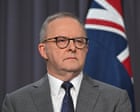
Canberra loves a resignation demand. It is the political equivalent of flipping the board game when you do not like the dice roll. When Shadow Energy Minister Dan Tehan steps up to a microphone and demands Climate Change and Energy Minister Chris Bowen resign over Australia's bid and diplomatic handling of the United Nations Climate Change Conference (COP), the press gallery dutifully writes it down. The live blogs refresh. The outrage machine hums.
Meanwhile, the actual structural realities of Australia's energy transition—and the real diplomatic calculus behind hosting or participating in a COP summit—get buried beneath theatre.
And tucked right beside that partisan sparring on the daily news cycle is a tribute from Opposition figures like Angus Taylor honoring the late, "kind, gentle" Ian "Molly" Meldrum—or in similar parliamentary moments, figures whose careers spanned decades of cultural shifts—reminding everyone that Australian politics still knows how to pause for genuine human grace, even if it immediately returns to trench warfare five minutes later.
To understand why the latest demand for Bowen’s head is a distraction from the real fight, you have to look past the press conference soundbites. Both the Coalition and the Labor government are locked into arguments that satisfy their bases while obscuring the massive capital, diplomatic, and engineering trade-offs sitting right in front of the country.
The Resignation Trap In Australian Politics
Resignation calls used to be nuclear weapons in Westminster democracies. They were reserved for proven corruption, egregious misleading of parliament, or catastrophic administrative failure. Today, they are confetti.
According to statements reported across Australian political coverage, Dan Tehan’s push for Chris Bowen to step down centers on allegations of diplomatic missteps, taxpayer expenditure, and policy failures surrounding Australia's COP ambitions and international climate commitments. From the Opposition's perspective, the argument is straightforward: the government is prioritizing international climate pageantry over domestic energy affordability and grid reliability.
That critique resonates with voters staring at higher power bills and businesses navigating uncertain regulatory timelines. Nobody in western Sydney or regional Queensland cares about a communique drafted in a European or Middle Eastern conference hall if their quarterly electricity statement jumps by twenty percent.
Yet demanding a minister's resignation over COP diplomacy misdiagnoses the problem. Changing the person sitting in the ministerial chair does not alter the underlying physics of an aging coal fleet, the global supply chain bottlenecks for high-voltage transmission lines, or the geopolitical reality that Australia's major trading partners are decoupling from unabated fossil fuels.
If Bowen resigned tomorrow, his successor would wake up to the exact same spreadsheet:
- Retiring thermal generation: Coal-fired power stations are reaching the end of their technical and economic lifespans, regardless of who holds the portfolio.
- Transmission lag: Building the poles and wires required to connect renewable zones to population centers takes years of environmental approvals, landholder negotiations, and capital allocation.
- Global capital flows: Institutional investors managing trillions of dollars use international climate frameworks—including COP outcomes—to price sovereign and corporate risk.
Focusing on ministerial scalps treats a multi-decade industrial restructuring like a bad week in a PR firm.
What A COP Bid Actually Buys—And What It Costs
The lazy consensus in Australian political commentary divides COP into two caricatures. To climate advocates, hosting or leading a COP summit is an unalloyed moral triumph that restores Australia's international standing. To critics on the right, it is an expensive junket that forces Australian taxpayers to subsidize global virtue signaling.
Both caricatures are wrong. A COP summit is neither a moral absolution nor a mere cocktail party. It is a massive trade show for green capital, industrial policy, and geopolitical influence.
When a country bids to host or co-host a COP—such as Australia's protracted push to partner with Pacific Island nations—it is attempting to position itself as a premier destination for clean energy investment. Consider what happens on the sidelines of these summits. Sovereign wealth funds, infrastructure giants, and hydrogen and critical minerals buyers make decade-long off-take agreements. For a resource-exporting nation like Australia, whose entire economic model relies on shipping energy and minerals to Asia, being in the room where the rules of green trade are written is basic commercial self-interest.
However, critics like Tehan are right to point out the severe downsides and risks that governments routinely downplay:
- The diplomatic price tag: Securing the backing of regional blocs and competing against rival bidders (such as Turkey in the Western European and Others Group) requires immense diplomatic capital. Concessions made to win a hosting bid can tie a government's hands on domestic policy.
- The domestic political blowback: Hosting a massive international summit while domestic households feel squeezed by inflation and energy costs creates an optics nightmare. Every dollar spent on conference logistics becomes an easy target for opposition attack ads.
- The credibility gap: If a host nation cannot demonstrate rapid progress on its own domestic emissions targets—such as Australia's 43 percent reduction target by 2030—it invites relentless scrutiny from international NGOs and Pacific neighbors, turning a diplomatic showcase into a public relations liability.
The real debate should not be whether Bowen deserves to be fired for pursuing international climate diplomacy. The real debate is whether Australia gets a measurable return on investment from hosting global summits compared to deploying that same diplomatic and financial capital directly into bilateral clean-energy trade deals with Japan, South Korea, and ASEAN nations.
The False Binary Of Grid Reliability Versus Climate Diplomacy
Watch any parliamentary Question Time and you will see the same sterile binary repeated ad nauseam. One side claims renewables are the cheapest form of new-build energy and the only path to economic survival. The other side claims the government's ideological rush to renewables is wrecking the grid and driving up prices, arguing instead for a mix that includes gas and long-term nuclear options.
Both sides leave out the crucial engineering and economic nuances that actually determine what happens to power bills.
Take the "cheapest form of energy" talking point. At the generator gate, wind and solar have zero fuel costs and low levelized costs of electricity. That is a mathematical fact verified by the Australian Energy Market Operator (AEMO) and the CSIRO's GenCost reports. But consumers do not buy electricity at the generator gate. They buy firmed, reliable power delivered to their wall sockets 24 hours a day, 365 days a year.
When you factor in the system costs—utility-scale batteries, pumped hydro, synchronous condensers to maintain grid frequency, and thousands of kilometers of new transmission infrastructure—the total system cost looks very different from the raw generation cost. Pretending those integration costs are trivial destroys public trust when bills rise.
Conversely, the Coalition's critique often glosses over the sheer cost and timeline of the alternatives. Keeping aging coal plants running past their engineered retirement dates invites unplanned outages, which cause massive price spikes in the wholesale market. Meanwhile, introducing nuclear power into a country with zero domestic nuclear industry, federal and state legislative bans, and high construction labor costs involves multi-billion-dollar capital outlays and timelines stretching well into the late 2030s or 2040s.
Imagine a scenario where a corporate board had to choose between two business plans: one that underestimates integration costs by billions, and another that relies on a technology prohibited by current law with a fifteen-year lead time. Neither plan would survive five minutes in front of an investment committee. Yet in Canberra, these two positions form the entirety of the national energy debate.
Why The Press Gallery Loves The Theatre
If the policy realities are so clear, why does daily political coverage fixate on resignation demands and tactical skirmishes?
Because conflict is easy to cover, and infrastructure engineering is hard.
A live blog thrives on quick hits: a shadow minister demands a resignation; a minister fires back; a senior figure pays tribute to a beloved cultural icon. Notice the contrast in how these moments land. When Angus Taylor or other parliamentarians pause to pay tribute to someone known for warmth, generosity, and decency—qualities universally praised in tributes to figures like Meldrum—the tone shifts instantly. The partisan armor drops. Readers see human beings acknowledging a shared cultural touchstone.
Then the clock ticks forward, and the armor slams back into place.
The danger of covering energy and climate policy purely as a blood sport is that it trains voters to expect instant, painless solutions. If you believe energy prices are high solely because Chris Bowen is incompetent, then firing him seems like a solution. If you believe climate policy is stalled solely because the Opposition is obstructionist, then winning the next election seems like a solution.
Neither is true. Australia is attempting one of the fastest transformations of a major fossil-fuel-dependent grid anywhere in the developed world, while simultaneously trying to remain a top-tier exporter of energy and minerals. That transition will be messy, expensive, and politically bruising regardless of which party occupies the treasury benches.
How To Actually Judge Energy And Climate Leadership
If voters, business leaders, and commentators want to stop falling for Canberra's daily distractions, they need to throw out the political scorecard and start using an operational one. Stop asking who won Question Time or who should resign over a diplomatic row. Start asking four concrete questions:
- Are transmission bottlenecks actually clearing? Megawatts of approved wind and solar mean nothing if they cannot connect to the grid. Watch the completion dates and budget blowouts on major interconnector projects like HumeLink, VNI West, and Marinus Link.
- Is firming capacity keeping pace with coal closures? Track the gigawatts of dispatchable storage and peaking gas capacity actually reaching financial close—not just announced in press releases—before major coal units switch off.
- Are industrial energy users staying onshore? Look at the contract renewals for aluminum smelters, chemical manufacturers, and mineral processors. If heavy industry starts shuttering capacity due to uncompetitive power contracts, the transition strategy is failing in real time.
- Does international diplomacy yield binding capital? Judge COP participation and international climate pacts strictly by binding foreign direct investment into Australian clean-energy supply chains, rather than the warmth of the applause in conference halls.
Stop Watching The Theatre
Dan Tehan will keep calling for resignations because that is the job description of an Opposition attack dog. Chris Bowen will keep defending Australia's international climate posture because backing down hands the Opposition an easy victory. And the daily news cycle will keep packaging their clashes alongside tributes, leadership speculation, and parliamentary point-scoring.
You do not have to buy a ticket to the show. The real story of Australia's energy future is not being written at press conferences in Canberra or on the floor of a UN summit. It is being decided in grid connection queues, bond markets, and engineering yards across the country—and no resignation demand is going to wire a single substation.