Two weeks from now, the biggest sporting event on earth kicks off across North America. But if you’re a Canadian soccer fan trying to score a seat in Toronto or Vancouver, you’re probably staring at your screen in absolute disbelief.
The dream of watching a home World Cup has turned into a financial nightmare.
South of the border, politicians are finally pushing back. New York Attorney General Letitia James and New Jersey Attorney General Jennifer Davenport just launched a joint investigation into FIFA. They slapped soccer’s governing body with subpoenas, targeting what they call "confusion, fake scarcity, and impossibly high prices."
It’s about time someone called out the madness. But as American regulators hunt down answers for games at MetLife Stadium, a massive question hangs over Ottawa.
Why is Canada’s Competition Bureau sitting on the sidelines?
If the US can haul FIFA over the coals for deceptive practices, Canada has every reason to do the same. Leaving fans at the mercy of a broken system isn't an option.
The Mirage of Affordable Soccer
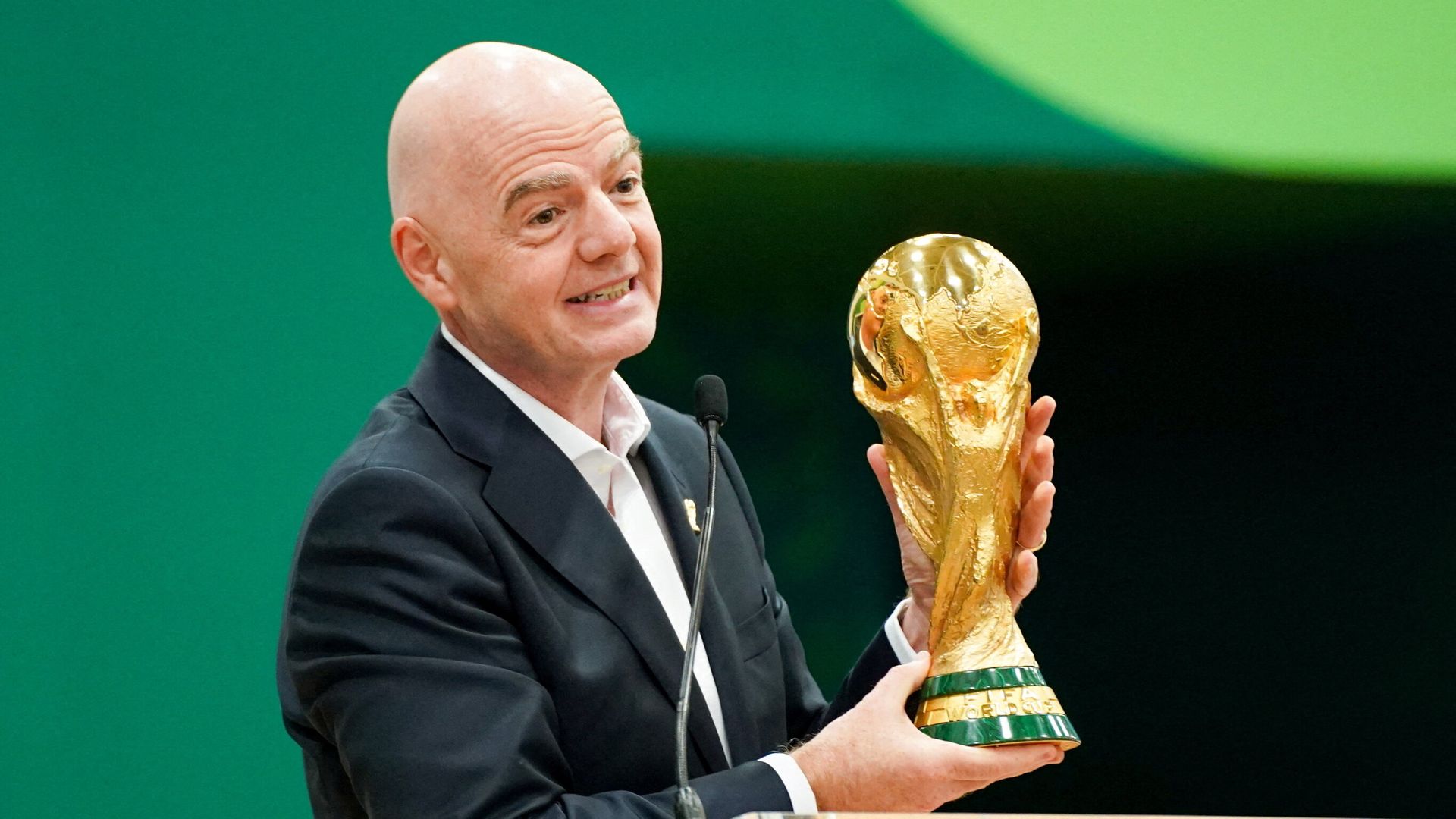
FIFA President Gianni Infantino loves to talk about growing the game. When critics confront him about skyrocketing costs, his go-to excuse is that FIFA is simply "adapting to the North American market."
That’s corporate speak for charging whatever they can get away with.
For decades, soccer thrived on its reputation as the people's game. It was cheap to play and accessible to watch. This summer, that legacy is being systematically dismantled.
Take a look at the numbers. In Qatar four years ago, the most expensive ticket for the final match was around $1,600. For the 2026 final in New Jersey, FIFA set the initial top-tier price at $6,730.
It gets worse. By the time the April sales window rolled around, FIFA jacked that exact same ticket category up to $10,990.
This isn't just inflation. It’s a deliberate strategy to squeeze every single dollar out of passionate fanbases. Even Donald Trump publicly complained that he wouldn't pay $1,000 for nosebleed seats to see the US face Paraguay. When a billionaire tells you a ticket is overpriced, you know the market is completely broken.
In Canada, families face the exact same wall of extortion. Regular folks trying to take their kids to a group stage match in Vancouver are finding individual tickets listed between $800 and $1,000. For an average family of three, that’s a $3,000 night out before you even buy a single hot dog or pay for parking.
The Dynamic Pricing Trap and Fake Scarcity
The core of the American legal probe focuses on how FIFA actually sells these seats. For the first time in World Cup history, the organization introduced dynamic pricing.
You’ve probably dealt with this nightmare when buying concert tickets. Algorithms track demand in real-time. If a million people log on at once, the price automatically spikes.
It’s an aggressive tactic that turns ticket buying into a panic-driven gauntlet. US authorities allege that FIFA used this system alongside misleading public statements to engineer a sense of fake scarcity.
Fans log into the portal, see a ticking clock, and get told that almost nothing is left. Desperate to see a once-in-a-lifetime tournament, they agree to five-figure sums because they think they have no choice.
Then, magically, more ticket blocks appear weeks later.
This is exactly the kind of deceptive marketing that Canadian consumer protection laws are supposed to prevent. Canada’s Competition Bureau has a history of policing this stuff. They’ve handed out over $6 million in penalties to ticket resellers like Ticketmaster, TicketNetwork, and StubHub in recent years. In fact, StubHub Canada got smacked with a $1.3 million fine in 2020 for advertising hidden fees and unattainable prices.
The Bureau knows how the game is played. Yet, face-to-face with the biggest sports monopoly on earth, Canadian regulators have only issued a generic warning telling buyers to "stay vigilant" against scams.
A warning isn't enough. Vigilance won't fix an algorithm designed to drain your bank account.
The Ontario Capping Experiment and the Resale Loophole
While Ottawa hesitates, provincial governments are trying to patch the holes. Doug Ford’s government in Ontario passed a law capping World Cup resale prices at their original face value.
On paper, it sounds great. If you bought a ticket for $600, the law says you can't flip it for $1,200.
But look at how this plays out in reality. The moment the law took effect, secondary market tickets for Toronto’s six matches vanished from platforms. Sellers pulled them because they couldn't make a profit, or because they bought them under the old rules and now face massive financial losses if they resell legally.
Meanwhile, FIFA runs its own official resale platform. They don't follow Ontario's provincial caps, and they pocket a massive 15% surcharge from both the buyer and the seller on every single transaction.
It’s a perfect double-dip. FIFA inflates the original price via dynamic algorithms, creates confusion about seat locations, and then collects a massive cut when desperate fans try to trade tickets on the secondary market.
Provincial legislation can't fix a systemic issue rooted in Zurich. It takes federal muscle to investigate an international governing body.
Why a Canadian Federal Probe Matters Right Now
Canada isn't just a passive observer in this tournament. Taxpayers in Toronto and Vancouver are pouring hundreds of millions of dollars into stadium upgrades, security, and transit infrastructure to host these 13 games.
When public funds bankroll an event, the public deserves fair access to it.
If the Competition Bureau launched a formal inquiry alongside the US attorneys general, it would force FIFA to open its books. Regulators could demand transparency on how many tickets were actually made available to the general public versus corporate sponsors. They could audit the dynamic pricing algorithms to see if fans were intentionally misled about availability.
A joint cross-border investigation puts real pressure on FIFA. Serving subpoenas in New York is a great start, but tracking corporate behavior across the entire unified North American market is how you actually force a policy change.
Soccer shouldn't belong exclusively to corporate executives and high-net-worth individuals. If Canada wants to protect its sports culture and its consumers, the federal government needs to stop watching from the luxury suites.
Demand accountability from FIFA. Open a formal investigation into the 2026 ticketing process. Force the organization to disclose its pricing mechanics before the first whistle blows in Toronto. If you're sick of getting priced out of your own stadium, contact your local Member of Parliament and demand that the Competition Bureau steps up. It's time to pull FIFA off the pitch and put them in the penalty box.